Most software engineers do not face challenges due to lack of skills—they do not have an idea about what to study next.
Do you want to master DSA? Learn System Design? Do Full Stack projects? Or begin with GenAI?
The answer is all of them but in the right order.
Many professionals waste months hopping from YouTube tutorials, e-learning platforms to coding websites without having a proper roadmap. And hence, they acquire knowledge without being able to correlate everything in their interviews or while developing applications.
The Bosscoder Academy Software Engineering Curriculum addresses the challenge by integrating programming fundamentals, Data Structure & Algorithm, System Design, Full Stack Development, and Applied GenAI into one structured roadmap aimed at software engineers of all experience levels.
Quick Fact: Learning different technologies is easy, it is learning how they fit together that makes a software engineer.
What is the Bosscoder Academy Software Engineering Curriculum?
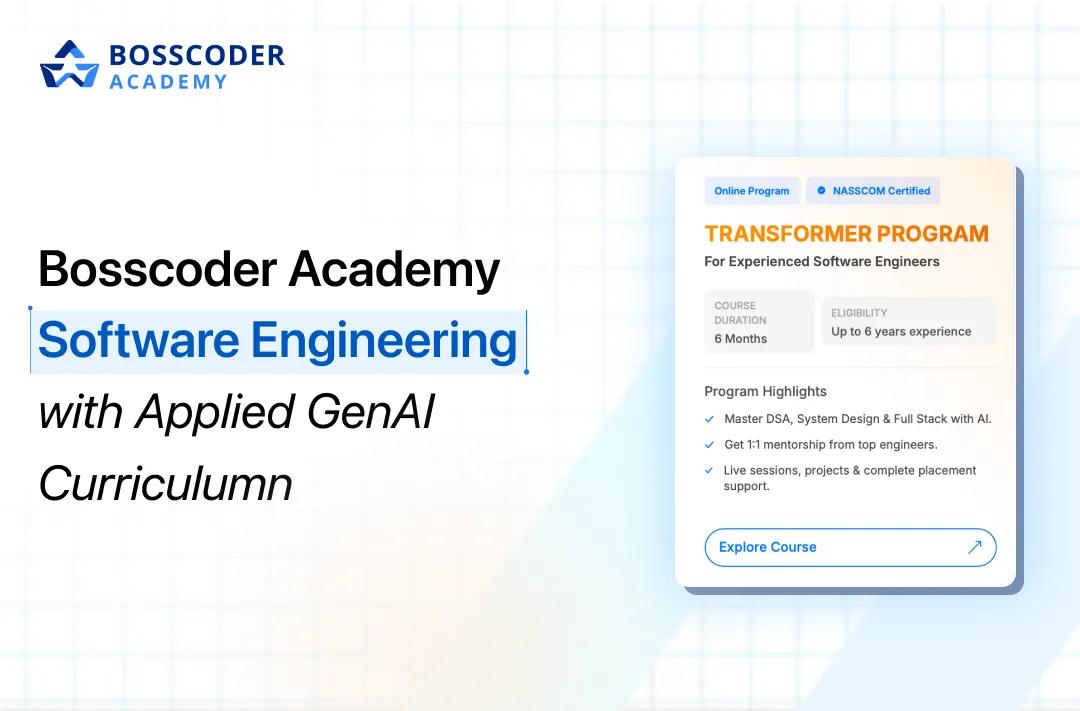
The Bosscoder Academy Software Engineering Curriculum is a 6-month live and mentor-driven Software Engineering Program with Applied GenAI for individuals with 0-6 years of professional experience.
Rather than focusing on individual topics, the curriculum follows a structured progression:
- Programming Fundamentals
- Data Structures and Algorithms
- SQL, LLD & HLD
- Full Stack Development
- Applied GenAI
- Industry-Related Projects
- Placement Preparation
The objective here is to enable learners to establish strong engineering fundamentals while getting ready for software engineering jobs in product based companies.
Why This Software Engineering Curriculum Is Unique
Many learning platforms offer lessons in Coding, System Design, and AI individually.
Bosscoder Academy connects these topics into one structured roadmap so learners gradually strengthen their engineering skills instead of learning disconnected concepts. The curriculum is based on live classes, 1:1 mentorship, and placement preparation.
Traditional Learning vs Structured Learning
| Traditional Learning | Bosscoder Academy Curriculum |
|---|---|
| Scattered learning materials | Structured roadmap |
| Individual topics | Connected software engineering curriculum |
| Theoretical approach | Real-life projects and practical experience |
| Self-study | Live classes with mentorship |
Curriculum Overview
The Bosscoder Academy Software Engineering Curriculum is designed to follow a step by step roadmap that begins from basic programming concepts and then advances to software engineering and Applied GenAI.
| Module | Duration |
|---|---|
| Programming Constructs | 4 Weeks |
| DSA Problem Solving | 12 Weeks |
| System Design (SQL + LLD + HLD) | 8 Weeks |
| Full Stack Specialization | 4 Weeks |
| GenAI & Agentic AI | 8 Weeks |
| Deep Dive Electives | 8 Weeks |
Phase 0: Programming Constructs (4 Weeks)
Every successful software engineer begins with good programming fundamentals.
In this phase, the course begins by refreshing the basics before diving into complex subjects like DSA and System Design. It helps the learner become better at coding logic, developing optimized codes, and builds confidence that can help them in other phases.
Topics Covered
- Programming Concepts
- Input/Output
- Data Types
- Operators
- Conditionals
- Loops
- Functions
- Arrays
- Strings
- Number Systems
- Introduction of Data Structures
- Time and Space Complexities
- Pattern Problems
What Will You Learn?
At the end of this phase, you will be able to:
- Code properly
- Apply programming logic well
- Apply solutions using functions and arrays
- Set a strong base for advanced DSA concepts
Pro Tip: Never neglect your basics. Programming basics make DSA, System Design, and Full Stack Development easy to understand.
Module 1: Problem Solving using Data Structures & Algorithms (12 Weeks)
Data Structures and Algorithms (DSA) form the first technical round in almost all software engineering interviews. Good problem-solving skills not only help you crack interviews but also make you better at approaching real-world engineering problems.
The Bosscoder Academy Software Engineering Curriculum dedicates 12 weeks to DSA, helping learners move beyond syntax and develop structured thinking through commonly used data structures, algorithms, and interview patterns.
What You'll Learn
Curriculum covers topics on Linear and Non-Linear Data Structures that allow step-by-step development of concepts.
Linear Data Structures
The topics covered under linear data structure include:
- 1D & 2D Arrays
- Strings
- Number System & Mathematics
- Bit Manipulation
- Binary Search
- Two Pointers
- Recursion
- Hashing
- Sorting
- Linked Lists
- Stacks & Queues
- Non-Linear Data Structures
The curriculum then moves to advanced topics such as:
- Trees
- Binary Trees
- Binary Search Trees
- Tries
- Heaps
- Greedy Algorithms
- Dynamic Programming
- Graphs
Skills Gained
By the end of this module, learners should be able to solve DSA questions that are usually asked in the interview rounds of product based companies including MAANG-level interviews.
You'll develop the ability to:
- Solve coding problems in a structured way.
- Select the appropriate data structure depending upon the scenario.
- Improve your problem-solving skills using concepts like time and space complexities.
- Gain confidence for the coding interview.
Interview Tip: Rather than spending weeks solving countless coding problems, focus on recognizing the pattern. In many cases, learning a single pattern may help solve numerous interview problems.
Module 2: System Design (SQL + LLD + HLD) – 8 Weeks
Coding isn’t the only task that comes under the domain of Software Engineering. With increasing experience, companies expect system designs from candidates which are scalable, robust, and maintainable.
This module includes SQL, Low Level Design (LLD), and High Level Design (HLD) to help learners understand the design aspects of today’s backend systems.
Part 1: SQL
SQL is still one of the most critical skills for backend and full-stack engineers.
The curriculum includes topics on not only basic SQL but also advanced queries that are applied in real world apps.
Topics Covered
- Basic SQL
- Advanced SELECT Queries
- Joins
- Sorting & Grouping
- Aggregation
- Common Table Expressions (CTEs)
- Subqueries
- Advanced String Functions
- Window Functions
- Recursive CTEs
Why It's Important
Studying SQL doesn't mean learning just how to write queries. You will know the entire process of retrieving, analyzing, and optimizing data.
Part 2: Low-Level Design (LLD)
Low-Level Design is about creating sustainable and reusable components of software.
Rather than coding alone, you will learn how an experienced engineer designs applications before implementing them.
Topics Covered
- Object-Oriented Programming (OOP)
- Design Patterns
- UML Diagrams
- Database Schema Design
- Design Problems
- Machine Coding
Skills That You Will Get
By the end of this part, you will feel more confident in:
- Creating well-structured classes.
- Using popular design patterns.
- Decomposing complex tasks into reusable components.
- Justifying your design choices in interviews.
Pro Tip: Most SDE-2 interviews involve machine coding or LLD questions. Knowing OOPs design will definitely help you score better in these sections.
Part 3: High-Level Design (HLD)
High-Level Design gives an understanding of how large applications are designed and scaled.
Where Low-Level Design talks about classes and objects, High-Level Design discusses services, databases, caching, APIs, and distributed systems.
Topics Covered
- Distributed Systems
- Load Balancing
- Consistent Hashing
- Caching
- Transactions
- SQL vs NoSQL
- Designing Real-Life Systems
- Microservices
- Distributed Queues
Learning Outcomes
- Design scalable back-end systems from scratch.
- Make architectural trade-offs with respect to scalability, reliability, consistency, and performance.
- Translate business requirements into actual system design.
- Write production-grade SQL based on real-world data access requirements.
Why This Module Matters
One of the toughest topics that a software engineer faces while preparing for product-based company interviews is System Design.
In understanding the concepts of SQL, LLD, and HLD, you learn about how various layers of the software system interact with each other, right from the database queries to a distributed system.
Planning to crack a product-based company?
Read our Complete blog to Cracking Good Product Companies and learn the skills, roadmap, and preparation strategy that complement this curriculum.
Module 3: Full Stack Specialization (4 Weeks)
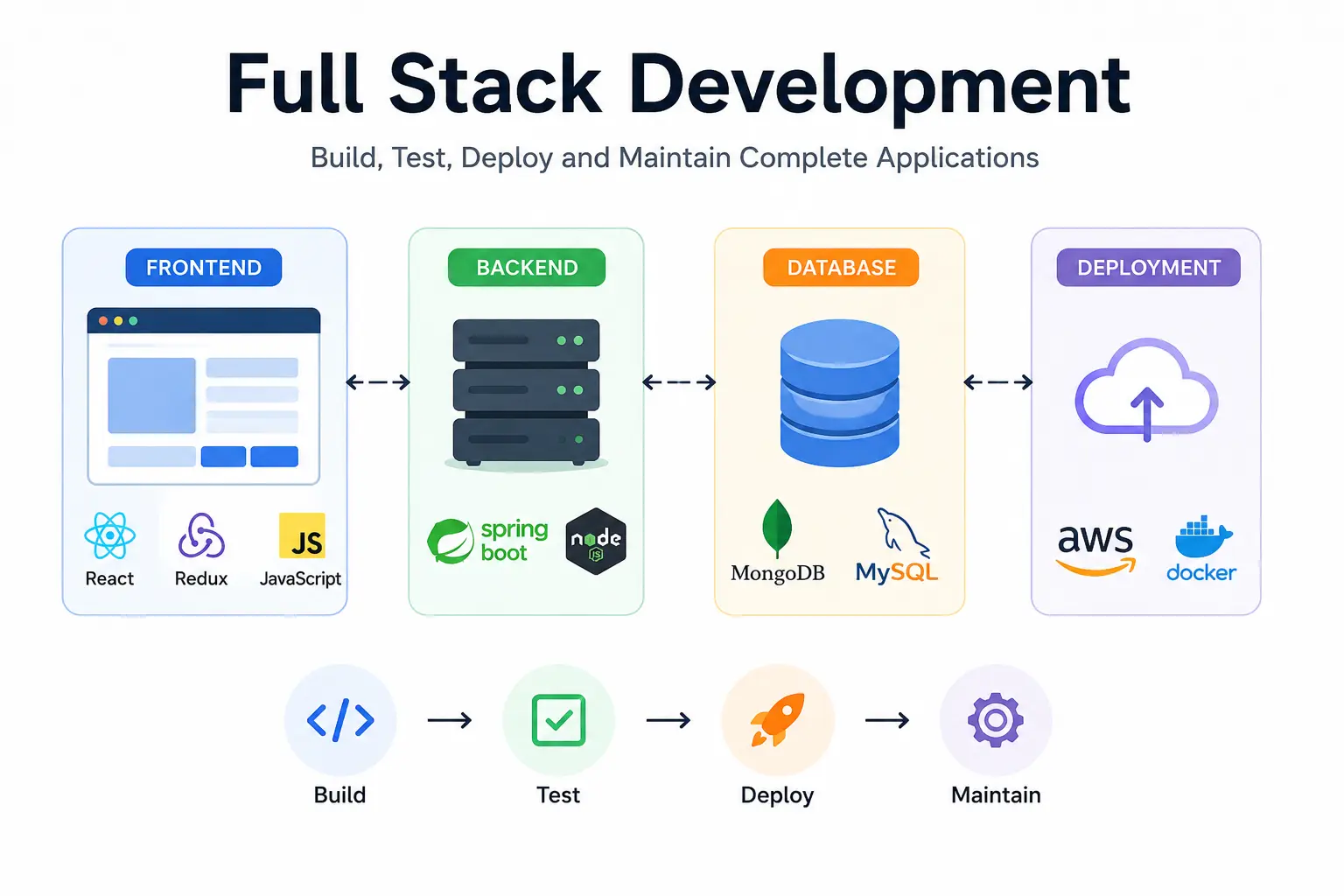
Product-based companies demand more from software engineers. They don't just want engineers who can build individual components. They need engineers who can build, test, deploy, and maintain whole applications.
The Full Stack Specialization module in the Bosscoder Academy Software Engineering Curriculum focuses on developing end-to-end engineering skills through Backend Development (Spring Boot) and Full Stack Development (MERN). By the end of this module, you will learn how modern applications are engineered and deployed in production.
Backend Development (Spring Boot)
Spring Boot is popular for designing scalable backend services in enterprises and product-based companies.
This section focuses on designing robust server-side applications while following modern backend development practices.
Topics Covered
- Spring Boot
- Object Relational Mapping (ORM)
- Unit Testing
- Git
- Deployment
- Project-based Interview Questions
Upon completing this part, you will have gained the following practical experiences:
- Designing RESTful backend services
- Database management using ORM
- Testable and maintainable codebase
- Version Control using Git
- Deployment of backend services
Pro Tip: Interviewers typically ask detailed questions about backend projects you have built. Building projects yourself will help you answer such interview questions confidently.
Full Stack Development (MERN)
Today's software developers are required to have skills in both frontend and backend development.
This track will teach you how to develop full stack web applications using the MERN stack.
Subjects Covered
- React
- Redux
- Node.js
- Express.js
- MongoDB
- Git
- Testing
- Deployment
- Interview Questions
Expected Learning
According to the curriculum, after completing this module you'll be able to:
- Create production-level applications.
- Create scalable APIs and frontend-backend integrations.
- Apply version control, testing, and deployment of projects.
- Confidently answer architectural questions in interviews.
Module 4: GenAI & Agentic AI for Software Engineers (8 weeks)
AI is gradually becoming an integral part of the software development process. Rather than learning about AI as a separate discipline, Bosscoder’s curriculum aims to incorporate it into the scope of software engineering.
This module is all about Applied GenAI - how to build an AI application taking into account various production factors like accuracy, latency, cost, and reliability.
Topics Covered
The curriculum includes the following topics:
- LLMs & Transformers
- Prompt Engineering
- Vector Databases
- Semantic Search
- Enterprise RAG Systems
- LLM APIs
- Fine-Tuning
- Agentic AI Workflows
- Agentic RAG Systems
- MCP Integration
- LangChain
- LangGraph
- Full-Stack GenAI Systems
What You’ll Learn
By the time you complete the module, you will be able to:
- Understand where GenAI can be used within a modern software system.
- Make decisions regarding LLMs, RAG, AI agents, and rule-based systems.
- Build AI-powered applications, taking into account different production factors.
- Estimate AI systems in terms of reliability, safety, latency, and cost.
Did you know?
These days, many tech companies expect software engineers to have knowledge about the integration of AI with their existing product rather than simply using AI tools.
Deep Dive into Elective Curriculum (8 Weeks)
While the core curriculum ensures that you are proficient in all skills required for software engineering interview purposes, for those wishing to delve even deeper, Bosscoder also provides elective courses related to advanced engineering subjects.
Advanced DSA
Expand your knowledge of problem-solving beyond the basics with subjects such as:
- Segment Trees
- String Pattern Matching
- Advanced Dynamic Programming
- Advanced Graphs
System Design through Case Studies
Understand system design through case studies which include:
- Hotstar Streaming System
- Chess Game
- Parking Lot
- Rate Limiter
- Netflix Frontend
- WhatsApp Web
- Full Stack E-commerce Application
Additional Specializations
Depending on your preference, the elective course also includes:
- Java Backend Specialization
- Mobile Application Development
- Computer Networks
- Operating Systems
Work on Industry-Ready Projects
Learning theories is important however, practical application through projects builds engineering skills.
The curriculum has projects for multiple domains.
Data Structures & Algorithms
- Over 300 curated LeetCode problems
- Interview questions company-wise
- Live DSA mock interviews
System Design Projects
Work on designing systems like:
- Video Streaming Platform like Hotstar
- Order Management System like Amazon
- Messaging System like WhatsApp
- Cab Booking System like Uber/Ola
- Parking Lot Management System
- Scalable Social Media Platform
Full Stack Projects
Work on developing applications such as:
- Analytics Dashboard
- E-Commerce Catalog
- Chat Application in Real-Time
- Notification Service
- Recommendation API
- Payment & Settlement Services
- Food Ordering Application
- Professional Network like LinkedIn
Applied GenAI Projects
- AI Support Assistant with RAG
- AI Workflow Automation Agent
- AI-Augmented Engineering Assistant
Why These Projects are Important
Projects provide you with an opportunity to:
- Apply concepts practically.
- Develop a better developer portfolio.
- Prepare yourself for discussing projects in interviews.
- Get experience in the latest workflows of software engineering.
Why Professionals Choose Bosscoder Academy
A great curriculum is just one aspect of successful preparation for an interview. Consistent guidance, feedback, and practice play a major role.
Bosscoder Academy helps its learners with all their preparation process via structured learning, 1:1 mentorship, live classes, assignments, and placement support.
Important Features of Bosscoder Program
1. Structured Learning Roadmap
Rather than deciding what needs to be studied next, learners follow a step-by-step curriculum designed around modern software engineering skills.
It includes programming fundamentals, DSA, system design, full stack development, applied gen AI, and interview preparation in a structured manner.
2. 1:1 Mentorship
Every learner comes from a different background.
The curriculum includes 1:1 mentorship sessions that enable learners to do the following:
- Discuss doubts
- Get personalized guidance
- Practice mock interview
- Identify areas for improvement
- Plan a structured learning plan
3. Live Interactive Classes
All classes are live and are taught by instructors who have worked with top product companies.
Small class size also allows them to clarify doubts and concepts during the classes.
4. Regular Assignments & Doubt Support
Learning does not stop once the session ends.
Every learners are given assignments at the end of each session. Continuous doubt resolution is provided to ensure steady progress.
5. Placement Support
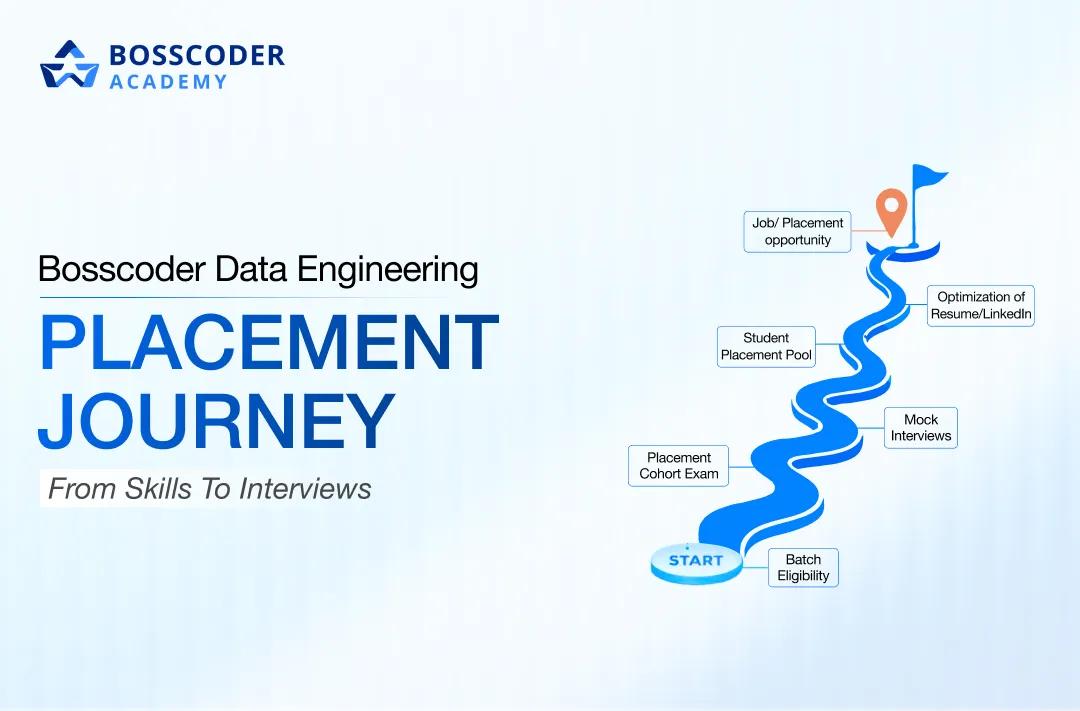
Once learners have prepared themselves for the interview stage, Bosscoder Academy helps them with placement assistance in the following ways:
- Resume building
- Optimization of linkedIn profile
- Mock interviews
- Networking opportunities
- Salary negotiations guide
- Job opportunities
6. Learning Community
Interview preparation can be difficult on one's own.
The program also includes a community of learners where members can discuss problems, collaborate, and stay motivated throughout their preparation journey.
Career Support Beyond the Curriculum
In addition to providing technical skills, the curriculum will assist students in preparing for the job hunt process.
Some of the career assistance provided include:
Resume Building
Learners will get help in crafting resumes that are ATS friendly along with relevant keywords and improved formatting.
LinkedIn Optimization
The program also helps learners improve their LinkedIn profiles so recruiters can better discover their skills and experience.
Application Strategy & Referrals
Learners will get help in crafting cold emails, applying strategically, and accessing referrals through Bosscoder's alumni network and mentors.
Hiring Partnerships
Bosscoder Academy claims to have 500+ hiring partnerships with various product companies and startups in order to assist eligible learners during the placement process.
Career Tip: Crafting an impressive resume and LinkedIn profile may help you secure interviews but regular interview preparation is still as important.
Learn from Experienced Mentors
One of the key advantages of the Software Engineer Program is the mentor community.
Instructors and mentors offer hands-on tips on software engineering, scaling, backend development, workflows using AI, and interview preparation based on their professional experience.
Is This Curriculum Right for You?
If you are:
- Software engineer who has 0-6 years of experience and needs to improve fundamentals.
- Are planning to change companies from service to product-based.
- Want to learn about DSA, System Design, Full Stack Development, and Applied GenAI through one structured roadmap.
- Looking for mentorship and guided interview preparation.
Then, Bosscoder Academy Software Engineering Curriculum may be right for you.
Conclusion
The Bosscoder Academy Software Engineering with Applied GenAI Curriculum brings together the various skills required of modern software engineers all into one structured curriculum.
Instead of learning one thing at a time, this curriculum focuses on programming basics, then moves to DSA and System Design, Full Stack Development, and finally introduces Applied GenAI along with real-world projects. In addition to theoretical knowledge, this curriculum also involves 1:1 mentorship, interview prep, and career advice to ensure that the learner gets prepared to take on real-life software engineering jobs.
If you are looking for a road map to improve your software engineering fundamentals, do some hands-on projects, and practice your interviewing skills at product-based companies, you may want to consider Bosscoder Academy Transformer Program.
Frequently Asked Questions (FAQs)
Q1. What is the duration of the Bosscoder Academy Software Engineering Program?
The Software Engineer (Transformer) Program is a 6 months long mentor-led program for professionals having 0-6 years of experience.
Q2. Which subjects are taught in the Software engineering curriculum?
Subjects taught in the curriculum include:
- Programming fundamentals
- Data structures and algorithms
- SQL
- Low level design
- High level design
- Full stack development
- Applied Gen AI
- Specialization electives
- Industry projects
- Placement preparation
Q3. Are there any industry projects involved in the program?
Yes. There are projects for DSA, System design, Full stack development and Applied Gen AI in the curriculum so that learners can practically use concepts learned.
Q4. Does Bosscoder Academy Software Program offer mentorship?
Yes. You will be provided 1:1 mentorship, live classes, help with mock interviews, and feedback.
Q5. Is placement support included?
Bosscoder Academy offers placement help services such as resume building, LinkedIn profile optimization, referral, mock interview, and job hiring support.