The demand for skilled software developers has increased significantly across all industries. From startups to large product-based companies, organizations are searching for professionals with the ability to solve complex business problems, manage the development of systems that can continue to scale, and understand how to interact with modern technologies.
The result is that many working professionals are looking at software engineering programs in order to gain the skills needed to either change careers, upskill or to get higher-paying software development roles. This leads to a common question asked by before making a decision:
"How much does a software engineering course cost, and is it worth paying for?"
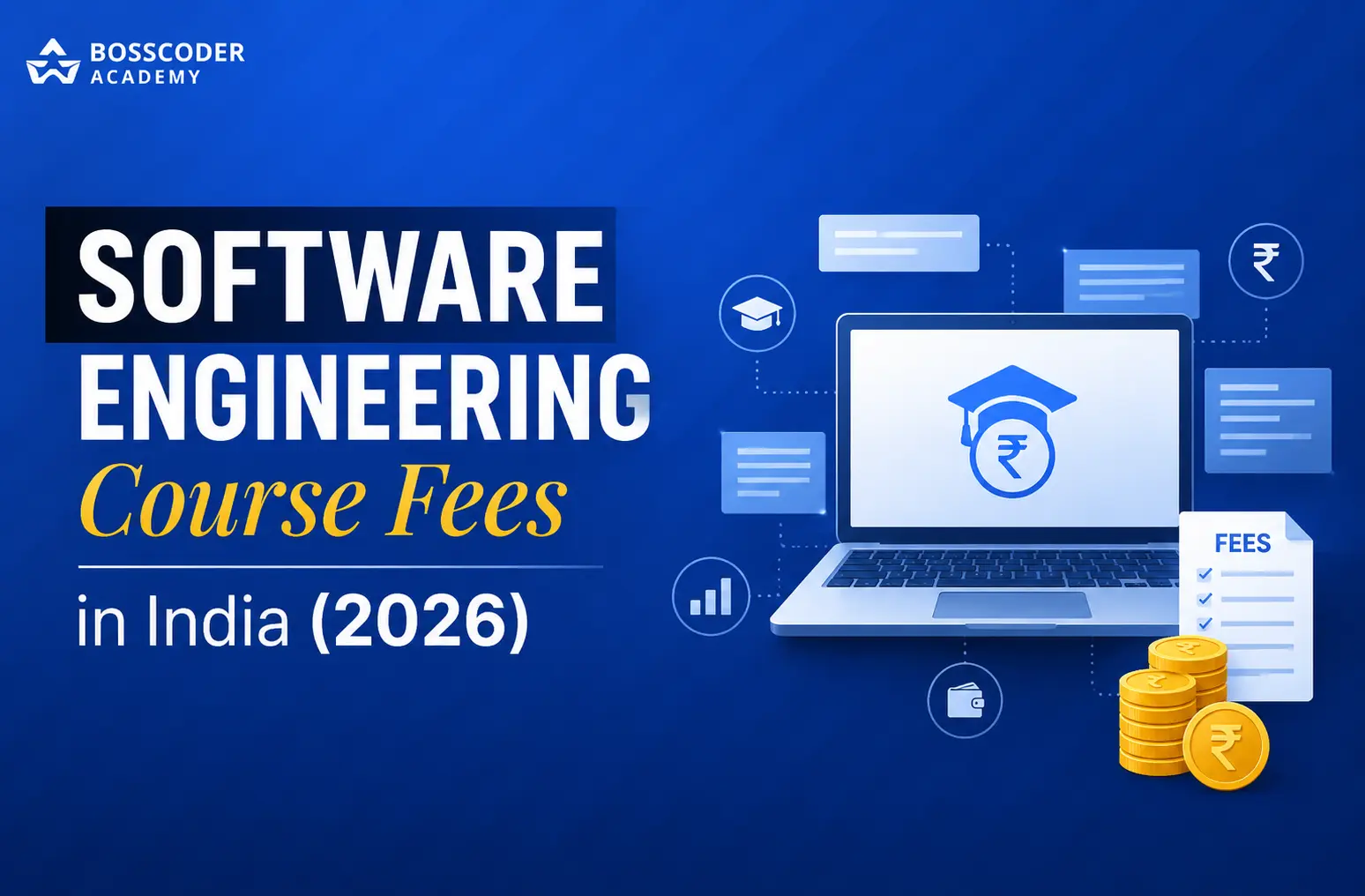
In this blog, you will find an explanation for software engineering course fees in India and the variables that can affect pricing, along with how to determine if a program will provide the value you expect for your career.
The Problem: Software Engineering Courses Vary Widely in Cost
Some examples of commonly asked questions are:
- Why is there such a large difference in fees?
- Are expensive courses really the best?
- Can low-cost courses help professionals get a job as a software engineer?
- What else should professionals consider when selecting software engineering courses beyond the cost?
Many Learners don't understand what is included, so they mostly focus on price and miss the factors that may actually affect their career outcome.
Understanding Software Engineering Course Fees in India
The cost of software engineering courses is determined by many different criteria including program duration, curriculum, mentoring, placement support, and hands-on training.
Here are average costs based on the different types of programs:
| Course Type | Typical Fee Range |
|---|---|
| Self-Paced Online Courses | ₹2,000 - ₹20,000 |
| Certification Programs | ₹20,000 - ₹80,000 |
| Career Transition Programs | ₹80,000 - ₹2,00,000+ |
| University Affiliated Programs | ₹1,00,000 - ₹5,00,000+ |
Cost-effective courses, while an effective way to learn about programming concepts, typically do not provide interview prep, mentoring, or career advice.
For any professional who wants to land a software engineering job at a product-based company, these additional factors can have a huge influence on their career outcomes.
Why Many Professionals Struggle Despite Taking Courses
One common misconception is that simply completing a course is enough to secure a software engineering role.
In reality, employers evaluate candidates on much more than course certificates.
Software engineering interviews are generally focused upon:
- Data Structures and Algorithms (DSA)
- Problem Solving
- System Design
- Backend Development
- Computer Science Fundamentals
- Real World Experience
- Interview Performance/Communication Skills
Many professionals spend months learning through scattered online resources but still struggle during interviews because they lack a structured roadmap & guidance.
As a result, they invest time and money without achieving the career growth they wanted to.
What Should Be Included in a Good Software Engineering Course?
Before evaluating fees, professionals should check the value of course being offered. A strong software engineering program typically includes:
1. Structured Curriculum
The course should teach all fundamental concepts related to software engineering such as:
i) Data Structures And Algorithms
ii) Object-Oriented programming
iii) Databases
iv) Systems Design
v) Backend Development
vi) Fundamentals Of Computer Science
2. Hands-On Learning Experiences
In order to truly understand how the material presented in class applies to real world projects, you'll need to be able to implement those concepts using coding assignments, real life projects and implementation of actual workflows as part of the learning process.
3. Mentoring From Experienced Engineers
Guidance from experienced software engineers can help professionals avoid common mistakes and focus on the most relevant topics.
4. Mock Interviewing Experience
Many candidates fail interviews due to lack of practice rather than lack of knowledge. Mock interviews help bridge this gap.
5. Placement Support
Resume review, mock interview, and job hunting assistance are often crucial in assisting professionals to transition into software engineering roles.
The Solution: Focus on ROI, Not Just Course Fees
Rather than asking,
"What is the lowest-cost course available for software engineers?"
instead, ask,
"Where will I get the most return on my investment?"
For example, a course costing ₹1 lakh, where the professional earns a much higher salary, may offer much more value than a course costing ₹10,000 that teaches only basic software engineering concepts.
When evaluating a course, look at:
- The skills you gained
- If the skills are relevant in the industry
- Mentorship quality
- Your job outcomes
- Your potential to earn money in the future
How Bosscoder Academy Approaches Software Engineering Course
Bosscoder Academy has a structured software engineering program that allow working professionals to upskill or to transition from their current job to a new position at a product-based company.
The program focuses on helping learners develop skills that are commonly required during software engineering interviews, including:
- Problem Solving and DSA
- System Design (HLD and LLD)
- Backend Engineering Concepts
- AI-Native Development Skills
- Interview Preparation and Mock Interviews
According to the Bosscoder Academy program, learners receive a structured curriculum, 1:1 mentorship, coding practice, and career-focused guidance designed specifically for working professionals.
Overall, the primary focus of the program is not about simply completing courses, but instead is aimed at assisting professionals in building the potential skills that are applicable in interviews and real-world development environments.
Is Paying More for a Software Engineering Course Worth It?
The answer to this question will vary depending on what you want to gain from the course.
If you want to learn programming as a hobby, lower-cost self-paced courses may be sufficient.
However, if your purpose is to:
- Become an SDE
- Change to a product organization
- Be prepared for a technical interview
- Advance your ability to solve problems
- Increase your earning potential
Then, the value of a structured career-oriented program may be considerably greater than the value of standalone courses.
The key is to check what is included rather than comparing fees alone.
Conclusion
The price of a software engineering course in India will vary from a few thousand to several lakhs depending on the course format, mentorship, curriculum and career support.
Working professionals should not just look at the cost of a course to make their decisions.
Instead, they should be looking at whether the course teaches them the technical skills needed to be successful in technical interviews and reach long-term goals in the real-world software engineering domain.
A high-quality software engineering course represents a significant investment in your future (and could make you eligible for higher-paying positions), they usually have a well-structured approach with both technical training, mentorship, and practical project work in combination with interview preparation.
The most "affordable" software engineering course is not necessarily the best. The "best" software engineering course is the one that gets you as close to your end goal of becoming a software engineer as possible.
Frequently Asked Questions (FAQs)
Q1. How much does a software engineering course cost in India?
Software engineering course fees in India can range from a few thousand rupees to several lakhs, depending on the course structure, mentorship, and career support provided.
Q2. Is Bosscoder Academy worth it for software engineering professionals?
Bosscoder Academy can be a good option for working professionals looking to upskill or switch to product-based companies, as it offers 1:1 mentorship, interview preparation, coding practice, and career support alongside technical training.
Q3. What should I check before joining a software engineering course?
Before enrolling, look for a structured curriculum, experienced mentors, hands-on projects, mock interviews, and placement support to ensure the course aligns with your career goals.