If you're planning to become a Full Stack Developer or switch to a better software engineering role, understanding the Full Stack Developer course syllabus is the first step.
Unlike any ordinary programming language course, a good full stack course trains you to develop full-fledged web applications, learn the process of frontend and backend coordination, database management, deployment of projects, and technical interview preparations.
Whether you are a working professional trying to switch careers, a software engineer trying to upgrade his/her skillset, or even a fresher just stepping into this field, we will cover all that you need to know about your full stack development courses.
Pro Tip: Today’s companies always prefer candidates who are capable of developing end-to-end applications rather than being an expert at one end of the software development process.
What is a Full Stack Developer?
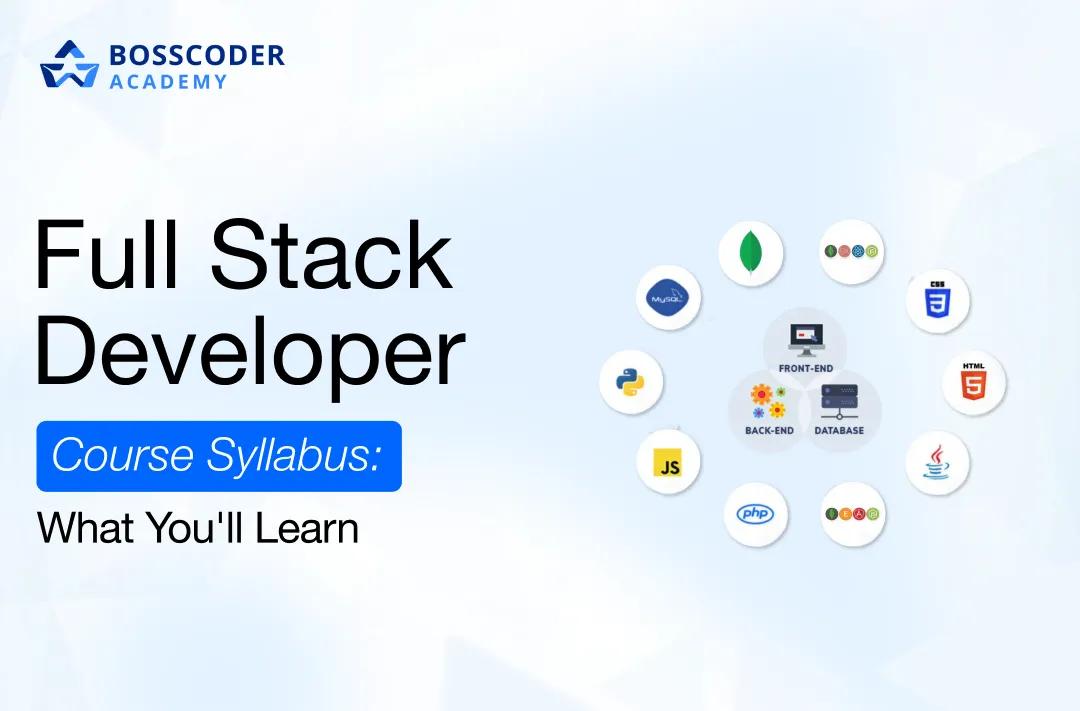
A Full Stack Developer is one who is able to build both the frontend and the backend parts of an application.
Full stack developers use the following things usually:
- Front-end technologies
- Back-end frameworks
- Database management
- APIs
- Version system
- Cloud deployment
This makes them well-equipped to build entire web applications from scratch.
Who Should Join Full Stack Developer Course?
The full stack development course should be taken by:
- Software engineers thinking of switching their career path
- Front-end developers wanting to learn back-end technology
- Back-end developers looking for front-end development skills
- Working professionals who want better opportunities
- Fresh college graduates who want to pursue careers in software development
In case you want to clear interviews in product-based companies, go for a course where development, DSA, System design and interviews are taught.
Syllabus of Full Stack Developer Training Course
| Module | What You'll Learn |
|---|---|
| Fundamentals of Programming | Fundamentals of programming, OOP, Problem solving |
| Frontend Development | HTML, CSS, JavaScript, React |
| Backend Development | Node.js, Express.js, REST API |
| Databases | SQL, MongoDB, Database Design |
| Git & GitHub | Version Control, Collaboration |
| APIs & Authentication | REST APIs, JWT, OAuth |
| Deployment & Cloud | Docker, CI/CD, Hosting |
| Full Stack Developer Project | Full stack developer projects at industry level |
| Interview preparation | Data structures & Algorithms, System Design, Resume, Mock Interviews |
This syllabus is based on what most companies demand today for full stack developers.
Module 1: Programming Fundamentals
Every successful programmer begins with solid programming fundamentals.
Even before studying frameworks like React and Node.js, you will have an understanding of how programming works.
Topics
- Variables
- Data Types
- Operators
- Loops
- Conditionals
- Functions
- Arrays
- Objects
- Object-Oriented Programming (OOP)
- Exception Handling
- Problem Solving Fundamentals
Many programs usually involve one of these languages:
Programming language is less important than knowing the core concepts.
Why This Module Is Important
Solid fundamentals help to pick up new technologies later and code problem-solving skills in interviews.
Tip for learning: Don’t rush to frameworks. Give yourself enough time to practice basic coding challenges before moving on.
Module 2: Frontend Development
Frontend development refers to building everything that users interact with.
This module shows you how to create responsive and user-friendly websites.
HTML
Here are some topics included:
- HTML5 Semantic
- HTML Forms
- HTML Tables
- Media Elements
- Accessibility Basics
CSS
They include:
- CSS Selectors
- Box Model
- Flexbox
- CSS Grid
- Responsive Web Design
- Media Queries
- Animations and Transitions
JavaScript
JavaScript makes websites work.
It covers:
- DOM manipulation
- ES6 features
- Arrow Functions
- Promises
- Async/Await
- Fetch API
- Events Handling
React.js
React is one of the most commonly used frontend libraries by modern companies.
Topics include:
- Components
- JSX
- Props
- State
- Hooks
- Routing
- API integration
- Basics of state management
- Performance optimization
By the end of this module
You will be able to create:
- Landing pages
- Dashboards
- Portfolio websites
- Blogging applications
- E-commerce interface
Try this: Try rebuilding the homepage of your favorite site. It's a good exercise to work on HTML, CSS, and React at once.
Module 3: Backend Development
Once the frontend is completed, it's the backend that provides functionality to the application.
Here you will understand how servers receive requests, process data and exchange data with databases.
Technologies Covered:
- Node.js
- Express.js
Topics covered:
- Basics of server development
- REST APIs
- CRUD operations
- Routing
- Middleware
- Authentication
- Authorization
- JWT
- Password hashing
- Error handling
- Environment variables
- File uploads
And you'll also know how to communicate frontend applications with backend services using APIs.
Why It Matters
The backend is responsible for the following:
- User login
- Payments
- Business logic
- Notifications
- Data storage
- Security
Without a backend, most modern apps will not work.
Pro Tip: Try building little APIs when studying rather than just watching tutorial videos since it is more efficient to learn this way.
Module 4: Database Management
All applications need to store their data, thus making database management an important skill.
Good full stack development courses teach about both types of databases – SQL and non-SQL.
SQL Databases
Some popular options are:
- MySQL
- PostgreSQL
What is taught:
- Database Design
- Tables
- Relationships
- CRUD Operations
- Joins
- Constraints
- Indexing
- Transactions
NoSQL Databases
You will also learn how to work with MongoDB.
What is taught:
- Collections
- Documents
- Aggregations
- Relationships
- Indexes
SQL vs NoSQL
| SQL | NoSQL |
|---|---|
| Structured Data | Flexible Data |
| Fixed Schema | Dynamic Schema |
| Best for Transactions | Best for Scalability |
This way you can select the appropriate database depending upon your project needs.
Module 5: Git & GitHub
Version control is an important skill that every software developer must possess.
Git makes it easier for developers to make changes to the source code.
Topics Covered
- Installation of Git
- Creating a repository
- Commit & Push
- Pull Request
- Branching
- Merge Conflicts
- GitHub Workflow
- Collaboration
Not only that but you will learn how developers collaborate using Git in software projects.
Did You Know? Recruiters often go through your GitHub profile before any interviews. Hence, keep your GitHub clean with valuable projects.
Tools You'll Learn Throughout the Course
Apart from learning programming languages and frameworks, almost all full stack developer courses teach the following development tools:
| Category | Popular Tools |
|---|---|
| Code Editor | VS Code |
| Frontend | HTML, CSS, JavaScript, React/td> |
| Backend | Node.js, Express.js |
| Database | MySQL, PostgreSQL, MongoDB |
| API Testing | Postman |
| Version Control | Git, GitHub |
| Deployment | Docker, Vercel, Netlify |
| Cloud Basics | AWS or Azure |
These are some of the tools that are commonly used by startups and product-based companies.
What You've Learned So Far
At this point in the syllabus, you will already have a good grasp of:
- Programming fundamentals
- React frontend development
- Node.js & Express.js backend development
- Database management
- Using Git and GitHub
- Industry standard development tools
All of which make up the core building blocks for any full-stack developer.
Module 6: APIs & Authentication
Modern web applications do not operate as standalone entities. To interact with other services, they use APIs (Application Programming Interfaces) to exchange information.
In this module, you will learn about the interaction between applications and user authentication process.
Topics Covered
- REST APIs
- HTTP Methods (GET, POST, PUT, DELETE)
- API Testing with Postman
- JSON
- Authentication & Authorization
- JWT (JSON Web Tokens)
- OAuth
- RBAC (Role-Based Access Control)
- Password Hashing
- Session Management
Skills to Acquire
Having successfully completed this module, you will be able to:
- Create secure REST APIs
- Integrate frontend and backend
- Protect user accounts
- Manage authentication and authorization
- Use Postman for API testing
Tip: Each application you create should have a secured login feature. Authentication is one of the most common questions asked during technical interviews.
Module 7: Deployment & Cloud Basics
Application development is one part of the work done by a developer. The other part includes deploying the application so that it can be accessed over the internet.
Topics Covered
- Hosting of Applications
- Domain Name & DNS Basics
- Environment Variables
- Docker Fundamentals
- CI/CD Basics
- Cloud Computing Fundamentals
- Deployment with Vercel, Netlify, or Render
- Introduction to AWS or Azure
Importance of the Module
Recruiters prefer developers who not only develop but also deploy the applications. Having knowledge of deployments allows you to solve production-level issues.
Tip: Try to deploy each and every application you develop. Mentioning a demo link in your resume will definitely make your portfolio better than mentioning screenshots.
Module 8: Full Stack Projects
Theory gets converted into practice through projects.
Ideally, there should be more than one project-based module in a full-stack course.
Projects You May Build
- E-commerce website
- Application for Task Management
- Blog Platform
- Chat application
- Social Media platform
- Job portal
- Learning Management System (LMS)
These projects will enable you to put your knowledge into practice from front-end development to back-end APIs and databases.
Skills That You Can Acquire
Through projects, you will learn to:
- Design web applications
- Use APIs and databases
- Manage Authentication
- Deploy applications
- Write clean code
- Make a solid portfolio
Portfolio tip: As per the recruiters, they give only a few minutes on any portfolio. Two to three complete projects are more valuable than many incomplete projects.
Module 9: Interview Preparation
Learning technologies is important, but interview preparation is equally essential if your goal is to secure a better software engineering role.
A full stack developer course not only equips you with the skills of being a full stack developer, but it should also assist you in preparing for your interviews.
Interview topics covered:
- Data Structures and Algorithms (DSA)
- Problem Solving
- System Design Fundamentals
- Low Level System Design
- Resume Creation
- GitHub Portfolio Review
- Mock Interview
- HR Interview Preparation
Why This Matters
Most developers fail during interviews since they have a framework-only mindset. Product companies consider the following when evaluating developers:
- Coding skills
- Problem solving
- System design
- Communication
- Project work experience
Preparing in all these areas significantly improves your interview performance.
Duration of Full Stack Developer Course
This depends entirely upon your experience and learning speed.
| Type of Learner | Duration Required |
|---|---|
| Beginners | 6-9 months |
| Working Professionals | 8-12 Months (Part-Time) |
| Intensive Bootcamps | 4-6 Months |
It all comes down to consistency. Just allocating 2-3 hours per day could be enough to see improvement.
Career Opportunities After Completing Full Stack Course
A full stack developer course opens doors to multiple software engineering roles.
Some common career paths include:
| Career | Experience Required |
|---|---|
| Frontend Developer | Entry Level |
| Backend Developer | Entry Level |
| Full Stack Developer | 1 - 3 Years |
| Software Engineer | 2 - 5 Years |
| Senior Full Stack Developer | 4+ Years |
| Technical Lead | Experienced Professionals |
Other options to consider as you gain experience include cloud engineering, backend architecture, DevOps, and system design.
Common Mistakes to Avoid
There are some common mistakes that a lot of learners make that hold them back from progressing faster.
1. Trying to Learn Multiple Technologies Simultaneously
Learn one technology completely before learning another.
2. Neglecting Fundamentals of JavaScript
Good knowledge of JavaScript will help you learn React and Node.js much more easily.
3. Only Watching Videos
Only watching videos will not help you. Make sure you build projects and solve problems consistently.
4. Neglecting Git and Deployment
It is a very valuable skill in the industry and involves collaboration and deploying applications.
5. Avoiding DSA & System Design
These topics are equally important for product-based companies as coding skills.
Remember: Consistency is better than intensity. It is far more efficient to practice something over a span of many months than to cram everything into a couple of weeks.
Why Most Professionals Prefer Bosscoder Academy?
Most professionals seeking a change in their career or growth in software engineering benefit immensely from a structured learning path.
Bosscoder Academy provides a full stack developer course which focuses not just on frameworks but also includes learning with modern web development, learners receive guidance on:
- Data structures & algorithms (DSA)
- System design
- Full stack project work
- Mock interview preparation
- Resume building
- Mentorship by experienced software engineers from top product based companies
Such a combination allows one to gain development skills along with preparing for technical interviews in product based companies.
Instead of randomly acquiring knowledge about various technologies, it would be beneficial to have a structured curriculum to guide through the learning process.
Conclusion
The Full Stack Developer course syllabus designed properly will help you get a better understanding of programming concepts, Frontend & Backend development, database management, deployment, and application development.
In case you are planning to upskill yourself and switch careers into software engineering, you should be focusing on learning proper fundamentals, developing good projects, learning Git, getting familiar with system design, and doing proper coding practices.
With the proper approach towards learning and continuous practice, you will have everything covered to become successful as a software engineer.
Next Step: Before taking any full stack developer course, you should analyze the course content in terms of projects, mentorship, interview preparation, and career guidance. The course that includes development as well as DSA & System Design will definitely make you job ready.
Frequently Asked Questions (FAQs)
Q1. What does a Full Stack Developer course syllabus include?
The syllabus usually includes coding concepts, HTML, CSS, JavaScript, React.js, Backend programming, databases, API's, Git, Deployment, Cloud basics, project works, and preparation for interviews.
Q2. Which language should I learn to become a Full Stack Developer?
JavaScript is one of the most popular languages used for full-stack development since it can be used in frontend as well as backend development. Some full-stack development courses also use Java or Python for backend development.
Q3. Is Full Stack Developer a good career choice in 2026?
Yes. The full-stack developer is still relevant among startups, product-based companies, and enterprises since full-stack developers can make end-to-end web applications using different stacks.
Q4. Do I need to know DSA to become a Full Stack Developer?
DSA isn't necessary to develop an application. However, if you want to work in product-based companies, you'll have to solve problems during technical interviews which require DSA concepts.