Working on projects is the quickest way to enhance your programming skills. If you're an engineering student of the first year or are preparing for internships or a working professional learning AI, projects will be of great help to learn new things practically.
Projects make your resume strong, enhance your problem-solving ability, and give you something substantial to speak about in the interview.
We have shared here a list of 20 unique project ideas for Computer Science and AI students. These projects include basic applications as well as complex AI applications.
Quick Tip: Do not blindly implement any GitHub project. Try to customize it and document your learning process.
Why Should Students Build Projects?
Projects enable you to:
- Apply classroom knowledge to real-life situations
- Create an excellent GitHub profile
- Prepare for hackathons and internships
- Make your resume impressive
- Feel confident before placements
Just a single project is better than taking several online courses without doing anything.
Want to build industry-ready projects during your B.Tech? Explore the Best Private College for Computer Science in India and see what makes it different.
20 Best Computer Science & AI Project Ideas
Beginner Projects
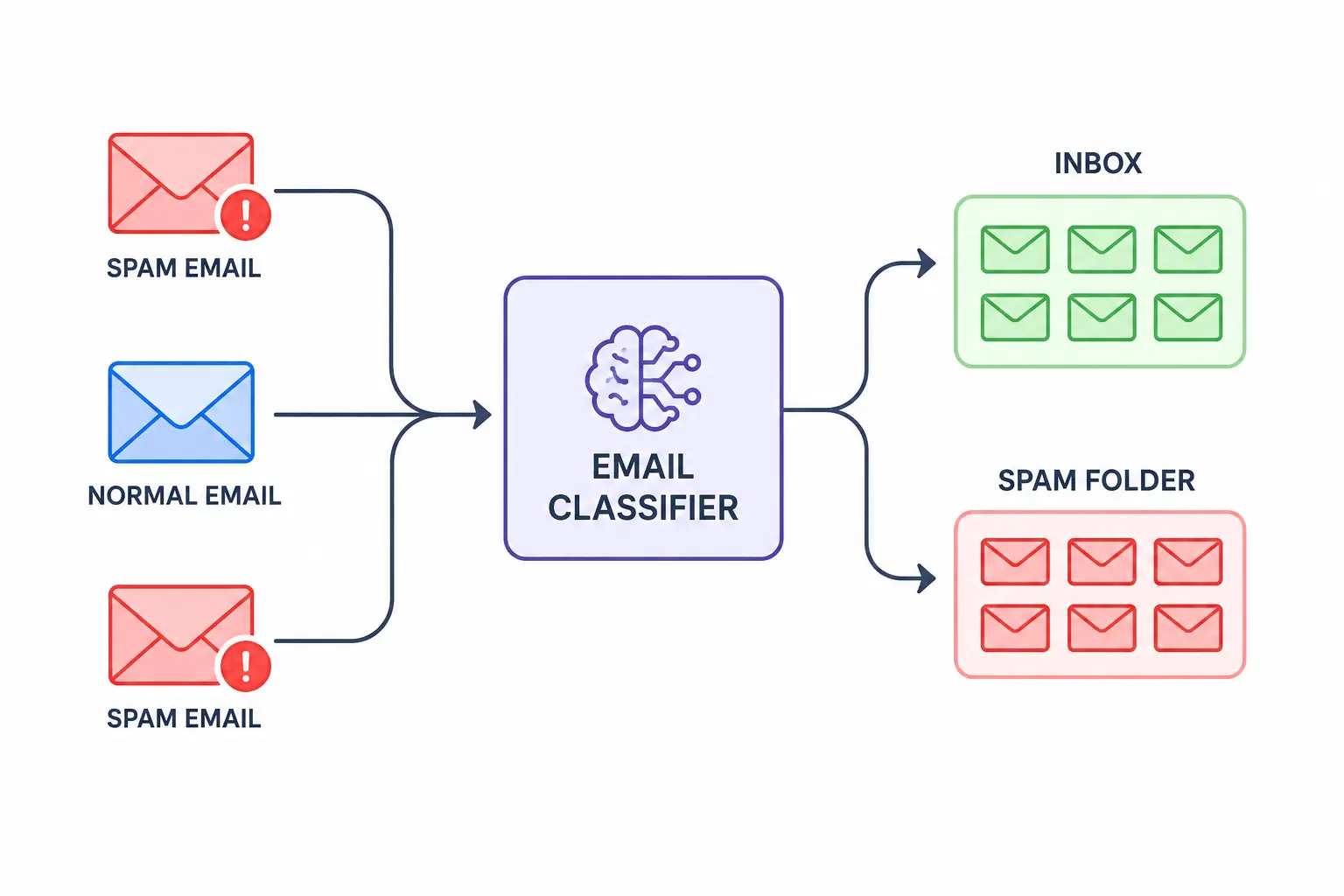
1. Spam Email Classifier
Tech Stack: Python, Scikit-learn, NLTK, Pandas, Streamlit
Problem
Spam emails not only occupy your time but may also be dangerous and contain links to phishing sites. A tool that could automatically classify suspicious emails would help businesses and individuals.
Approach
- Get a public email data set (e.g., SpamAssassin).
- Clean and preprocess the text.
- Filter out stop words and tokenize sentences.
- Vectorize text with TF-IDF.
- Train classification algorithms such as Naive Bayes, Logistic Regression, and SVM.
- Evaluate models and choose the most accurate one to deploy in Streamlit.
Result
A web app where you can copy any email and find out whether it is a spam or not.
What Skills Will You Learn
- Natural Language Processing (NLP)
- Text Preprocessing
- Machine Learning
- Model Evaluation
- Streamlit Deployment
Additional Features
- Identify suspicious words
- Show the probability of being spam
- Load emails for predictions
Dataset
2. AI Resume Analyzer (Beginner)
Tech Stack: Python, Streamlit, OpenAI API/Gemini API, PDF Parser
Problem
Many resumes are automatically rejected by Applicant Tracking Systems (ATS) due to the absence of key words or poor formatting. With an AI-based analyzer, candidates can optimize their resumes prior to sending it for application.
Approach
- Let users upload a resume as a PDF file.
- Extract the text of the document.
- Match it with a job description.
- With the help of an LLM, detect missing skills and key words.
- Get personalized recommendations and ATS score.
Outcome
AI-based solution that analyzes resumes and gives recommendations on how to increase the chances of getting an interview.
Skills to Acquire
- LLM APIs
- Prompt Engineering
- Processing PDF
- Resume Parsing
- Streamlit
Additional Features
- Score of a resume out of 100 points
- Download optimized resume
- Skill gap analysis
Challenge Yourself: Deploy the project you have done to the web via Vercel, Render, or Streamlit Cloud.
3. Smart Quiz Generator
Technology Stack: Python, OpenAI API, Streamlit, OCR
Problem
Students take hours making their own questions for practice either from books or notes. Using an AI quiz generator, you can get quizzes automatically generated from your study material.
Approach
- Upload notes/PDF.
- Text Extraction.
- Generating quizzes with the help of LLM.
- Difficulty Level Selection by User.
- Showing scores for each quiz.
Outcome
An AI-powered study assistant that generates customized quizzes for revision purposes.
Skills You'll Learn
- Prompt Engineering
- OCR
- Generative AI
- Python
- API
Bonus Features
- Timed Mode
- Difficulty Level Selection
- Save Quiz as PDF
4. Expense Tracker
Tech Stack: React, Node.js, Express, MongoDB
Problem Statement
Students and professionals often find it difficult to keep track of their monthly expenses. This app will allow users to track their expenditures and create budgets.
Approach
- Input Income and Expenses
- Save Data in Database
- Categorize the transactions
- Create Monthly reports with graphs.
- Alert Users if their budget exceeds preset limits.
Outcome
A web app for analyzing and managing finances.
Skills You Will Learn
- MERN stack
- CRUD operations
- Authentication
- Database
- Data Visualization
Extra Credit
- Dark Mode
- Report Exporting
- Monthly Alerts
5. Library Management System
Tech Stack: Java, Spring Boot, MySQL
Problem
Managing books manually becomes difficult as libraries grow. A digital system makes borrowing and tracking books much easier.
Approach
- Create book and student records.
- Manage book borrowing and returns.
- Calculate overdue fines.
- Search books using filters.
- Build an admin dashboard.
Outcome
A complete library management application for schools and colleges.
Skills You'll Learn
- Java
- Spring Boot
- SQL
- Backend Development
- Database Design
Bonus Features
- QR code-based book search
- Email reminders
- Fine calculator
Portfolio Tip: Recruiters love projects that solve everyday problems. Focus on usability, not just complexity.
Intermediate Projects
6. Face Attendance System
Tech Stack: Python, OpenCV, Face Recognition Module
Problem
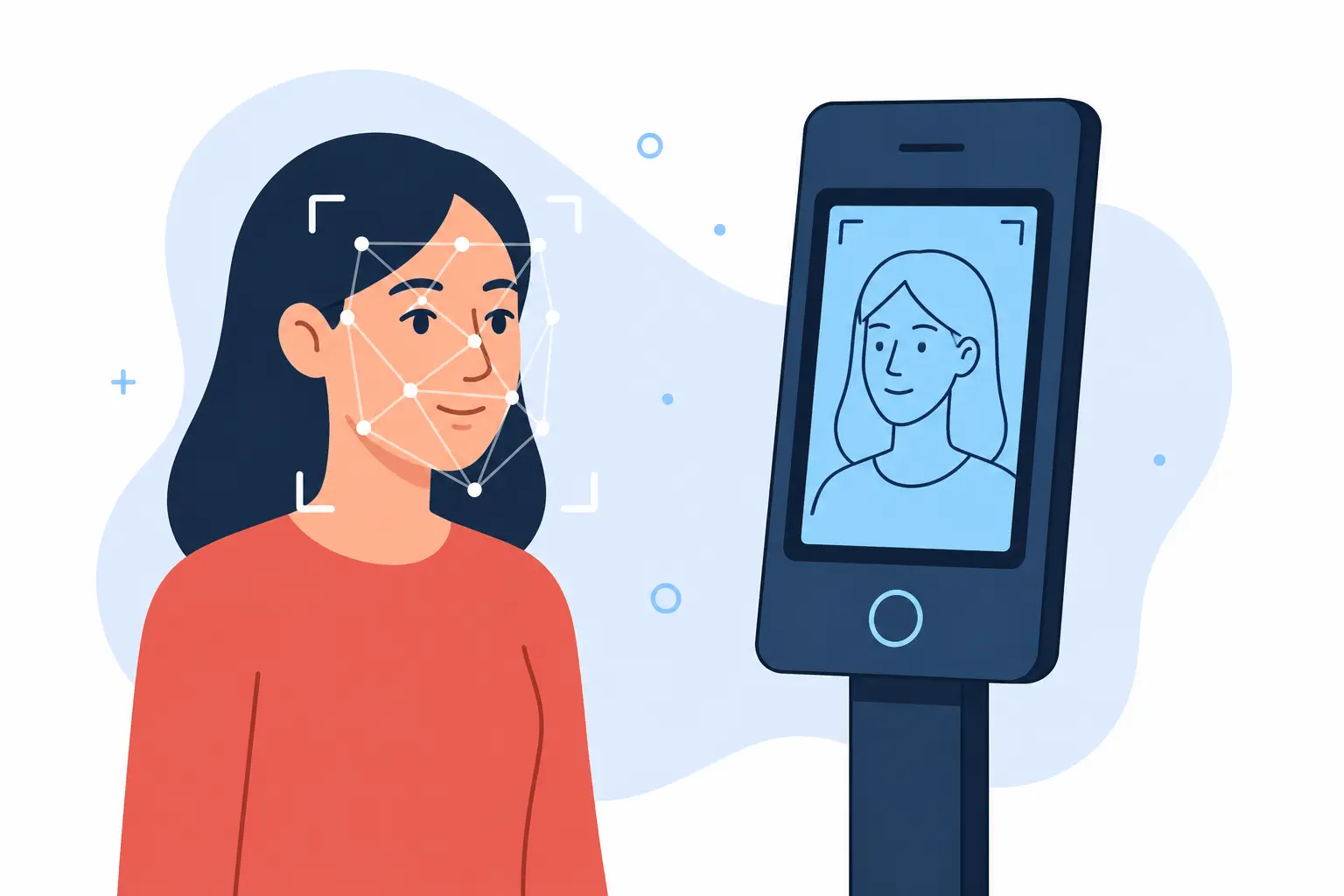
Manual attendance takes a lot of time and can have mistakes. Face recognition makes attendance automatic using face recognition.
Approach
- Capture images of the face.
- Build a face recognition model.
- Detect faces using OpenCV.
- Match faces with registered users.
- Update the attendance record automatically.
Output
An attendance management system to record attendance automatically.
Skills You Will Learn
- Computer Vision
- Image Processing
- Face Recognition
- Python
- OpenCV
Additional Features
- Webcam attendance
- Attendance report
- Alerts for unknown face
7. Movie Recommendation System
Tech Stack: Python, Pandas, Scikit-learn, Flask
Problem
Streaming platforms recommend movies based on user interests. Recommendation systems improve user engagement and viewing experience.
Approach
- Use the MovieLens dataset.
- Clean and preprocess movie information.
- Build recommendation models using collaborative or content-based filtering.
- Display similar movie suggestions.
- Deploy the application.
Outcome
A recommendation engine that suggests movies according to user preferences.
Skills You'll Learn
- Recommendation Systems
- Machine Learning
- Data Processing
- Python
- Flask
Bonus Features
- IMDb ratings
- Genre filters
- Personalized recommendations
8. College Chatbot for AI
Technical Stack: Python, LangChain, Vector Database, Gemini/OpenAI API
Challenge
Questions on admissions, fees, placements, and schedule from students. AI chatbot will provide the answers immediately.
Approach
- Gather college documents.
- Embed them.
- Store them in a vector database.
- Build a Retrieval-Augmented Generation (RAG) chatbot.
- Deploy it with a simple interface.
Result
Chatbot that answers questions from students using official college information.
Technical Skills You Will Gain
- RAG
- LangChain
- Vector Databases
- LLM APIs
- AI Engineering
Additional Features
- Voice command
- Multilingual support
- Conversation history
9. Social Media Sentiment Analyzer
Technologies Involved: Python, Tweepy, NLP, Streamlit
Problem Statement
Brands need to know what their customers think about their offerings. Sentiment analysis aids in classifying opinions as either positive, negative or neutral.
Solution Approach
- Extract content from social media sites.
- Pre-process the extracted data.
- Train the machine learning model for sentiment classification.
- Visualize the output via graphs.
- Create the dashboard.
Result
The development of an online app that does real-time sentiment analysis of customer feedback.
Skills Acquired
- Natural Language Processing
- Sentiment Analysis
- Data Visualization
- APIs
- Machine Learning
Other Features
- Popular hashtags
- Word cloud
- Emotion detection
10. Fake News Detector
Technical Requirements: Python, Scikit-learn, NLTK, Flask
Problem
Fake news spreads rapidly through social media. A machine learning model will help to detect fake news before it goes viral.
Approach
- Work with a public data set for fake news.
- Clean the text data.
- Obtain features by applying TF-IDF.
- Train different classification models.
- Test and choose the best performing model.
Result
Application predicting the probability of being a genuine or fake news article.
Skills Acquired
- Text Classification
- Natural Language Processing
- Machine Learning
- Flask
- Model Evaluation
Extra Features
- Integration with fact-check API
- Browser extension
- News credibility score
Advanced Projects
11. AI Interview Simulator
Technology Stack: Python, React, APIs from LLMs, Speech to Text, Text to Speech
Technical Interviews may be difficult, but even more so if you do not have anyone to practice with. The idea of an AI Interview Simulator is to mimic an interviewer who will ask coding, system design, or behavioral questions and give an assessment of your answers in real-time. This helps students figure out their strong and weak points before going to an interview.
Create an application that will allow users to choose a certain role - a Software Engineer, an AI Engineer, or a Data Scientist. The AI must ask the relevant questions, listen to the answers either orally or typed, and provide instant feedback on your performance in terms of technical knowledge, communication skills, and confidence.
Skills You Will Gain: Generative AI, Prompt Engineering, AI Engineering, Speech Processing, React
12. Building a Chat System Like ChatGPT
Tech Stack: LangChain, Vector DB, React, Node.js, OpenAI/Gemini API
Large Language Models are changing the way people search and interact with software systems. Rather than developing a simple chatbot, develop an AI chatbot that can comprehend and respond to queries based on custom documents using Retrieval-Augmented Generation (RAG).
The user must upload the PDFs, notes, or company documents and raise questions in natural language. Your application first fetches the information from these documents and then generates the response. For making your project better, implement conversation history, multi-document support, authentication, and source citations.
This project illustrates how AI assistants of today's modern enterprises are developed and helps you gain practical knowledge of one of the most sought-after AI architectures in recent years.
Skills You Will Learn: RAG, LangChain, LLMOps, Vector Databases, AI Engineering
13. Hate Speech & Toxi Comment Detection
Tech Stack: Python, Hugging Face Transformers, FastAPI, React
Millions of comments are posted on social media platforms every day. This makes manual moderation extremely hard. Implement an AI application that will automatically detect offensive, abusive, or hate speech before it is published.
Use available datasets to train your model and classify the comments as safe, offensive, hate speech, and other categories. Develop a dashboard for moderators to view and act upon the flagged posts. You can also develop multi-language support, confidence score, and explainable AI.
This is a great way to use the power of Artificial Intelligence to create a safer internet community and solve a real-world problem at the same time.
Skills You Will Learn: NLP, Deep Learning, Text Classification, AI Moderation, API Development
Industry Tip: Projects that have practical application value always make a bigger impact than mere CRUD projects.
14. AI Recommendation System
Tech Stack: Python, TensorFlow, SQL, Flask
Companies such as Netflix, Amazon, Spotify, and YouTube use recommendation systems to tailor user experiences. In this project, you will create an AI system that generates product, movie, course, or article suggestions to users.
Collect user interactions and history information first. Then train the recommendation system either through collaborative filtering or content-based filtering. Personalize the recommendations and show additional similar suggestions. In the advanced version of this project, you can implement hybrid recommendations using several algorithms.
Properly developed recommendation system shows your knowledge of machine learning, data processing, and personalization.
Skills You'll Learn: Recommendation Systems, Machine Learning, Data Analytics, SQL, Model Evaluation
15. AI Language Translator
Tech Stack: Python, Transformers, Hugging Face, LLM APIs
Language translator is a feature used in many contemporary systems. Create an AI translator that will be able to convert text into different languages retaining its context and meaning.
Using language models that have transformers, it will be possible to understand the structure of sentences and their purpose. Let the users choose the source and destination languages, allow them to input files and translate whole paragraphs. The voice translation, pronouncing capabilities, and text summarization may be considered as additional features for the system.
In this project, students will learn about natural language processing and AI usage in global communication.
Skills You Will Acquire: NLP, Transformers, Generative AI, AI Engineering, API Integration
16. Distributed Rate Limiter Service
Tech Stack: Spring Boot, Redis, Docker, Kubernetes
Popular services process thousands of requests per second. Incorrect management of these requests causes server overloading or server failure. Implement a distributed rate limiter which will restrict the number of requests the user is permitted to make within a specific time frame.
Leverage Redis to store the count of requests and deploy multiple instances of the service on Docker and Kubernetes. Ensure that the rate limiter behaves consistently across all nodes of the distributed system. Create an administrative panel which will show the statistics of requests and blocked users.
The project will introduce you to the standard components of the architecture of large-scale services and prove your skills in the development of backend and cloud computing.
Skills You Will Acquire: System Design, Distributed Systems, Redis, Kubernetes, Cloud Computing
17. Scalable Job Matching Platform
Tech Stack: React, Spring Boot, PostgreSQL, Docker
Create a job listing website like LinkedIn Jobs wherein recruiters can publish listings and candidates can apply for positions depending on their skill sets and preferences. Rather than creating a simple job board, aim for scalability and smart recommendation features.
Let users create professional profiles, upload CVs, find relevant jobs, and provide them AI-based recommendations. The recruiters must be able to shortlist candidates according to skills, experience, and qualifications. You can even add notification, resume parser, and interview scheduling features.
This project showcases full-stack development along with high-level system design capabilities by addressing a practical recruitment issue.
Skills You Will Learn: Full-Stack Development, High-Level Design, Database Design, Authentication, Docker
18. Secure File Storage Platform
Tech Stack: Spring Boot, SQL, Linux, AWS S3
Cloud storage has become an integral component of today’s software products. Develop a secure file storage system that enables the users to upload, manage and share files from everywhere.
Develop authentication, access control and encryption for files uploads. Organize the files into folders, create secure links to share them and keep the versions of the uploaded files. As an optional task, incorporate cloud storage services like AWS S3 and optimize file retrieving for big data.
This project will provide useful practice in backend development, cloud storage and application security.
Skills You Will Gain: Backend Development, Cloud Storage, Authentication, Linux, Database Management
19. Industry-Supported AI Project
Stack of Technologies: Python, React, SQL, Machine Learning, Cloud Services
The best way to get ready for your future job is to solve some business problem. Instead of creating another demo project, select one of the industry use cases, e.g., automated customer support, demand forecasting, fraud detection, document summarization.
Start with learning about the business requirements, collecting all the necessary datasets, and developing a comprehensive solution. Develop a functional prototype, evaluate its performance, and present it properly documented and deployed. The main task here is not to create a bunch of algorithms but to solve the problem.
Such projects show how you can think like an engineer and develop production-ready software.
Skills You'll Acquire: AI Engineering, Problem Solving, Product Development, Cloud Deployments, Data Science
Looking for a college where project-based learning starts from day 1?
Discover why students choose the Best Private College for Computer Science in India.
20. Build Your Startup MVP
Tech Stack: It depends on what you will create (React, Spring Boot, Flutter, Python, AI APIs)
Are you tired of your own startup idea? Now is the time to implement it. Create an MVP that will solve real user problems and not overload it with every possible feature.
Focus on one key feature of the product, take feedback from users, and develop the product further with different iterations. From creating an AI study assistant and application for healthcare to other things you may come up with everything is possible here. Integrate user authentication, analytics, payment processing, and cloud deployment as the product evolves.
The project involves both software development and entrepreneurship and offers valuable experience in product development.
Skills You'll Learn: Product Development, Full-Stack Development, AI Integration, Cloud Deployment, Entrepreneurship
How To Make Your Project Unique
No matter which project you develop:
- Host your complete source code on GitHub.
- Provide detailed instructions to set up a project in your README file.
- Provide a live demo if it is possible.
- Include any screenshots or a quick demo video.
- Share the challenges you encountered while building the project and how you managed to overcome them.
All these little things will add a lot of value to your portfolio when you apply for an internship or placements.
Learn by Building at Bosscoder School of Technology
Great engineers not only understand the theory but also build actual software products.
In Bosscoder School of Technology (BST), students learn through projects from day 1. Each phase of BST curriculum is designed keeping in mind the industry requirement and has projects at every phase from web application, AI foundations to scalable software, cloud computing, Generative AI and startup innovation.
The 4 year B.Tech degree also includes 1:1 mentorship from experienced engineers, hackathons, industry-sponsored projects, and a final-year paid industry experience to help students graduate with practical skills not just theoretical knowledge.
Conclusion
The best project is not always the most difficult, it is the one that you can finish, enhance, and be able to defend and explain with confidence. Begin with something easy, progress to increasingly complicated systems, and continue to add more and more features as you get better at it.
Having an impressive project portfolio could help you secure internships, participate in hackathons, go into further education, or even land yourself a job in software engineering.
Frequently Asked Questions (FAQs)
Q1. What are the good project ideas for Computer Science & AI students?
The best projects are those that address problems in real life and at the same time allow you to learn useful industry-related skills. Novice programmers can try themselves in such simple projects as Spam Email Classifier & Expense Tracker. More experienced programmers can go on to work on more complex projects, for instance, AI Interview Simulator, Recommendation System, and Distributed Rate Limiter. It would be beneficial to add both beginner and advanced projects to your resume.
Q2. How many projects should one have in their resume?
Quality matters more than quantity. Having 3–5 well-documented projects with clean code, GitHub repositories, live demos, and detailed README files is usually enough to impress recruiters. Try to include projects of different difficulty levels, such as web development, AI/ML, backend systems, or cloud computing, to demonstrate a broad range of skills.
Q3. Will these projects be helpful for my internships or placements?
Absolutely! Recruiters always take into account your practical experience apart from academic performance. Working on projects, publishing them on GitHub, creating live demos, and discussing the design choices made during the interviews can boost your chances of landing internship and placement offers. Projects which solve real-world problems tend to have more impact than just simple assignments.
Q4. How does Bosscoder School of Technology help students build industry-ready projects?
Bosscoder School of Technology (BST) follows a project-first learning approach, students start developing practical applications from day 1 of their B.Tech course. Over time, they develop increasingly complex software, AI applications, cloud-based applications, and industry projects under expert guidance.