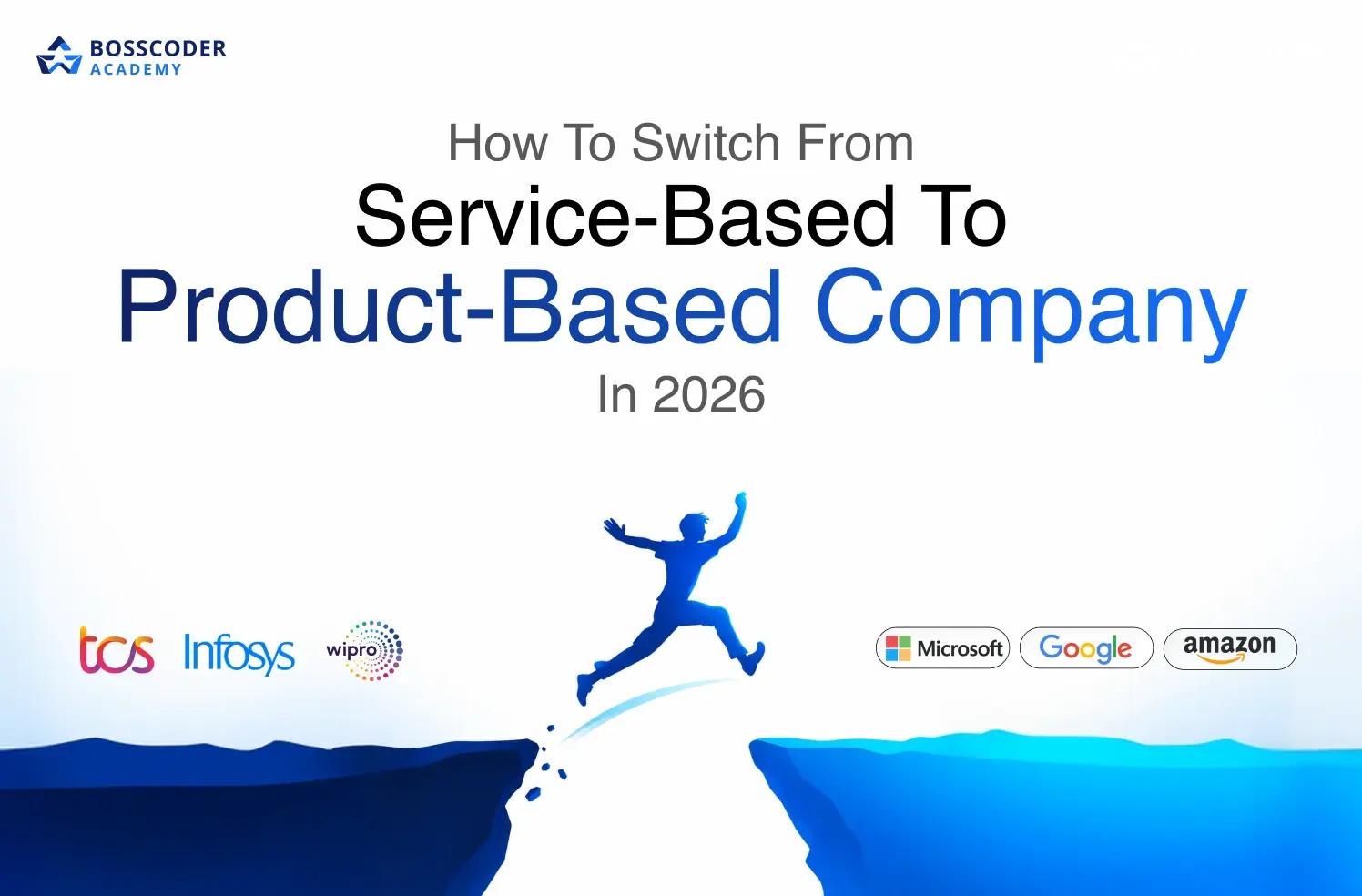
Transitioning from a service-based company to a product-based company is one of the most common career transition plans that techies have for themselves in order to get bigger projects to work on, to develop more technical skills, or simply to work at a product-based company.
However, it’s not only for Software Engineers. Professionals working in Software Development, Backend, Data Engineering, Data Analytics, AI/ML, GenAI, Cloud, DevOps, and other IT positions can also transition to product-based company by acquiring the necessary skills and targeting a specific position.
And the best part is that you won’t need to start from scratch. The experience that you already have will help you if you know how to improve it.
What is a Service-Based Company?
A service-based company focuses more on working on projects and technology solutions for outside clients. People can work across different clients, projects, technologies, and business needs.
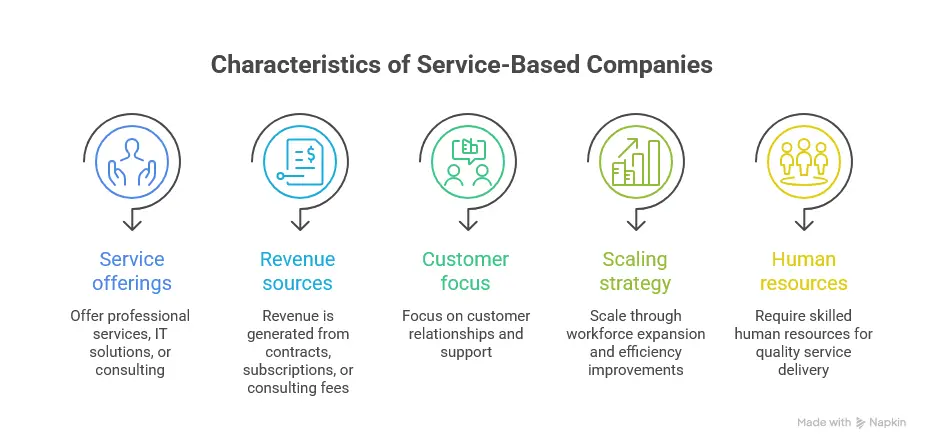
Based on the requirement of the project, people might work in the area of development, testing, support, maintenance, cloud, data, analytics or other types of technology.
What is a Product-Based Company?
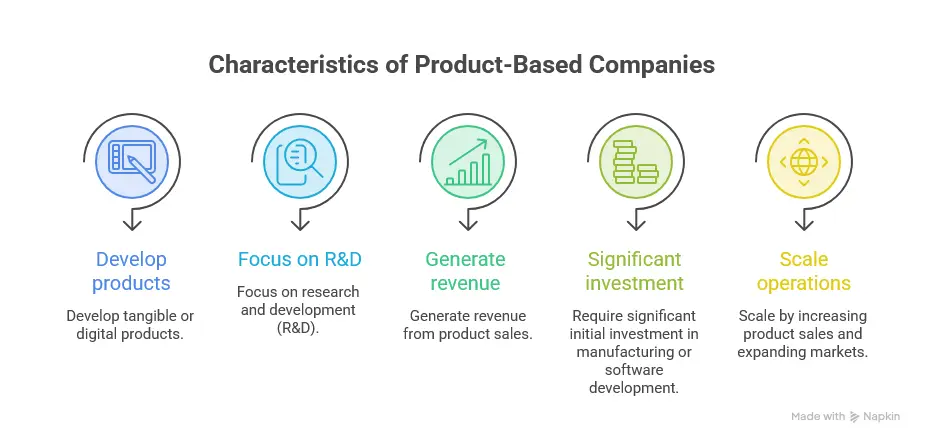
In a product-based company, people develop and maintain their own products or platform for their customers or organizations.
People working in the technology field might be working in the area of product development, backend, data platform, analytics, AI/ML, cloud, DevOps or other engineering domains.
The process of interview and expectations may vary widely from company to company and role to role.
Why Do Professionals Want to Switch?
There is no specific reason why a professional decides to change a service-based company for a product-based company.
These include:
- Working on highly technical projects
- Gaining more insight into a certain technology
- Joining in a more specialized position
- Collaborating closer with product and engineering departments
- Investigating new career opportunities
- Taking on greater ownership of technical problems
But changing jobs must always depend on your personal career goals and not on just switching from one type of company to another.
Switching from Service-Based to Product-Based Company
The first step is to stop preparing randomly. You need to start with choosing your target position. For instance:
| Target Role | Preparation Areas |
|---|---|
| Software/Backend Engineer | Coding, CS fundamentals, APIs, system design |
| Data Engineer | SQL, Python, data processing, pipelines, cloud |
| Data Analyst | SQL, analysis, statistics, dashboards |
| AI/ML Engineer | Python, ML fundamentals, model development |
| GenAI Engineer | LLMs, RAG, APIs, vector database, application development |
| Cloud/DevOps | Cloud, Linux, networking, CI/CD, infrastructure |
Having clearly defined your target, you need to analyze whether you have the required skill set to get jobs you are interested in.
How Difficult Is It to Make the Switch?
It all depends on your experience, current skill set, target role and preparation.
A frequent problem is that professionals attempt to prepare themselves for everything simultaneously. A structured preparation approach can help professionals stay focused on the skills that matter for their target role.
Instead, you should make a targeted preparation plan for your target role.
Interview Process at Product-Based Companies
The process varies from one company to another, but here is what you might face:
- Resume screening
- Online test or technical screening
- Technical interview
- Role-specific or system/design interview
- Behavioral/managers interview
- HR and offer discussion
Roles such as Data, AI/ML, cloud, and other specializations can have an additional role-specific evaluation stage.
If you're preparing specifically for product-based company interviews, understanding the common interview expectations can help you plan your preparation more effectively.
Resume Preparation
Your resume should reflect what you have accomplished, built, improved, or owned as opposed to just what you did.
Not:
Worked on backend development.
But rather something like:
Built and optimized backend APIs for X users, with a decrease in response time by Y%.
Where possible, include:
- Impact
- Scale
- Technologies
- Improvement in performance
- Automation
- Results to business
- Ownership
Remember to also update your LinkedIn profile and make sure your skills match the positions you are applying for. You can also learn more about building a resume for product-based roles before starting your applications.
How to Prepare for Product-Based Companies?
1. Strengthen Your Fundamentals
Improve your fundamentals according to your role.
If your role is engineering, it includes programming, problem solving, databases, APIs and system design. If you want a data-related role then SQL, Python, data processing, and analytics will be helpful for you. For professionals specifically considering Data Engineering, understanding the skills and career transition path can help you plan your preparation.
In case of an ML/AI role, focus on machine learning and practical AI. Professionals considering this transition can also explore how structured learning and mentorship can support an AI/ML career transition.
For software engineering roles, DSA and problem-solving are also important areas to practise consistently.
2. Work on Real Projects
It helps prove that you know how to apply your knowledge practically.
Create projects according to the role rather than collecting certificates without doing anything practically. Real projects can also give you better examples to discuss during technical interviews.
3. Prepare for Role-Specific Interviews
Understand the interview pattern of the company you are going to target and practice the questions according to your experience level.
Mock interviews will help to find out your areas of improvement before the actual interview.
4. Build Your Professional Network
Referrals can help you to get noticed by the hiring team but your skillset and preparation for the interview are still important.
Create connections with professionals of your target company, join their communities and keep your LinkedIn updated.
Things to Consider Before Switching
When you’re planning to change jobs, you need to think about:
- Target role
- Skills required
- Experience you have
- Notice period
- Location or remote
- Expected compensation
- Growth opportunities
- Responsibilities of the role
- Culture of the company and team
Don’t make the decision solely based on the company being called “product-based”. Understand what the role and responsibilities really are.
Common Challenges While Switching
There are some professionals who face challenges including:
- Lack of preparation for the interview
- Weak fundamentals
- Insufficient number of relevant projects
- Resume that doesn’t speak of your impact
- Finding difficulty in getting shortlisted
- Learning too many technologies at once
- Balancing preparation with a 9-5 job
Learning everything will not be the solution. The solution would be to determine what is missing from your profile and target job description.
Additional Tips to Get Shortlisted
- Apply consistently instead of waiting for the best opportunity.
- Tailor your resume according to your job role.
- Consider using referrals if possible.
- Update your LinkedIn profile regularly.
- Learn how to talk about your ongoing projects.
- Follow up after sending applications and interviews.
- Apply even as you prepare for your transition.
How Long Does It Take to Switch?
There is no fixed timeline.
The time you will require for preparation depends on your foundational knowledge and experience in the field.
A realistic approach would be to invest 3–6 months in preparation, even as you continue to apply for jobs.
How Bosscoder Academy Can Help
Bosscoder Academy is an upskilling platform which focuses on helping tech professionals build stronger engineering fundamentals and prepare for career transitions.
Its learning approach includes structured curriculum, 1:1 mentorship, live classes, projects, assignments, and career support in the form of resume writing, LinkedIn profile tuning, referrals, and mock interviews.
Also, the curriculum at Bosscoder Academy include such topics as problem solving, system design, full-stack development and Applied GenAI, helping professionals build skills that can be relevant across modern engineering roles.
Roadmap for Switching to a Product-Based Company
Month 1: Define the target position and determine the gaps in your skills.
Month 2: Strengthen your fundamentals and start preparing for interviews.
Month 3: Build or rework on role-specific projects.
Month 4: Start applying and practice mock interviews.
Month 5: Prepare for company-specific interviews.
Month 6: Keep applying, improve and target companies better matching your needs.
Conclusion
Transitioning from service-oriented to product-oriented company will not require you to begin at ground zero since your professional experience can be useful when supplemented with the right technical experience, project work, resume preparation, and interviews.
Start with one targeted position and determine where you need improvement to prepare properly for that specific position. Regardless of whether you are going after Software Engineering, Data Engineering, Data Analytics, AI/ML, GenAI, Cloud, DevOps, or any other tech position, consistency is key.
Frequently Asked Questions (FAQs)
Q1. Can I switch from a service-based to a product-based company?
Yes. Working professionals can do that through understanding the requisites of their desired position and preparing themselves accordingly.
Q2. How long does it take to switch to a product-based company?
There is no hard and fast rule here. For many working professionals, 3-6 months of targeted preparation can be the beginning point for switching to product-based companies.
Q3. Can I switch from a non-SDE role?
Yes. Many product-based companies recruit people in roles related to Data, Analytics, AI & ML, Cloud, DevOps and many other technological roles.
Q4. How Bosscoder Academy help me prepare for a product-based company?
Yes. Bosscoder Academy offer you structured preparation through online learning, 1:1 mentorship, live classes, projects, career assistance such as resume preparation, LinkedIn optimization, referral, and mock interviews.