Artificial Intelligence is changing how software is built, tested, and deployed. From recommendation systems and fraud detection to AI assistants and autonomous agents, organizations across industries are investing heavily in Machine Learning (ML) and Generative AI (GenAI). As a result, professionals who can build, deploy, and maintain AI-powered systems are becoming increasingly valuable.
However, many learners face a common challenge. Traditional Machine Learning courses often focus heavily on theory, while many Generative AI courses only cover prompt engineering or basic chatbot development. In practice, companies need engineers who understand both Machine Learning fundamentals and modern AI technologies such as Large Language Models (LLMs), Retrieval-Augmented Generation (RAG), AI agents, and production deployment.
The Bosscoder Academy GenAI & ML Engineer Program is designed to bridge this gap. It combines Machine Learning, Deep Learning, Generative AI, Agentic AI, and MLOps into one structured learning path that prepares learners to build production-ready AI applications. The curriculum focuses on practical implementation through live learning, hands-on projects, mentorship, and career support, helping professionals develop skills aligned with today's AI industry.
Why AI & Machine Learning Skills Matter Today
Artificial Intelligence is no longer limited to research labs. Today, businesses across healthcare, finance, e-commerce, cybersecurity, education, and enterprise software are integrating AI into their products and services.
Modern organizations are looking for professionals who can:
→ Build Machine Learning models that solve business problems.
→ Develop AI applications powered by Large Language Models.
→ Create intelligent RAG systems using enterprise knowledge.
→ Deploy scalable AI applications in production.
→ Monitor and improve AI systems using MLOps practices.
The demand extends beyond software companies. AI engineers are now contributing to automation, analytics, customer support, recommendation systems, fraud detection, search engines, and intelligent assistants across industries.
To prepare professionals for this shift, Bosscoder Academy has created a program that combines strong Machine Learning foundations with modern Generative AI engineering and production deployment skills.
What is the Bosscoder Academy GenAI & ML Engineer Program?
The Bosscoder Academy GenAI & ML Engineer Program is a 9-month live learning program divided into 8 structured phases. It is designed for professionals who want to build practical AI skills rather than only learning concepts.
Instead of teaching Machine Learning and Generative AI separately, the curriculum combines both into a single learning journey. Learners begin with programming, mathematics, and Machine Learning fundamentals before progressing to Deep Learning, LLM engineering, Agentic AI, MLOps, and AI system design.
Throughout the program, learners work on portfolio-ready projects that simulate real industry use cases, helping them gain practical experience with production-grade AI systems.
Who Should Join This Program?
This program is specially designed for:
- Software Engineers looking to transition into AI and Machine Learning.
- Backend and Full Stack Developers interested in building AI-powered products.
- Data Professionals who want to expand into modern AI engineering.
- Working professionals planning a career switch into AI.
- Developers interested in Large Language Models and Agentic AI.
According to the program, prior Machine Learning experience is not mandatory. The curriculum starts with the fundamentals before gradually introducing advanced AI concepts. Basic Python knowledge is recommended.
Program Structure at a Glance
The learning journey is divided into eight modules, each building on the previous one.
→ Duration: 9 Months
→ Learning Format: Live Learning
→ Program Phases: 8
→ Hands-on Projects: 15+ Portfolio Projects
→ Focus: Python Programming, Mathematics & Statistics, Machine Learning, Deep Learning, Generative AI, Agentic AI, MLOps, Production AI, System Design, and Career Preparation.
Module 1: Python for Data & AI
Every AI engineer requires a strong programming foundation. The program begins with advanced Python programming and teaches learners how to work with data effectively before moving into Machine Learning.
Key learning areas include:
- Advanced Python programming
- NumPy
- Pandas
- Exploratory Data Analysis (EDA)
- Data visualization using Matplotlib and Seaborn
- Data cleaning and preprocessing pipelines
By the end of this module, learners develop the programming skills required for modern AI and Machine Learning workflows.
Module 2: Mathematics & Statistics for Machine Learning
Machine Learning algorithms rely on mathematical concepts. Rather than treating mathematics as a standalone topic, the curriculum connects statistical concepts with real Machine Learning applications.
Topics include:
- Probability
- Bayes' Theorem
- Statistical Distributions
- Central Limit Theorem
- Hypothesis Testing
- A/B Testing
- Exploratory Data Analysis
These concepts help learners understand how Machine Learning models work, evaluate predictions, and interpret data with confidence.
Module 3: Machine Learning
Once the programming and mathematical foundations are established, learners move into Machine Learning.
The curriculum covers:
- Supervised Learning
- Tree-Based Models
- Support Vector Machines (SVM)
- Naive Bayes
- Clustering Algorithms
- Dimensionality Reduction
- Model Evaluation
- Time Series Analysis
Instead of focusing only on algorithms, the module focuses on selecting suitable models, evaluating performance, and applying Machine Learning techniques to practical business problems.
Module 4: Deep Learning & Transformers
Deep Learning plays a central role in modern AI applications, from computer vision to language models.
This module introduces learners to neural networks and modern Deep Learning frameworks while covering topics such as:
- Neural Networks
- Back propagation
- Deep Learning Optimization
- TensorFlow
- PyTorch
- CNN Architectures
- Transfer Learning
- Object Detection with YOLOv8
These concepts prepare learners for advanced AI systems and serve as the foundation for later modules focused on Generative AI and LLM engineering.
Module 5: Generative AI Engineering
After building a strong foundation in Machine Learning and Deep Learning, the program moves into one of the fastest-growing areas of Artificial Intelligence—Generative AI.
This module focuses on building applications powered by Large Language Models (LLMs) and teaches learners how modern AI assistants, enterprise chatbots, and intelligent search systems are developed.
Key topics include:
- LLM APIs
- Prompt Engineering
- Retrieval-Augmented Generation (RAG)
- Advanced RAG Techniques
- LLM Fine-Tuning
- Local LLM Deployment
- Embeddings
- Vector Databases
Rather than simply using AI tools, learners gain hands-on experience building AI applications that retrieve information, generate responses, and solve real business problems. The curriculum also introduces production-oriented workflows used in modern AI products.
Module 6: Agentic AI Development
Modern AI applications are moving beyond simple chatbots. Many organizations are now building AI agents that can reason, use tools, access external knowledge, and complete multi-step tasks.
This module introduces learners to Agentic AI development through practical implementation.
Topics covered include:
- Agentic AI Frameworks
- Agentic RAG Systems
- Tool Integration
- Memory Design
- AI Product Architecture
- LLM Evaluation
- AI Safety
- Capstone AI Product Development
By the end of this module, learners understand how intelligent AI agents are designed and evaluated before being deployed into production environments.
Module 7: MLOps & Production Deployment
Building an AI model is only part of the development process. Production systems require deployment, monitoring, scalability, and continuous improvement.
This module focuses on MLOps practices that help learners move AI applications from development to production.
Topics include:
- FastAPI
- API Development
- Containerization
- Docker
- CI/CD
- Experiment Tracking
- Cloud ML Platforms
- LLMOps
- Guardrails
- Monitoring
- Feature Stores
These concepts help learners understand how production AI systems are deployed, maintained, and monitored in enterprise environments.
Module 8: AI System Design & Career Preparation (Optional)
The final module is designed for learners preparing for AI and Machine Learning interviews.
It combines technical interview preparation with system design concepts commonly discussed in product-based companies.
Topics include:
- Data Structures & Algorithms
- Graphs
- Dynamic Programming
- Hashing
- Sliding Window
- Machine Learning System Design
- AI System Architecture
- Interview Preparation
This optional module helps learners strengthen their problem-solving skills while preparing for technical interviews in AI and software engineering roles.
Tools & Technologies You'll Learn
Throughout the program, learners gain practical experience with a wide range of tools commonly used by AI and Machine Learning teams.
Machine Learning & Data
- Python
- NumPy
- Pandas
- LightGBM
- SHAP
- LIME
Deep Learning
- PyTorch
- TensorFlow
- Hugging Face
- OpenCV
- YOLOv8
- NLTK
Generative AI
- OpenAI API
- Anthropic API
- LangChain
- Pinecone
- ChromaDB
- LlamaIndex
Agentic AI
- LangGraph
- CrewAI
- PromptFoo
- DeepEval
- Ollama
- Pydantic
MLOps & LLMOps
- FastAPI
- Docker
- MLflow
- Evidently AI
- Arize
- LangSmith
Cloud & Infrastructure
- AWS SageMaker
- Spark
- Feast
- LiteLLM
- Amazon S3
- NVIDIA NeMo
Learning these tools helps learners understand different stages of the AI development lifecycle, from data preparation and model training to deployment and monitoring.
Industry Projects You'll Build
Practical implementation is an important part of the learning experience. The program includes 15+ portfolio-ready projects that cover Machine Learning, Deep Learning, Generative AI, and production deployment.
Some of the featured projects include:
Fraud Detection System
Build an end-to-end Machine Learning pipeline using XGBoost and LightGBM on imbalanced financial datasets while applying SHAP for model explainability.
Skills Learned
- XGBoost
- LightGBM
- SHAP
- Scikit-learn
BERT Sentiment Classifier
Fine-tune a BERT model on a domain-specific dataset and compare its performance with LSTM-based approaches before deploying it using Hugging Face.
Skills Learned
- BERT
- Hugging Face
- PyTorch
Multimodal Product Search
Develop a search application that combines image and text understanding using CLIP to recommend relevant products.
Skills Learned
- CLIP
- GPT-4 Vision concepts
- LLaVA
Advanced RAG Knowledge Base
Create a production-oriented RAG system using hybrid search, re-ranking techniques, and evaluation frameworks.
Skills Learned
- LangChain
- Pinecone
- RAGAS
Fine-Tuned Support Chatbot
Fine-tune an open-source language model using QLoRA and deploy it locally using Ollama.
Skills Learned
- QLoRA
- Axolotl
- Ollama
Full AI Product Capstone
The capstone project brings together everything learned throughout the program.
Learners build a complete AI application that includes:
- Data Pipeline
- Fine-Tuned Model
- FastAPI
- Docker
- CI/CD
- LangSmith Monitoring
- Evaluation Frameworks
This project demonstrates the ability to design, build, deploy, and monitor production-ready AI applications.
Why These Projects Matter
Instead of working on isolated coding exercises, learners solve practical AI problems that reflect real industry workflows.
These projects help strengthen understanding of:
- Data preprocessing
- Machine Learning model development
- LLM applications
- Retrieval-Augmented Generation
- AI agents
- Model deployment
- Production monitoring
- AI system architecture
By the end of the program, learners build a portfolio that showcases practical experience across the complete AI development lifecycle, making it easier to demonstrate skills during interviews and technical discussions.
Learn from Industry Mentors
Learning AI is not just about understanding concepts, it's also about knowing how those concepts are applied in real-world products. One of the key highlights of the Bosscoder Academy GenAI & ML Engineer Program is its 1:1 mentorship from professionals who have worked on real large-scale AI and software systems.
The instructor panel includes experienced engineers and AI practitioners from leading technology companies who bring practical insights into Machine Learning, Generative AI, system design, and production engineering. According to the program, mentors include:
- Manish Garg – Co-founder of Bosscoder and former Samsung Machine Learning Engineer with expertise in Machine Learning, Android systems, AI engineering, and large-scale product development.
- Syed Mohammad Ali – Senior Data & Applied Scientist at Microsoft, working on large-scale forecasting systems powered by Machine Learning, Statistics, and Generative AI for global infrastructure.
- Anik Dutta – Machine Learning Engineer at RELX, specializing in Machine Learning, Deep Learning, and building AI solutions for real-world business applications.
- Sean Benhur – Machine Learning Engineer at Comcast, building LLM applications, Retrieval-Augmented Generation (RAG) systems, and enterprise AI platforms for production environments.
- Chinmay Jain – Data Scientist II at Microsoft, contributing to scalable data solutions, AI systems, and curriculum development, with expertise in Machine Learning and production AI.
Beyond classroom sessions, learners benefit from practical guidance, structured learning, and 1:1 designed to help them connect theoretical concepts with real engineering challenges.
Placement Support
Technical skills are only one part of building a successful AI career. Preparing for interviews, presenting projects effectively, and approaching job applications strategically are equally important.
The Bosscoder Academy placement support focuses on helping learners prepare for opportunities through a structured support process.
1. Profile Building
Learners receive guidance on strengthening their professional profiles through:
- ATS-friendly resume reviews
- LinkedIn profile optimization
- Curated job opportunities
- Application strategy guidance
2. Referrals
Bosscoder also provides access to its growing professional network through:
- Alumni referrals
- Mentor referrals for high-performing learners
- Real-time hiring opportunity updates
3. Hiring Partnerships
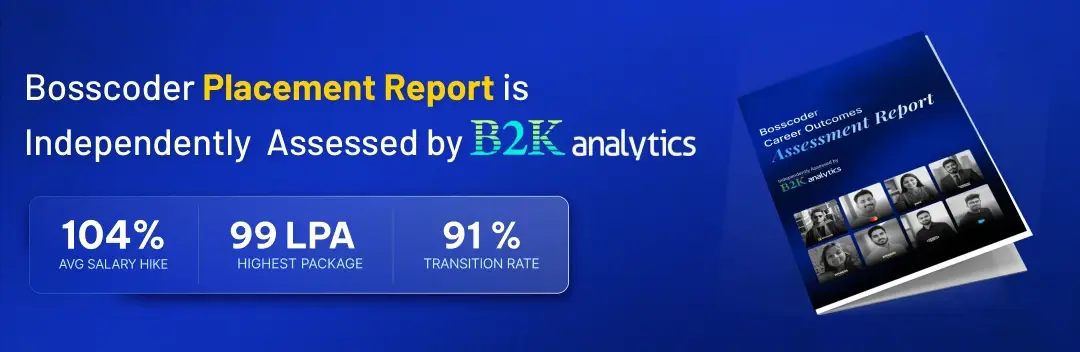
According to the brochure, Bosscoder has 400+ hiring partnerships across technology companies and supports learners throughout their interview journey.
Career Opportunities After Completing Bosscoder GenAI & ML Program
The curriculum is designed to prepare learners for multiple AI-focused roles depending on their background, experience, and interests.
AI / ML Engineer
Build Machine Learning models, develop intelligent applications, and integrate AI capabilities into production software.
Generative AI / LLM Engineer
Design applications powered by Large Language Models using prompt engineering, RAG pipelines, embeddings, and AI agents.
Data Scientist
Analyze data, build predictive models, and apply statistical techniques to solve business problems using Machine Learning.
MLOps / AI Platform Engineer
Deploy, monitor, and manage Machine Learning and AI systems in production while improving scalability and reliability.
These roles reflect the growing demand for professionals who can build AI systems from development through deployment.
Why Professionals Choose Bosscoder Academy
Many AI programs focus on either traditional Machine Learning or Generative AI. The Bosscoder Academy GenAI & ML Engineer Program combines both into a structured learning path that reflects how modern AI products are built.
Some of the program's key highlights include:
- Comprehensive coverage of Machine Learning, Deep Learning, Generative AI, Agentic AI, and MLOps.
- A structured 9-month curriculum divided into 8 progressive learning phases.
- More than 15 portfolio-ready projects covering real-world AI applications.
- Hands-on experience with industry-standard AI frameworks and cloud technologies.
- Live learning supported by experienced mentors from top tech companies.
- Career preparation through interview guidance, profile building, and placement support.
- Practical focus on production-ready AI systems rather than theory alone.
Student Success
Bosscoder has over time played an important role in training professionals on how to get ready for opportunities with product-based companies through structured learning and 1:1 mentorship.
The program highlights several learner experiences, where professionals have successfully joined Amazon, JP Morgan, American Express, SAP Labs, and Zocdoc after developing problem-solving abilities, interviewing skills, and engineering skills through the Bosscoder programs.
Final Thoughts
Artificial Intelligence is still reshaping software engineering and there is huge demand for engineers that are equipped with skills and knowledge of both machine learning concepts and generative artificial intelligence.
Bosscoder Academy GenAI & ML Engineer Program is one such program that brings together the best of both worlds by equipping participants with skills in Python programming, mathematics, machine learning, deep learning, LLM engineering, Agentic AI, MLOps, and AI systems design. The program aims to equip participants with industry-relevant skills that would enable them to secure jobs in AI engineering.
The program is designed for developers exploring large language models, software engineers who want to make a switch into AI engineering or a working professional planning your next career move, the program provides a structured pathway to develop production-ready AI skills.
Frequently Asked Questions (FAQs)
Q1. Who should join the Bosscoder Academy GenAI & ML Engineer Program?
The program is designed for software engineers, developers, data professionals, and working professionals who want to transition into AI, Machine Learning, or Generative AI roles. Basic Python knowledge is recommended, but prior Machine Learning experience is not required.
Q2. How long is the Bosscoder Academy GenAI & ML Engineer Program?
The Bosscoder Academy GenAI & ML Engineer program follows a 9-month learning journey consisting of 8 structured modules covering Machine Learning, Deep Learning, Generative AI, Agentic AI, MLOps, and career preparation.
Q3. What kind of placement support is available?
The program includes resume reviews, LinkedIn optimization, application guidance, referrals through the Bosscoder network, interview preparation, and access to 400+ hiring partnerships with technology companies.
Q4.What career roles can this program prepare me for?
Depending on your background and experience, the curriculum prepares learners for roles such as AI/ML Engineer, Generative AI Engineer, LLM Engineer, Data Scientist, and MLOps/AI Platform Engineer.