What do you get when you stop learning about technology and start creating something using it?
In that case, you start noticing issues in your daily life, explore ideas, and come up with products that could help resolve these problems.
This is precisely what the program "BuildX" is all about. It is an entrepreneurship and product building by Bosscoder School of Technology. In contrast to learning theories about tech alone, this program promotes experimentation with AI software, understanding user problems, and then making something tangible out of your ideas.
There are some interesting projects that school students have come up with through this process. Right from an AI-powered invoicing platform to a learning app for physics, these projects give us a glimpse of how young minds explore technology in different industries.
Here are five such interesting projects submitted via BuildX.
What is BuildX by Bosscoder School of Technology?
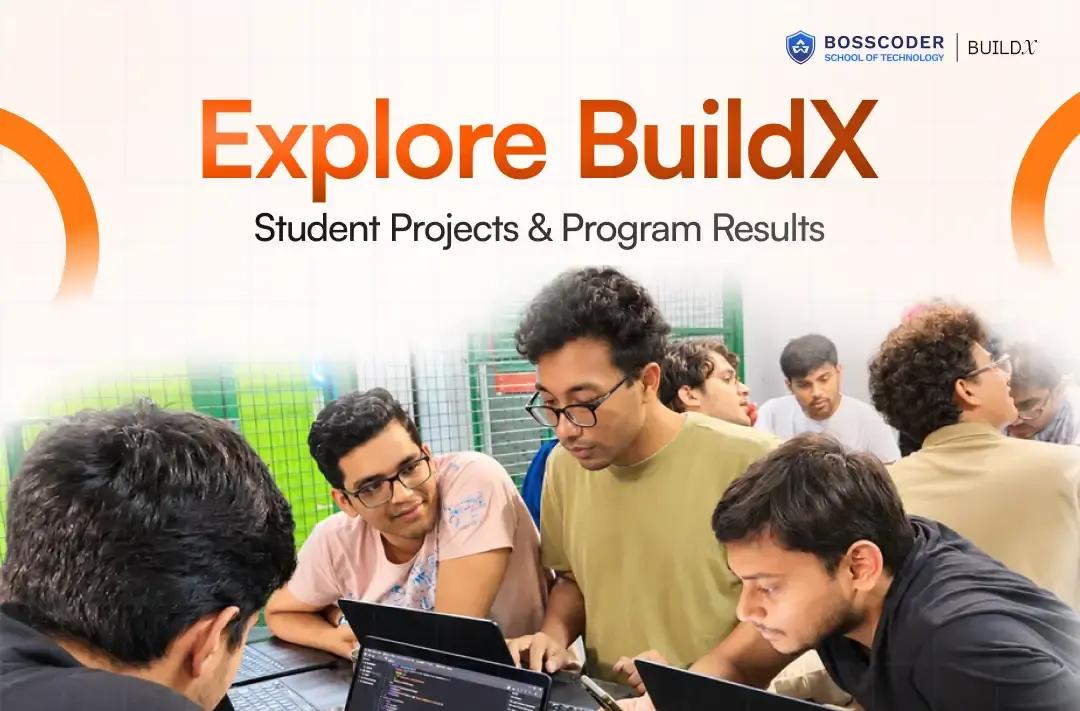
BuildX is an free, online, five-weekend program on entrepreneurship and product building tailored for students in Class 11 and 12.
The program uses artificial intelligence, problem solving, product building, and entrepreneurship in hands-on sessions. The goal of this program is to encourage students to create solutions rather than be mere consumers of technology.
The program uses artificial intelligence, problem solving, product building, and entrepreneurship in hands-on sessions. The goal of this program is to encourage students to create solutions rather than be mere consumers of technology.
The benefits for students include:
- Finding out real-life problems that need solving.
- Exploring AI tools and methods of product building.
- Creating prototypes and minimum viable products (MVPs).
- Understanding user needs and collecting user feedback.
- Making improvements on their products through experiments.
- Presenting ideas and explaining their solutions.
The five-step journey is called Ideate → Build → Validate → Iterate → Pitch.
This helps students learn how products are created, rather than just using technologies.
Results of the BuildX Program: 5 Interesting Student Projects
One of the most fascinating results of BuildX is the wide range of ideas that the students come up with.
The projects cover various issues related to business management, education, data preparation, retail, and civic infrastructure.
The following is a list of five projects that demonstrate the real-life practicality of their concepts.
1. Invoice Engine: Using AI to Simplify Business Operations
Business invoice management, handling billing information and inventory may be time-consuming tasks, especially for retailers.
This idea created by Prahit Bhardwaj explores how AI and automation can make these tasks easier within a retail management system.
The tool's Purchasing Workspace allows one to use OCR and AI-based extraction in order to turn invoice images or PDF documents into structured data. The Invoice Engine can also validate the field data, process several invoices at once and output organized Excel documents.
Other capabilities include:
- Product catalog management.
- Billing and checkout workflows.
- GST calculations.
- Sales and customers' data.
- Business reports.
Why it's interesting: This project shows how the students are capable of identifying time-consuming business processes and coming up with AI and automation solutions for them.
2. Kiln: Helping Students Understand Why They Get Physics Questions Wrong
An incorrect answer does not necessarily imply that the student has not revised enough. At times, the core reason behind such a mistake may be a misunderstanding of the concept.
Kiln, developed by Gurleen Kaur, is a learning diagnosis application aimed at Class 11 and 12 Science students.
Currently, the MVP concentrates on Class 11 Physics, and specifically the Laws of Motion chapter.
Kiln adopts a two-step problem solving method rather than judging if the response is right or wrong:
- Students are first required to identify the concept behind it.
- Then, they have to solve the question or identify that they don't know how to begin.
- The application generates a gap profile based on varied conceptual errors.
- Targeted recovery cards will give the feedback.
- The students can then try solving new questions and taking chapter assessments.
What makes it interesting: Kiln is a new take on educational technology. Instead of only concentrating on scores, it attempts to understand the gaps in conceptual understanding and help the students improve.
3. DataReady: Making Raw Data Easier to Work With
Sometimes, using data is not as easy as it seems. It often requires additional preparation of the collected information.
This is where the data readiness application DataReady created by Rajosree Sarkar comes into play with its easy-to-use solution.
The application lets you:
- Upload CSV files.
- Get a data readiness score
- See problems with your datasets.
- Solve discovered problems using an easy workflow.
- Download the processed data.
It was also nice that the student explained the motivation behind the project. Speaking with three different people, a data engineer, a researcher, and a student revealed the amount of time people waste on preparing the publicly available datasets for using.
What makes it interesting: DataReady shows how students can discover opportunities for creating developer productivity tools using feedback.
4. Munim: A Voice-First Billing Application for Local Stores
Many small shopkeepers find that it is easy for them to adopt a billing process which doesn't involve using complex software programs.
In this direction, Munim, created by Khush Gautam, brings the concept forward in the form of a voice-first billing application for general stores.
Rather than manually inputting each item, a shopkeeper can simply say the name of the items in either Hindi or Hinglish. The app calculates the bill total based on the price list in the shop.
The following are its submitted features:
- Item entry via voice.
- Support for Hindi and Hinglish languages.
- Auto-billing.
- Credit management with an instant bill status update option.
- Information about daily sales.
- Mobile application.
What makes it interesting: Munim is a good example of technology being designed to fit user needs.
5. DrainGRID: Applying AI to Urban Drainage Problems
Another use case of technology is addressing those challenges that can affect the entire community.
Developed by Kushaal B, DrainGRID is an AI-based civic-tech platform aimed at simplifying urban stormwater drainage challenges reporting and verifying process.
MVP shows the workflow where citizens can report urban drainage challenges via uploading images.
The workflow of the proposed solution includes:
- Challenges reporting.
- AI model pre-trained classification of uploaded images.
- Blockages severity estimation.
- Issues tracking.
- Worker verification.
This project is centered around urban drainage challenges, including challenges in flood zones.
Why is it exciting? DrainGRID shows how students can look for other applications of AI apart from educational and business uses and think about the place of technology in solving civic challenges.
Note: DrainGRID is an MVP under development, with further testing and refinement planned.
What Can We Learn about Student Innovation from These BuildX Projects?
By comparing all the projects together, we can learn an important lesson – students are capable of tackling different issues when given a chance to experiment and create.
Every project is a unique approach to using technology.
| Project | Field of application | Use of technology |
|---|---|---|
| Invoice Engine | Business administration | OCR, AI extraction and automation |
| United States (USA) | $150,000-$230,000 | USD |
| Kiln | Educational assessment | Concept diagnosis and learning analytics |
| DataReady | Data preparation | CSV validation and cleaning |
| Munim | Retail billing | Voice-based interaction |
| DrainGRID | Urban infrastructure | AI-assisted image classification |
These projects also demonstrate five important learning experiences.
1. Solving Problem before Developing Product
The student discovers that a good product starts from the ability to understand the problem. It is crucial to recognize who faces this problem and why it is necessary.
2. Using AI to Solve Practical Problems
The application of AI gets much more significance when students try to discover how it might help in practical uses of invoice extraction, image classification, and so on.
3. The Concept of Minimum Viable Products
The concept of MVP enables students to pay attention to the features which are required and not to develop the whole product at once.
Moreover, it provides an opportunity to check one's assumptions and to understand what must be improved.
4. Thinking about Users of the Product
When creating a product for a shopkeeper, student, or business owner, it is necessary to take into account the requirements of such users.
5. Learning Through Experimentation
Not every first version of a product turns out to be the best possible one. Experimentation, getting feedback, figuring out limitations, and improving the product is a natural part of the process.
How BuildX Encourages Students to Become Future Builders
The aim of BuildX is to expose students to the process of product development as opposed to only learning about technology within classroom settings.
With Bosscoder School of Technology, students have a chance to experience the process of going from identifying a problem to developing and pitching the solution.
The process of BuildX involves the following steps:
- Identify: Identify a problem and brainstorm on ways to solve it.
- Develop: Develop the idea to the point of having an initial product.
- Validate: Learn the requirements of users and gather feedback.
- Iterate: Enhance the product through observation and testing.
- Pitch: Pitch the product and demonstrate the problem it solves.
These are some of the practical concepts that students will learn, such as product thinking, AI application, entrepreneurship, communication, and experimenting.
Students also benefit from mentorship and opportunities to be considered for other future opportunities, including paid internships and seed-funding discussions, depending on selection.
Why Students Need to Start Working on Projects before Engineering College
Many students think that one should go to engineering college for programming, product development, or entrepreneurship.
But starting earlier will allow them to learn how technology works in real life.
Developing even a simple app will teach students how to:
- Find problems that are worth solving.
- Research target users.
- Look into available technologies.
- Turn the big picture into smaller features.
- Build and test MVPs.
- Explain what they did to other people.
All of this will also allow them to start building a portfolio of their projects.
The point isn’t about launching a successful startup. The idea is to gain confidence in exploring, experimenting, and learning through creating.
Final Thoughts
The BuildX program results highlight an important idea: students don't need to wait until college to start building meaningful technology projects.
There are five projects created by the students which show us how simple problems may lead to innovation in areas such as business, education, data processing, retailing, and civic construction.
What creates all these projects is the attempt to go beyond the idea and create a prototype.
For those who are into AI and technology in general, this experience may prove to be useful.
BuildX by Bosscoder School of Technology, you have the chance to try this experience out while still being a student.
Are you ready to take your idea and build it?
Learn more about the BuildX program and start building your product!
Frequently Asked Questions (FAQs)
Q1. What projects have students built through BuildX?
Some examples of student contributions are Invoice Engine, Kiln, DataReady, Munim, DrainGRID, and others in areas such as education, business automation, productivity, fitness, and civic technology.
Q2. Can school students build AI-powered projects?
Yes. Students can research AI solutions and build initial applications based on the problems they know. It will depend on what they want to build, what tools they use, and how much they know.
Q3. What is MVP in product development?
MVP stands for the Minimum Viable Product, which means the first version of the product with the essential features implemented. This allows for testing the idea, gathering feedback, and finding ways to improve.
Q4. How does BuildX help students learn about entrepreneurship?
With the help of BuildX, students learn about problem statement, product development, validation, iterations, and pitches. These activities help them understand how ideas can be developed into practical solutions.
Q5. Who can participate in BuildX?
BuildX is designed for Class 11 & 12 students who are interested in learning about Artificial Intelligence, Technology, Product Development, and Entrepreneurship.
Q6. Do students need prior startup experience to build a project?
No previous experience in startups is required to start the journey of creating a product. One can start with the basic problems, solutions and learn from experiments.