Segmentation in Operating System: Complete Guide with Examples
As applications become larger and more complex, the task of efficient memory management becomes one of the primary tasks of the Operating System. A poorly designed memory system causes delays, resource wastage, and even crashes of the programs.
Here comes Segmentation in Operating System.
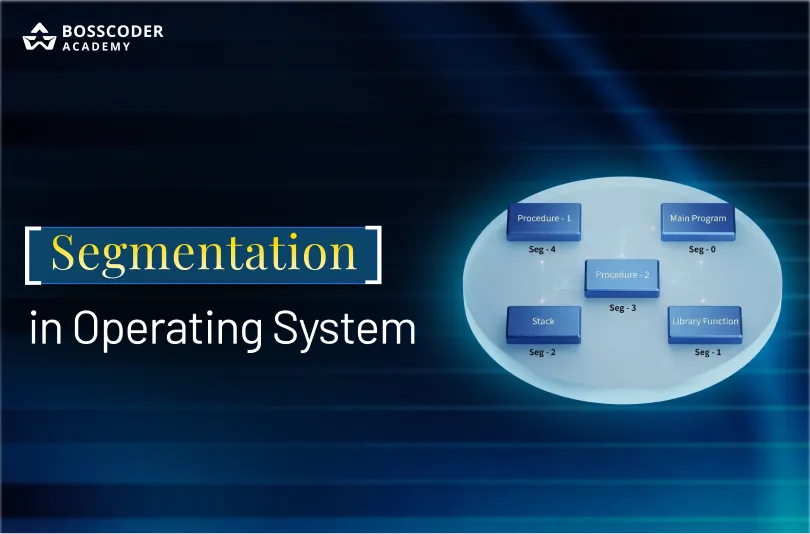
Segmentation is a memory management method in which the memory is divided into useful pieces of the program, such as code, data, stack, and functions rather than memory blocks of the same size. Since segments represent logical units of the program, it becomes easy to manage memory, to protect, and to share it.
Whether it's the preparation for software engineering interviews or studying operating systems at the college or even learning segmentation for product-based companies, it is a must-know topic. The questions on this topic along with Paging, Virtual Memory, Process Management, Memory Allocation are frequently asked during interviews.
In this blog, we will learn Segmentation right from the basics through some examples and diagrams, its advantages and disadvantages, interview questions
What is Segmentation in Operating System?
Segmentation is a memory management approach where the operating system partitions the process into multiple logical parts known as segments.
Every segment will contain a portion of the program.
For example:
→ Code Segment
→ Data Segment
→ Stack Segment
→ Heap Segment
Why is Segmentation Required?
Suppose an application consists of:
→ Source Code
→ Variables
→ Functions
→ Dynamic Memory
→ User Data
Grouping all of the above creates problems in managing the memory.
Segmentation solves this problem by dividing these elements into different segments.
Advantages of segmentation are:
- Organization of memory
- Memory protection
- Sharing among different processes
- Program management
- Improved Modular Programming
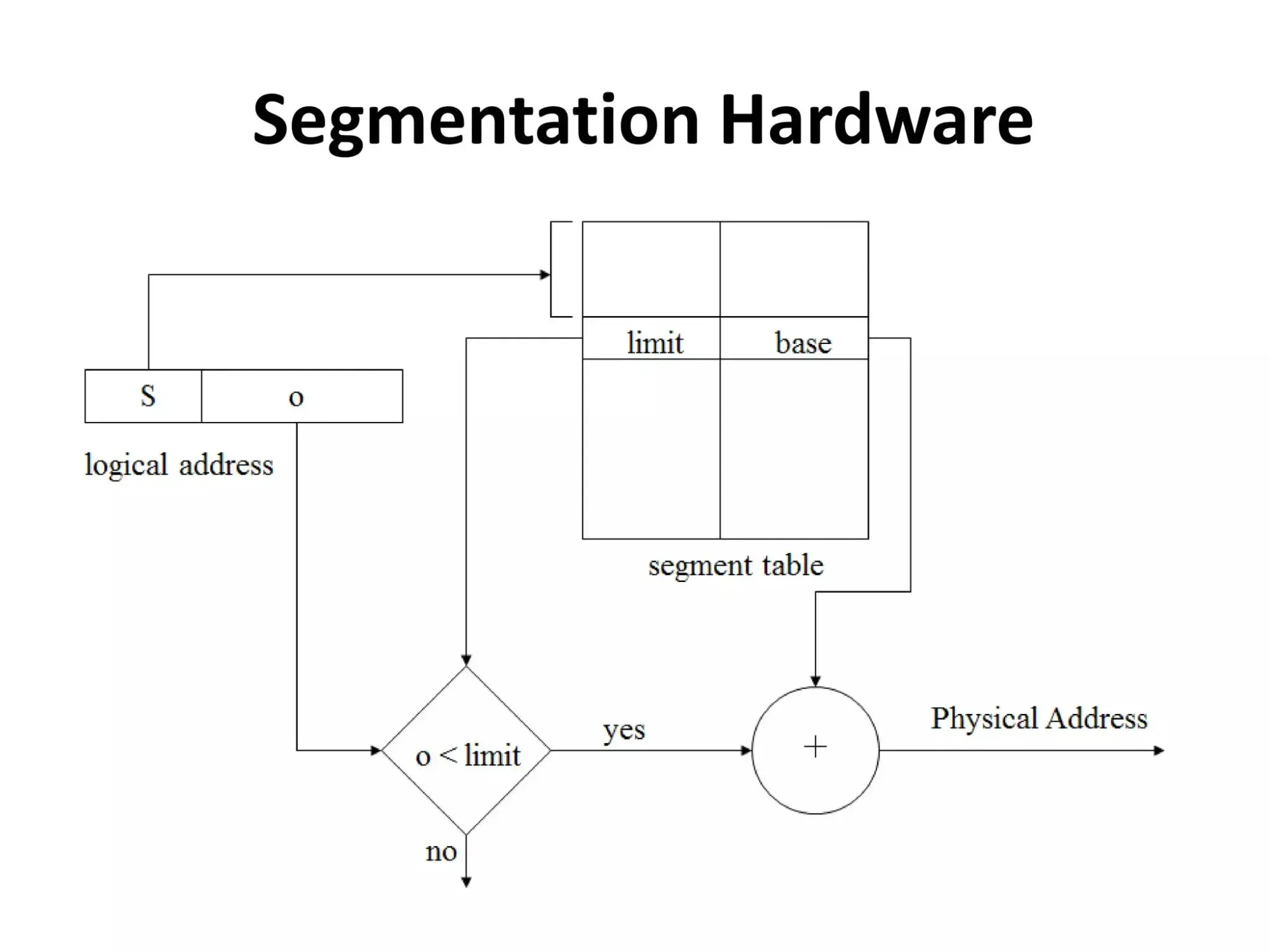
How Segmentation Works
Any process is broken down into several logical segments.
For example:
| Segment | Purpose |
|---|---|
| Code | Instructions for program |
| Data | Global Variables |
| Heap | Dynamic Memory Management |
| Stack | Calling Function and Local Variables |
Each segment has:
→ Base Address
→ Limit (Size)
When the CPU asks for any data:
Step 1:
Logical Address is formed.
Step 2:
The Operating System searches the segment table.
Step 3:
Physical Address is calculated.
If the address asked exceeds the size of the segment, then an error is thrown by the operating system.
Components of Segmentation
1. Segment Number
Determines which segment needs to be accessed by the program.
Examples:
→ Code Segment
→ Stack Segment
→ Heap Segment
2. Offset
Determines the location within that segment.
For example:
Logical Address
Segment Number = 2
Offset = 150
3. Base Address
Determines the starting address of the segment in physical memory.
For example:
Segment 2 is stored at address 5000.4. Limit
Determines the upper limit on the size of that segment.
When the offset exceeds the limit, memory access is not granted.
Address Translation in Segmentation
A logical address consists of:
Segment Number + OffsetThe OS performs the operation:
Physical Address = Base Address + OffsetBut only when:
Offset < LimitOr else,
Segmentation Fault
Understanding Segment Tables
Each process has a segment table.
A segment table stores:
| Segment | Base Address | Limit |
|---|---|---|
| Code | 1200 | 600 |
| Data | 4500 | 350 |
| Heap | 8000 | 900 |
| Stack | 10000 | 500 |
Whenever an access to memory takes place, the OS checks this table.
Example of Segmentation
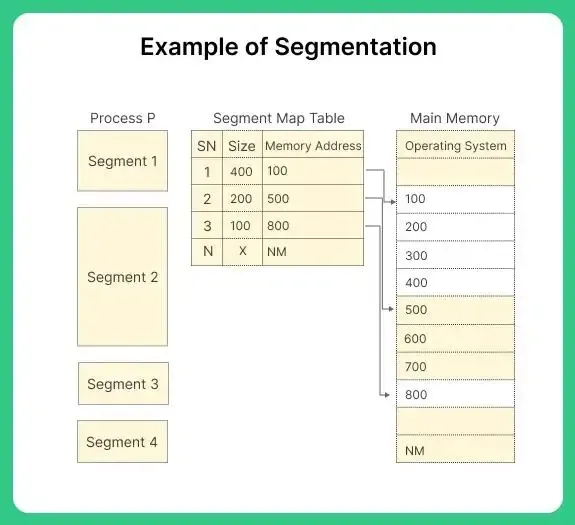
If:
Code Segment
Base = 3000
Limit = 500
Offset Requested = 200
Physical Address
3000 + 200
= 3200
As
200 < 500This is a valid request.
Assuming:
Offset = 700
As:
700 > 500A Segmentation Fault is generated by the operating system.
Advantages of Segmentation
Some of the key advantages are:
Improved Memory Organization
Programs are divided into logical sections.
Modular Program Design
Modules can be handled separately.
Memory Protection
Permissions may be set for separate segments.
Example:
→ Read-Only Code
→ Read/Write Data
Sharing is easy
Segments of code can be shared across various programs.
Optimized Memory Usage
Every segment consumes only its required memory.
Disadvantages of Segmentation
While having its strengths, segmentation has certain drawbacks.
External Fragmentation
Memory that is free gets fragmented over time.
Complex Memory Management
Finding contiguous memory for variable-size segments gets complex.
More Overheads
The OS needs to maintain the segment tables.
Slower Address Translation
Address translation process takes place for every memory access operation.
Segmentation vs Paging
| Feature | Segmentation | Paging |
|---|---|---|
| Partition | Logical | Fixed Size |
| Size | Variable | Equal |
| Type of Fragmentation | External | Internal |
| Visibility to User | Yes | No |
| Protection Level | Easy | Moderate |
| Memory Partition | Variable | Fixed |
Real-World Applications of Segmentation
Segmentation is mainly utilized for:
- Operating Systems
- Design of Compiler
- Process Separation
- Memory Protection
- Virtual Memory System
- Operating Systems of Multi Users
Though most operating systems of today use the paging and segmentation in combination, the study of segmentation is important for interview questions and designing systems.
Common Interview Questions on Segmentation in Operating System
1. What is Segmentation in Operating System?
Segmentation is a method of memory management where a computer program is broken down into different logical sections of various lengths.
2. What is a Segment Table?
The segment table contains the base address and limit of all segments.
3. Why does Segmentation Fault occur?
It happens due to accessing memory beyond the permissible limit of a segment.
4. What is the difference between Paging and Segmentation?
While paging divides memory into fixed size pieces of memory, segmentation breaks the programs in logical variable length segments.
Q5. Is Segmentation still used today?
Today, the operating systems mainly use the paging concept for memory management but segmentation is still useful for protection, logical arrangement and interview preparations.
How Learning Operating System Concepts Helps in Software Engineering
A strong knowledge of the operating system concepts is very important for cracking technical interviews conducted by product-based companies. Subjects such as segmentation, paging, process scheduling, synchronization, and virtual memory are usually covered in the interviews for the positions of software engineer as they assess whether you have understood the inner workings of application processes.
If you wish to change careers or enhance your computer science fundamentals, then it is recommended that you learn these concepts along with other computer science concepts such as Data Structures & Algorithms, System Design, and Core Computer Science Concepts. You can prepare yourself effectively using a systematic learning route.
The Software Engineering Program at Bosscoder Academy with Applied GenAI will teach you fundamentals of computer science including DSA, Operating Systems, DBMS, Computer Networks, and System Design along with software engineering based on artificial intelligence technology.
No matter if you want to prepare for technical interviews or move to product-based companies, learning segmentation along with advanced AI technology will make you a better engineer and interview ready software engineer.
Conclusion
Segmentation in Operating System is a logical memory allocation process where programs are divided into meaningful segments as opposed to fixed-size segments. With segments like code, data, heap, and stack, operating systems are able to offer efficient management of memory.
Although most modern systems have adopted paging as their main memory management approach, segmentation is an important aspect of an operating system and one of the popular topics asked during software engineering interviews. It will greatly improve your knowledge of basic computer science principles and help you prepare for your interviews.
For professionals who wish to advance their careers in software engineering, learning segmentation is a worthwhile move.