Most engineers who want to move into forward deployed AI work share the same worry. They can write code, and they've read about RAG and agents, but they can't tell whether they could actually do the job. They also don't know who could show them.
This post is about the support around learning: how Bosscoder Academy teach, who teaches, and how Bosscoder Academy help with the job search. If you're after the module-by-module syllabus, that lives in our curriculum post.
Why this role is hard to prepare for on your own
The technical side of AI engineering is well documented. You can pick up prompting, retrieval and agent frameworks from docs and tutorials. What's hard to learn alone is everything that surrounds the model once a real company is involved.
Company AI pilots tend to stall on messy data, old systems, security reviews and unclear business value. None of that appears in a tutorial, because a tutorial gives you clean data and no stakeholders.
- Nobody to push back. In a customer meeting, the stated problem is rarely the real one. You learn to spot the difference by practicing with someone experienced in the room.
- Feedback that stings. A client's security team may reject your first architecture. Redesigning calmly, and explaining why, is a skill that grows with practice and review.
- No yardstick. Working solo, it's hard to tell whether your design would survive questions from a client's own architects.
The model is the part you can learn alone. The customer is the part you can't.
That's why our program leans on live teaching, reviewed projects, and mentors who have worked on production systems.
Inside Bosscoder’s 6-month Forward Deployed AI Engineering program
The program runs for about six months. It's built around three things: live sessions, hands-on projects, and mentorship.
- Live sessions. You learn alongside others and can ask questions as they come up. Our learners also mention going back to their notes and recorded lectures when they revise.
- Projects that produce something you can explain. There are 14 industry-style projects, most around six to eight hours each. The later ones move from building systems to simulating client work, such as running a discovery engagement and making sense of an undocumented legacy system. Each one gives you something concrete to talk through in an interview.
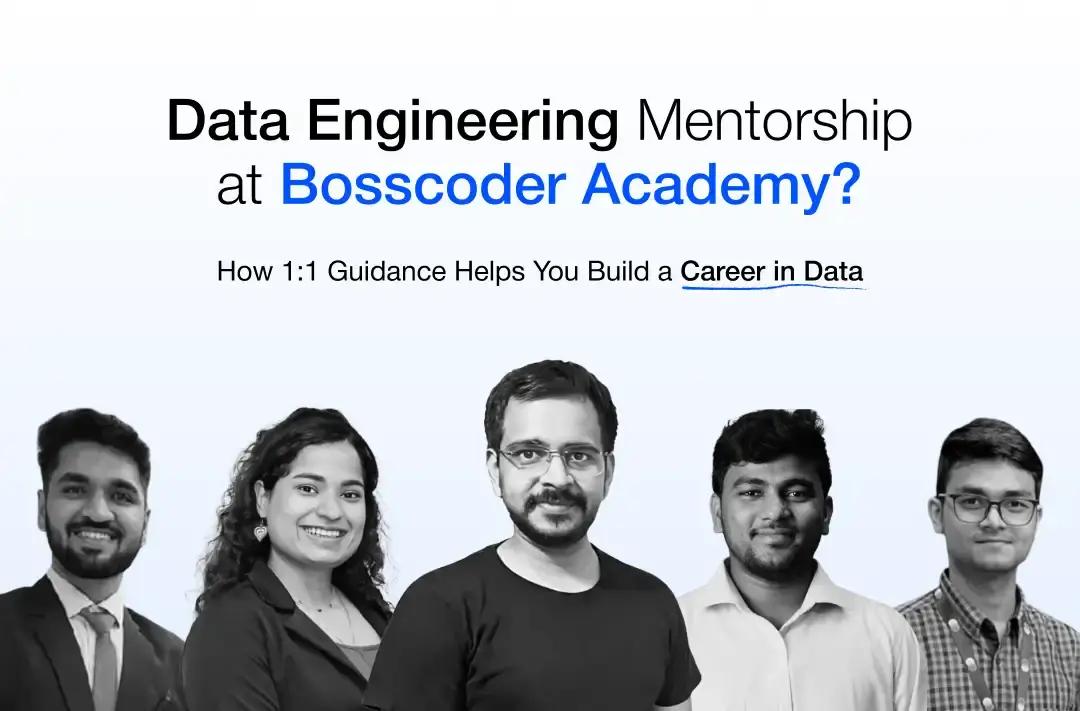
- One-on-one mentorship. Every engineer arrives from a different background. A backend developer and a data engineer need different help, so mentorship is personalized instead of one-size-fits-all.
- Mock interviews and guidance. Several learners credit mock interviews and structured prep for how they performed when it counted.
It's a full program, so plan your weeks around it. The learners who tell us it worked usually point to the same thing: steady live practice, week after week.
The instructors and what they work on
Our mentors are people who build AI and data systems for a living. Here's who you'd learn from.
Rajat Garg
Co-founder, Bosscoder. Ex-Microsoft
An NIT Delhi (2019) graduate who began his career at Microsoft, contributing to PowerPoint's web services used by 200M+ monthly users. He has six years of teaching experience.
Manish Garg
Co-founder, Bosscoder. Ex-Samsung
An IIT Dhanbad alumnus. He worked as an ML engineer at Samsung, then with Android's founder at Essential, and later led Quoori's speech team. He brings nine years of teaching experience.
Syed Mohammad Ali
Data and Applied Scientist 2, Microsoft
Works on large-scale forecasting systems that power Azure's global infrastructure, using ML, statistics and GenAI to drive business decisions.
Chinmay Jain
Data Scientist II, Microsoft
An IIT Kharagpur alumnus who has built scalable data solutions and played a key role in shaping Bosscoder's curriculum.
Sean Benhur
ML Engineer 2, Comcast
Builds AI systems across LLMs, RAG and enterprise ML platforms, with a focus on turning research into scalable, low-latency systems. He is also an active NLP researcher.
Anik Dutta
ML Engineer, RELX
Brings expertise in machine learning and deep learning, and helps learners turn concepts into real impact.
How Bosscoder Academy's placement support works
Learning the skills is half the job. The other half is getting in front of the right employers. Our placement support has three steps.
1. Profile building
We make sure your work is easy to see.
- A resume that highlights real work
- A LinkedIn profile optimized for visibility
- Curated roles that suit your profile
- Guidance on applications
2. Referrals
Many roles are filled through people, not job boards.
- Access to an alumni network across product companies
- Mentors and instructors referring high-performing learners
- Real-time sharing of relevant hiring opportunities
3. Company tie-ups
We work with employers directly.
400+ hiring partnerships across top tech companies
The roles this prepares you for include Forward Deployed AI Engineer, AI Solutions Engineer, Applied AI Engineer and GenAI Engineer. Salaries for these roles range from ₹12 to 35 LPA, depending on prior experience.
Support like this improves your odds, but it doesn't replace your own preparation. Where you land will depend on your background and the effort you put in.
Frequently Asked Questions (FAQs)
Q1. What is forward deployed AI engineering?
A forward deployed AI engineer works close to the customer to get an AI system running inside the customer’s own setup. That means working out what the business really needs, getting data out of legacy systems, getting through security reviews, and making the AI work in production.
Q2. Why is this role hard to prepare for on my own?
The technical side (prompting, retrieval, agents) is well documented. What’s hard to learn alone is the work around the model: pushing back on the stated problem, handling a client’s security team rejecting your first architecture, and judging whether your design would survive a client’s own architects. Those skills come from practice, feedback and experienced people.
Q3. Do I need a machine learning background to join?
No. The program starts from Python fundamentals and builds up. You do need to have shipped software before, so it suits working engineers such as SDEs, backend, data, DevOps and platform engineers.
Q4. How is the program taught?
It runs for about six months and is built around live sessions, hands-on projects and mentorship. Learners also mention going back to their notes and recorded lectures when they revise.
Q5. What kind of projects will I build?
There are 14 industry-style projects, most around six to eight hours each. The later ones simulate client work, such as running a discovery engagement and making sense of an undocumented legacy system. Each gives you something concrete to explain in an interview.