What would happen if the students not only think of concepts for apps but build solutions for the real-life problems?
They will produce applications for education, business, personal training, productivity, business management, etc.
The BuildX student projects present a good example of how students learn to transform their observations into first product ideas and minimum viable products (MVPs). Rather than waiting until college to get some experience working with technology, students learn how to define a problem, come up with a solution, and implement an idea.
From AI-based solutions to small business applications, all of the projects illustrate how product development can start from solving real-life problems.
What Are BuildX Student Projects?
BuildX is a hands-on learning experience by Bosscoder School of Technology (BST) that introduces students to problem-solving, AI, product thinking, and entrepreneurship.
However, it is not just about generating an idea. Students analyze the problem, who will become its beneficiary users, what kind of solution they can offer, and how vital user feedback is for creating a product.
The examples listed below were provided by students and their MVP links and descriptions.
10 BuildX Student Projects Worth Exploring
These are some of the interesting products made by students, along with the problem that they solve.
| Student project | The problem it solves | Features of the product |
|---|---|---|
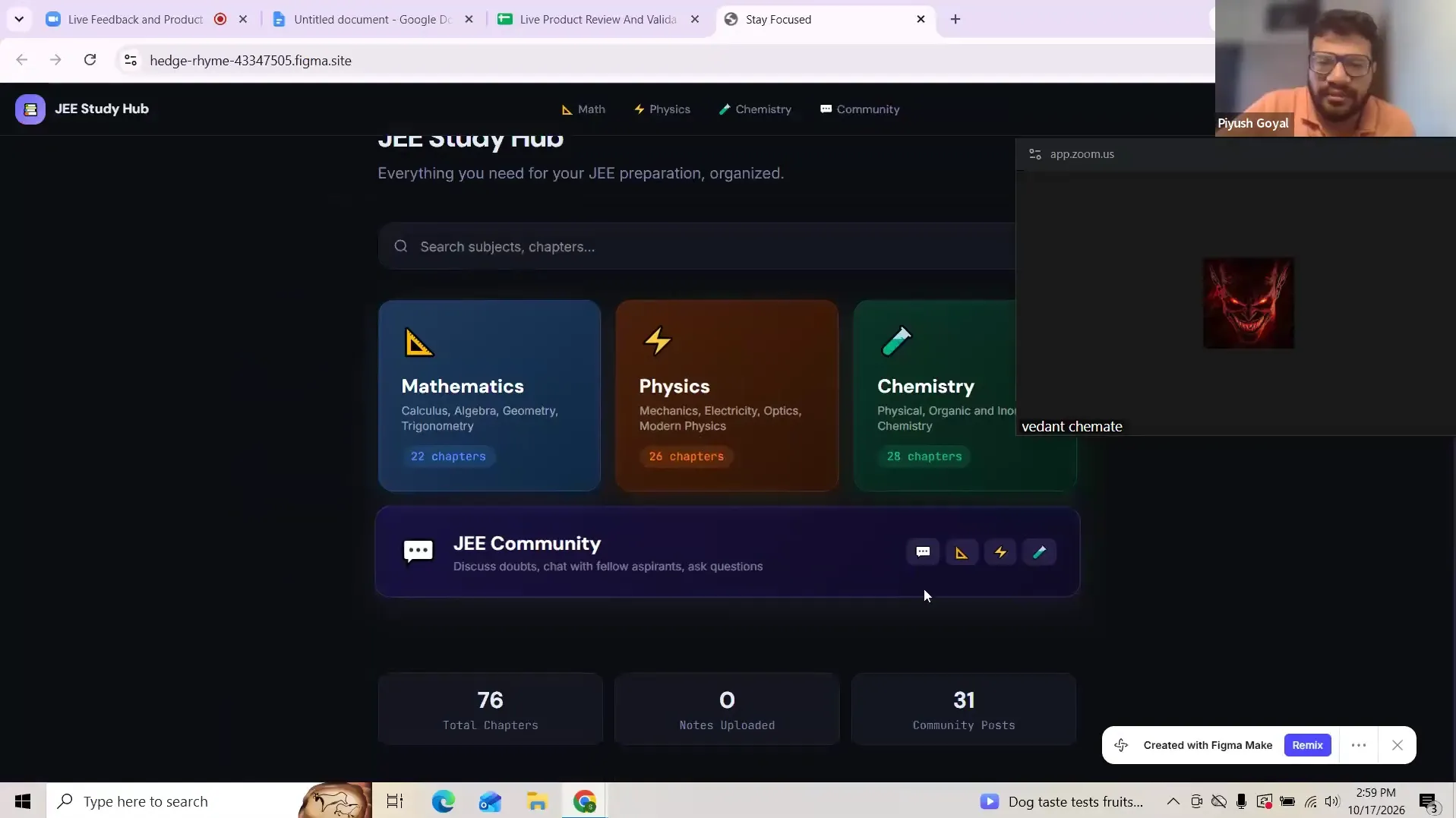
| JEE Study Hub | Study materials are available on various platforms. | Study materials, formulas, saved study materials, and a community for solving doubts. |
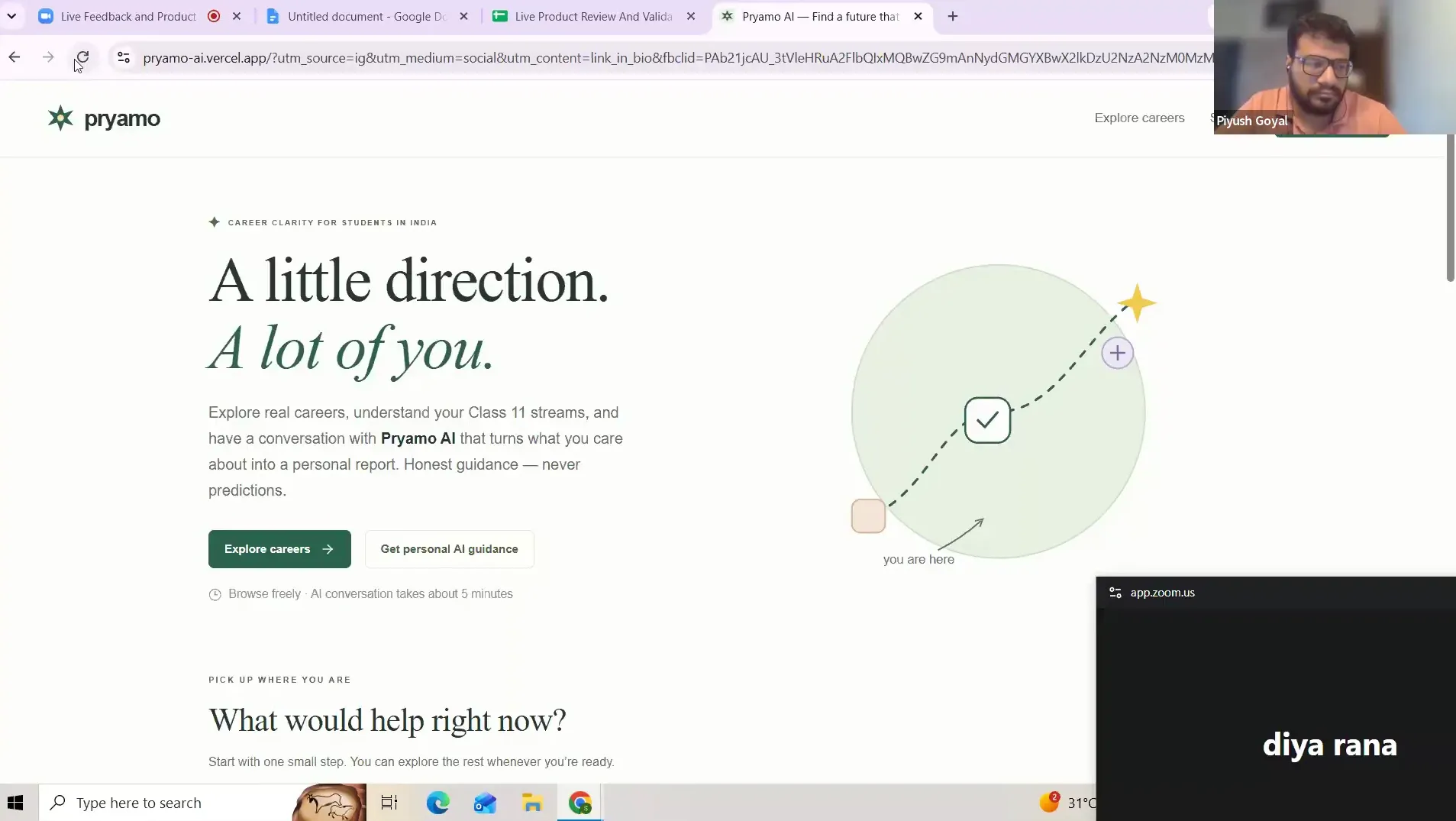
| Pryamo AI | It is difficult for students to explore career options. | A platform where one can explore various career options and make informed decisions. |
| PulseNEET UG | It becomes tough for students to revise large amounts of NCERT material. | Active recall, keyword test, and learning-oriented revision tools. |
| StudyFlow | It becomes tough for students to organize themselves for studying. | Study plan, task management, focused sessions, and tracking of progress. |
| Invoice Engine | It takes up time for businesses to manage invoices and other administrative tasks. | Invoice data extraction, billing workflow, and sales record. |
| GLITZY | It is hard for people to choose an outfit. | Styling using AI, outfit suggestion, and wardrobe planning. |
| Kiseki Engine | There is a need for structure when beginners want to learn Japanese. | Lessons, quizzes, and progress of learning. |
| FitBuddy | Beginners might have difficulties planning their workout sessions. | Personalized workouts, posture assessment, and progress tracking. |
| Horizon Hunt | Students can find opportunities on several platforms. | Opportunity search, discovery, categorization, and saving of listings. |
| Dukaan Saathi | Small shops might have difficulty keeping track of inventory manually. | Stock record, expiry dates, and stock tracking. |
As you can see from the above projects, there are huge differences in the starting points that can be used for creating product builds.
Explore the Student Projects
1. JEE Study Hub: Bringing Your Study Material in One Platform
Explore: JEE Study Hub
It is not easy for JEE aspirants to switch between notes, formula sheets, revision papers and doubt-solving platforms. This is what JEE Study Hub attempts to change by unifying these processes.
Its features are supposed to include resources according to each chapter of PCM, uploading study materials, saving resources and discussions within the community.
Why is it interesting? The project attempts to help students reduce time spent on searching learning resources rather than making another site for reading notes.
2. Pryamo AI: Simplify Career Exploration
Explore: Pryamo AI
It can be hard for students to choose a career path since they don’t have much information about available options. Pryamo AI seeks to enable them to explore career options that are outside their reach and make decisions based on their interests.
The project showcases an important product lesson: knowledge about the user’s confusion can serve as a basis for developing a helpful solution.
3. PulseNEET UG: Rethink Your Approach to Revision
Explore: PulseNEET UG
PulseNEET UG adopts a unique strategy in its NEET preparation by using active recall rather than just reading.
Its submitted description includes interactive exercises for keyword recall and retention, as well as ways to revise difficult topics.
The goal is to make the process of revision more interactive and to help students recognize their weak spots.

4. Invoice Engine: Business Administration Made Easy
Discover: Invoice Engine
Invoices, billing statements, and sales details may cause repeated tasks in small enterprises.
Invoice Engine is here to make these tasks easier with invoice image and PDF processing, data structuring, billing, GST calculation, and sales details.
It is an example of how student projects can help solve business problems and not just those associated with school or college life.
5. GLITZY: A Personal Fashion Companion
Discover: GLITZY Fashion Studio
GLITZY tries to demonstrate how AI could be used in helping with fashion decisions. The main features are an AI stylist bot, fashion advice, wardrobe styling, and an AI assistant encouraging more conscious shopping.
Unlike the idea that is aimed only at choosing clothing items, the project tries to assist users in using their clothing items properly.
6. Dukaan Saathi: Assist Small Stores with Inventory Management
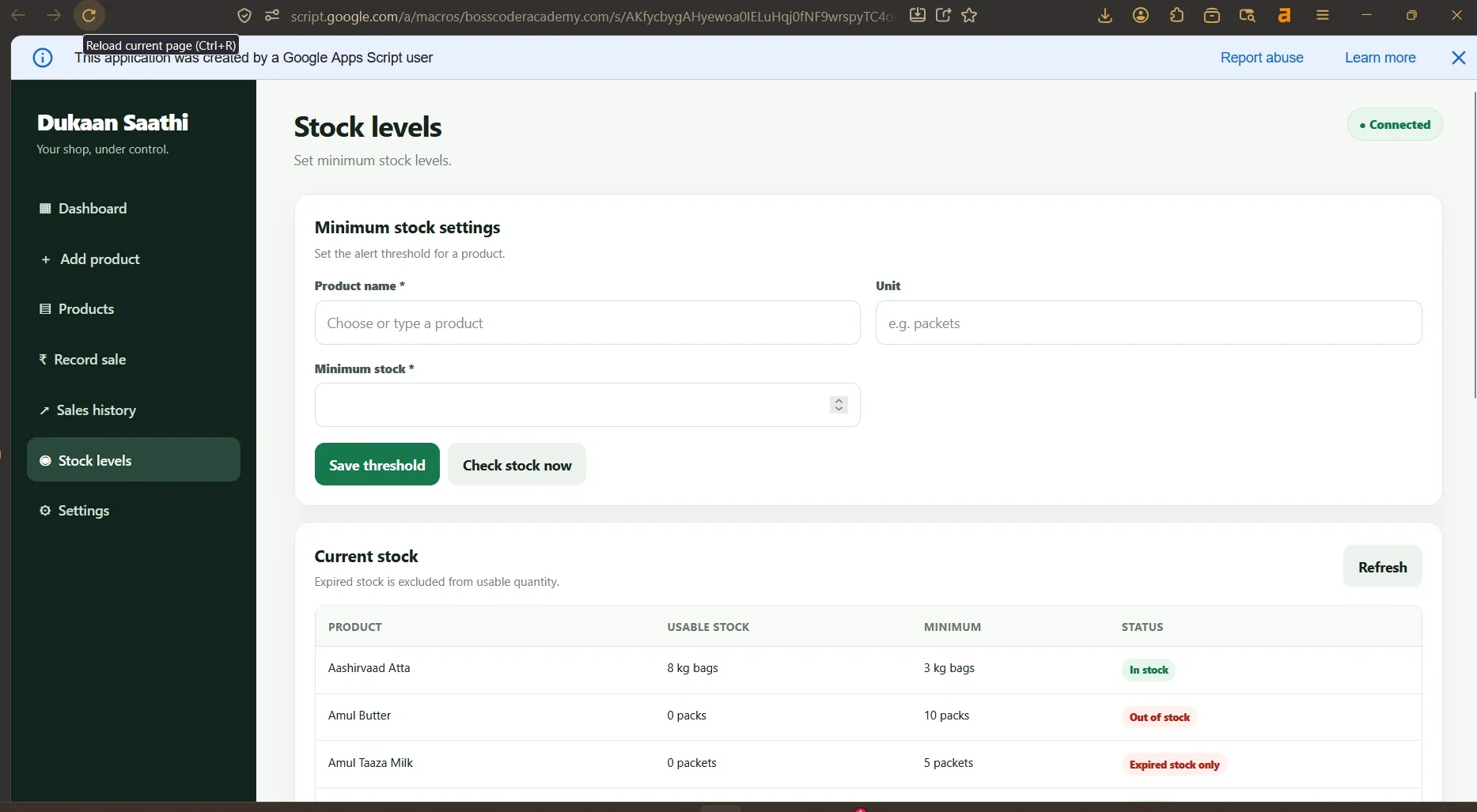
Explore: Dukaan Saathi
A small shop owner might use pen and paper to maintain their inventory. The purpose behind Dukaan Saathi is to make it simpler for small shop owners to manage inventory data.
The following features have been mentioned:
• Product details
• Stock details
• Expiry dates
• Sales updates
The fundamental concept is simple – make inventory management easy without complicating a simple shop process.
Note: These are student-submitted project descriptions, not independent product reviews. Some links may lead to early prototypes or MVPs, and their functionality may change.
What Do Students Learn From These Project?
Apart from the application itself, there is also a lot to learn while creating one.
- Problem-solving: Define the problem before trying to find what needs to be created.
- Product thinking: Define who the product is for and which functions would matter to them.
- Technology and AI: Discover how existing tools can make the solution possible.
- User testing: Determine if the product is understandable and useful to the target audience.
- Communication: Describe the problem, showcase the product, and give feedback on what could be improved.
The next crucial step would be to test the developed products with their intended users. The working prototype would be a good starting point, but actual usage and feedback would be required to understand whether the problem was solved through the use of the product.
How BuildX Helps Students Turn Their Ideas Into Products
BuildX encourages students to see product development as a process rather than just a single assignment.
The process goes through five key steps:
IDEATE → BUILD → VALIDATE → EXECUTE → PITCH
Students identify problems, develop an initial solution, get feedback, plan further improvements, and learn how to communicate about their work.
Such an approach would also help students form a portfolio of their practical projects. Rather than just describe what they have learned, students would be able to demonstrate what they tried to build, what problem they considered, and what lessons they learned.
To know more about the learning process in details, you can read A Look Inside BuildX by Bosscoder School of Technology.
To know more about BuildX by Bosscoder School of Technology, you can check out What Is BuildX by Bosscoder School of Technology?
Final Thoughts
As seen in the BuildX student projects, inspiration for products can come from simple daily problems like preparing for an exam, choosing a career, managing inventory, or planning an agenda.
Students do not have to start off with a flawless idea or a completely formed app. Instead, they can start off by identifying a problem, learning about the people experiencing the problem, and creating a solution which can be tested and iterated on.
This is the larger picture of what BuildX at Bosscoder School of Technology aims to achieve, learning technology becomes much more significant when students get to apply it to build something of their own.
The next step is not just adding more functionality. It is about listening to users and iterating on your app to make each iteration better than the previous one.
Frequently Asked Questions About BuildX Student Projects
Q1. What are BuildX student projects?
BuildX student projects are prototypes and MVPs developed by students to find real-world problems. They can be related to education, AI, productivity, fitness, career guidance, and business management.
Q2. What types of projects can students build through BuildX?
Students can discover projects such as AI-powered applications, educational platforms, productivity tools, business solutions, and career guidance products. The key is to recognize a problem, develop a solution, and learn how to improve it based on feedback.
Q3. How does BuildX by Bosscoder School of Technology help students build products?
BuildX by Bosscoder School of Technology teaches students about problem-solving, AI, product thinking, and entrepreneurship. Its educational approach encourages students to start from recognizing a problem and moving towards building an MVP, validating ideas, executing the plan, and presenting their product.
Q4. Do students need coding experience to build a student project?
Not all student projects require a high level of coding. Students can start with a prototype using the right no-code, low-code, or AI-powered solutions. The essential steps are to recognize a problem, define core features, and test whether the proposed solution works.