Generative AI is changing how software is built, but many working professionals struggle to keep up. Most online AI courses either focus heavily on machine learning theory or only teach basic prompt engineering. As a result, many learners still lack the practical skills needed to build real AI applications.
Today, top tech companies are looking for engineers who can work with Large Language Models (LLMs), Retrieval-Augmented Generation (RAG), AI agents, vector databases, and production-ready AI systems. Learning only ChatGPT prompts is no longer enough to stand out in interviews or contribute to modern AI products.
The Bosscoder Academy Applied GenAI Program is designed to bridge this gap. Instead of focusing only on theory, the program teaches learners how to build production-ready GenAI applications through a structured curriculum covering Prompt Engineering, Python, APIs, RAG, LLM Fine-Tuning, Agentic AI, LLMOps, deployment, and career preparation. It is designed for software engineers, product managers, career switchers, and professionals looking to upskill for AI-first roles.
The Importance of Applied GenAI Skills Today
Applied GenAI skills are becoming essential across industries as AI adoption continues to grow. Here's why professionals are investing in these skills today:
→ AI is becoming part of every software product.
→ Companies are hiring professionals who can build AI-powered applications.
→ The demand for Prompt Engineers, GenAI Engineers, AI Product Developers, and Agentic AI Developers continue to grow.
→ Production AI skills are now valued across startups and enterprise companies.
Bosscoder Academy Applied GenAI Curriculum
Module 1: Prompt Engineering & LLM Mastery (3 Weeks)
This module builds a strong foundation in working with Large Language Models (LLMs). You'll learn how to write effective prompts, enhancing AI results and using more advanced prompt techniques in order to deliver dependable AI products.
What You'll Learn
→ LLM Fundamentals: Understand how transformer models and attention mechanisms work to create an LLM response.
→ Popular AI Models: Learn when to use ChatGPT, Claude, Gemini, Copilot and other leading AI products.
→ Prompt Engineering: Create structured and clear prompts by using zero-shot, few-shot, role-based, and chain-of-thought prompting
→ Advanced Prompting: Improve results by using chain-prompting, reflection, structured outputs, and reasoning techniques.
→ Using Function Calling and APIs: Connect LLMs with external tools and APIs to build interactive AI applications.
→ Prompt Optimization: Reduce token use, increasing accuracy, and optimizing prompts for production-level applications.
→ Responsible AI: Learn and apply best practices in prompt security, safety, and prompt injection attacks.
→ Hands-on Project: You will build an AI Interview Coach that provides an interview question, an evaluation of your answer and feedback on your interviews.
Module 2: Python & API Foundations for AI
This module teaches the programming skills required to build AI-powered applications and integrate them with modern LLM APIs.
What You'll Learn
→ Python Fundamentals: Learn how to write in python, the principles of OOP, store, and retrieve data from files, and handle exceptions.
→ Working with JSON: Learn how to retrieve, modify and save Data from AI Applications using JSON format.
→ Async Programming: Build applications faster using an Asynchronous Python Programming method.
→ REST APIs: Learn what an API is and how its used to Allow Applications to Access AI Services.
→ OpenAI & Anthropic SDKs: Build Applications Using some of the most Popular Large Language Model APIs.
→ Project Structure: Develop your AI Project Using the current Development standard.
→ Hands-on Project: Create a Personal AI Morning Briefing assistant that summarizes daily information.
Module 3: RAG Systems & Vector Intelligence
Learn how modern AI systems retrieve information from external knowledge sources instead of relying only on model memory.
What You'll Learn
→ Embeddings: Convert text into vectors that AI models can understand.
→ Vector Databases: Store and search documents using Pinecone, ChromaDB, and FAISS.
→ Semantic Search: Retrieve information based on meaning rather than exact keywords.
→ Document Chunking: Split large documents into searchable sections for better retrieval.
→ RAG Pipelines: Build Retrieval-Augmented Generation applications using LangChain.
→ Hybrid Search: Combine keyword search and semantic search for higher accuracy.
→ RAG Evaluation: Measure retrieval quality using evaluation frameworks like RAGAS.
→ Hands-on Project: Build a chatbot that answers questions from your own documents.
Module 4: Advanced RAG & LLM Fine-Tuning
Go beyond basic AI applications by customizing language models and improving retrieval performance for production use cases.
What You'll Learn
→ Advanced RAG Techniques: Improve retrieval accuracy with query rewriting, re-ranking, and self-correcting RAG.
→ LLM Fine-Tuning: Customize open-source models using LoRA and QLoRA.
→ Model Optimization:Train models efficiently with PEFT and Hugging Face tools.
→ Local LLM Deployment: Run AI models locally using Ollama.
→ Model Evaluation: Compare performance and choose the right model for different applications.
→ Hands-on Project: Fine-tune your own AI model using custom datasets.
Module 5: Agentic AI Systems
Learn how to build AI agents that can plan, reason, use tools, and complete complex tasks with minimal human intervention.
What You'll Learn
→ AI Agent Architecture: Understand how autonomous AI agents make decisions.
→ LangGraph & CrewAI: Build multi-agent workflows using popular agent frameworks.
→ Tool Integration: Enable AI agents to search the web, access tools, and interact with external systems.
→ Memory Systems: Give AI agents short-term and long-term memory.
→ Agent Evaluation: Test and improve agent performance using modern evaluation frameworks.
→ AI Safety: Apply guardrails and security measures to build trustworthy AI systems.
→ Hands-on Project: Develop a personal AI assistant capable of completing real-world tasks.
Module 6: LLMOps, Deployment & Career Preparation
The final module focuses on deploying AI applications, monitoring their performance, and preparing for AI engineering interviews.
What You'll Learn
→ FastAPI & Docker: Package and deploy AI applications as production-ready services.
→ CI/CD Pipelines: Automate testing and deployment using GitHub Actions.
→ Cloud Deployment: Deploy AI applications on AWS infrastructure.
→ LLMOps: Monitor AI applications using LangSmith and evaluation tools.
→ AI Safety & Compliance: Learn best practices for secure, responsible AI deployment.
→ Interview Preparation: Prepare for GenAI interviews through career guidance and project reviews.
Tools & Technologies You'll Learn
You'll gain hands-on experience with the same tools and technologies used by AI teams to build, deploy, and manage production-ready GenAI applications.
Large Language Models (LLMs)
Learn how to integrate and build AI applications using leading language models and APIs.
- OpenAI API → Build AI applications powered by GPT models.
- Anthropic API → Work with Claude models for enterprise AI solutions.
- Hugging Face → Access, fine-tune, and deploy open-source language models.
- Cohere → Use enterprise-ready models for text generation and retrieval.
AI Frameworks
Build modern AI workflows using popular frameworks for LLM applications, RAG, and AI agents.
- LangChain → Develop LLM-powered applications and RAG pipelines.
- LlamaIndex → Connect AI models with structured and unstructured data.
- LangGraph → Build stateful AI agents and multi-step workflows.
- CrewAI → Create collaborative multi-agent AI systems.
Vector Databases
Store and retrieve embedding efficiently for semantic search and Retrieval-Augmented Generation (RAG).
- Pinecone → Managed vector database for scalable AI applications.
- ChromaDB → Open-source vector database for document retrieval.
Fine-Tuning & Model Optimization
Customize and optimize open-source language models for specific business use cases.
- QLoRA → Fine-tune large language models with lower hardware requirements.
- PEFT → Train models efficiently using parameter-efficient fine-tuning.
- Axolotl → Build and manage fine-tuning pipelines for LLMs.
Deployment & LLMOps
Learn how to package, deploy, and maintain production-ready AI applications.
- FastAPI → Build high-performance APIs for AI services.
- Docker → Containerize AI applications for consistent deployment.
- GitHub Actions → Automate testing and deployment using CI/CD pipelines.
- AWS → Deploy scalable AI workloads in the cloud.
- Vercel → Host and deploy AI-powered web applications.
Evaluation & AI Monitoring
Measure the quality, reliability, and performance of AI applications before deployment.
- LangSmith → Debug, monitor, and evaluate LLM applications.
- PromptFoo → Test prompts and compare AI model performance.
- DeepEval → Evaluate AI systems using automated benchmarks.
- RAGAS → Measure the accuracy and effectiveness of RAG pipelines.
Industry Projects You'll Build
Throughout the program, you'll work on hands-on, industry-relevant projects that help you apply what you learn. These projects are designed to strengthen your portfolio and give you practical experience with modern GenAI tools and workflows.
| Project | Skills Learned |
|---|---|
| Intelligent Document Assistant | RAG, LangChain, Pinecone |
| Advanced RAG Knowledge Base | Hybrid Search, Evaluation |
| Fine-Tuned Support Chatbot | QLoRA, Ollama |
| Prompt Optimization System | DSPy |
| Multi-Agent Research Writer | CrewAI, MCP |
| Autonomous Coding Agent | LangGraph |
| Full AI Product Capstone | FastAPI, Docker, CI/CD |
| AI Safety & Evaluation Suite | PromptFoo, DeepEval |
Career Outcomes After Completing the Program
After completing the Bosscoder Academy Applied GenAI Program, you'll have the practical skills to work on real-world AI applications across industries. The curriculum is designed to prepare learners for production-focused AI roles rather than just teaching AI concepts.
GenAI Engineer
Build and deploy AI-powered applications using Large Language Models (LLMs), Prompt Engineering, RAG pipelines, and AI APIs. This role focuses on developing intelligent software that solves real business problems.
LLM Engineer
Design, optimize, and deploy production-ready LLM systems using fine-tuning, vector databases, retrieval pipelines, and LLMOps practices to improve performance and scalability.
AI Product Developer
Turn AI ideas into real products by building chatbots, copilots, internal tools, and customer-facing AI applications that deliver practical business value.
Agentic AI Developer
Develop autonomous AI agents capable of planning tasks, using external tools, maintaining memory, and collaborating with other agents to automate complex workflows.
Technical Product Manager (AI)
Bridge business goals and technical execution by defining AI product requirements, collaborating with engineering teams, and delivering scalable AI features aligned with user needs.
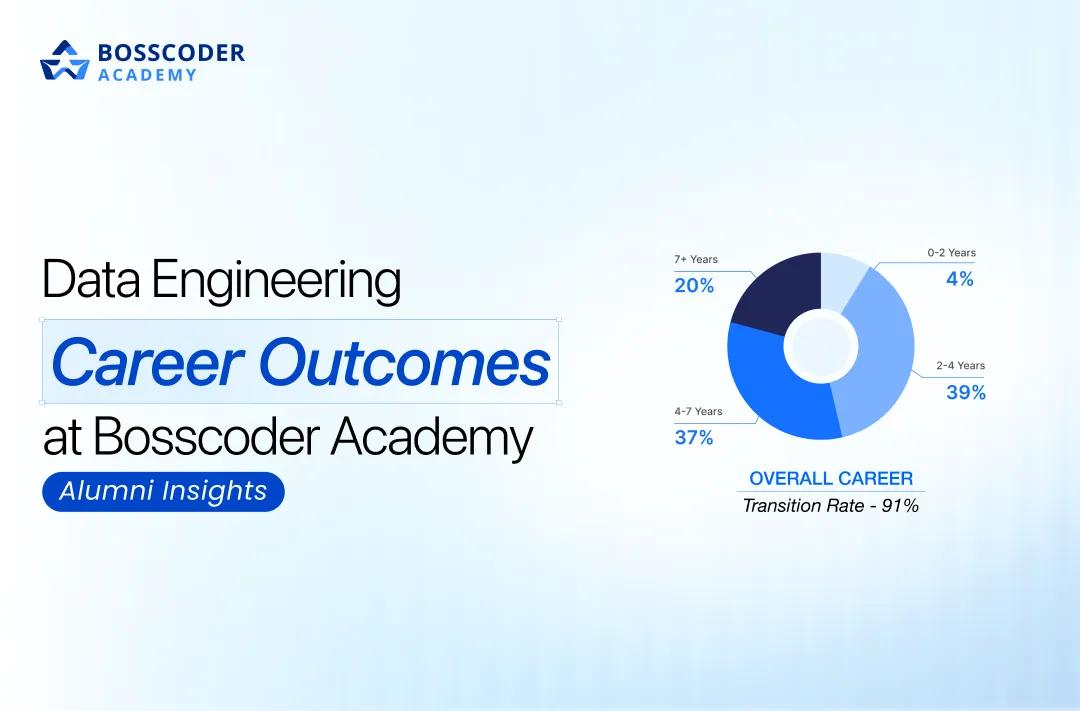
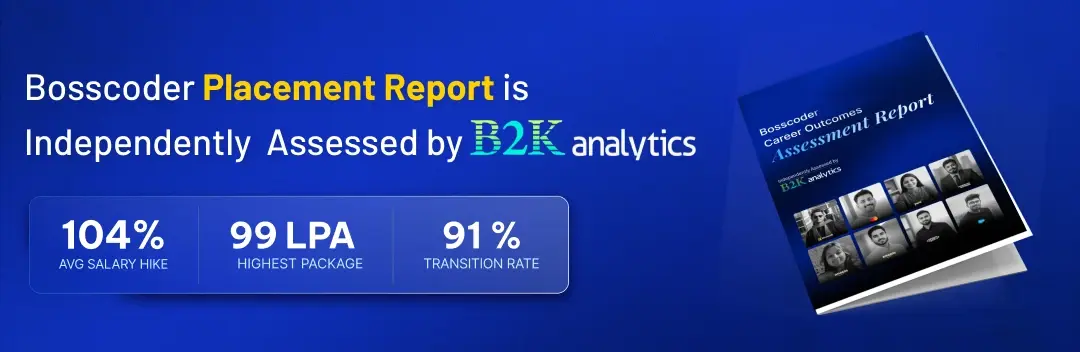
Many of our learners have successfully transitioned into AI roles after completing the program. These outcomes are independently assessed, giving you a transparent view of the career results achieved by our learners.
Placement Support
Along with technical learning, the program provides career-focused support to help you prepare for AI opportunities and strengthen your professional profile.
→ ATS-friendly resume building and LinkedIn profile optimization to improve your visibility with recruiters.
→ Mock interviews and interview preparation to help you prepare confidently for technical and behavioral interview rounds.
→ Mentor and alumni referral support through Bosscoder's growing professional network.
→ Access to 400+ hiring partnerships and relevant job opportunities shared through Bosscoder's hiring ecosystem.
→ End-to-end career guidance with application strategy, profile reviews, and interview readiness throughout the program.
Why Professionals Choose Bosscoder Academy's Applied GenAI Program
The Applied GenAI Program is designed to help professionals build practical, production-ready AI skills through a structured curriculum, hands-on projects, and modern AI tools.
→ Advanced Prompt Engineering with modern prompting techniques, DSPy, and function calling.
→ Production-ready RAG systems using LangChain, vector databases, semantic search, and evaluation frameworks.
→ Hands-on LLM fine-tuning with QLoRA, Hugging Face, PEFT, and Axolotl.
→ Local LLM deployment using Ollama and open-source language models.
→ Agentic AI development with LangGraph, CrewAI, MCP, memory systems, and tool integration.
→ Production-grade LLMOps using FastAPI, Docker, GitHub Actions, AWS, and LangSmith.
→ AI safety and evaluation using Guardrails, PromptFoo, DeepEval, and RAGAS.
→ 10+ portfolio-ready projects, including RAG applications, AI agents, fine-tuned models, and a production-ready capstone.
→ Structured career support with resume reviews, LinkedIn optimization, interview preparation, referrals, and career guidance.
Conclusion
Generative AI is rapidly changing how modern software is built, creating new opportunities for professionals with practical AI skills. Whether you're a software engineer looking to stay ahead, a working professional planning a career switch, or a recent graduate entering the AI industry, learning to build real-world GenAI applications can give you a strong advantage.
The Bosscoder Academy Applied GenAI Program follows a structured learning path that covers Prompt Engineering, RAG, LLM Fine-Tuning, Agentic AI, LLMOps, and production deployment. Combined with hands-on projects, mentorship, and career support, the program is designed to help learners build practical skills that align with today's AI engineering roles.
If you're looking for a practical way to learn Generative AI and build production-ready AI applications, this program provides a comprehensive roadmap from fundamentals to deployment.
Frequently Asked Questions (FAQs)
Q1. Who should join the Bosscoder Academy Applied GenAI Program?
The Bosscoder Academy Applied GenAI Program is specially designed for software engineers, working professionals, product managers, career switchers, and anyone who wants to build practical Generative AI skills. Basic Python knowledge is helpful, but prior AI or Machine Learning experience is not required.
Q2. Do I need prior experience in AI or Machine Learning?
No. The curriculum starts with AI fundamentals, Python, and Prompt Engineering before progressing to advanced topics like RAG, LLM Fine-Tuning, Agentic AI, and LLMOps.
Q3. What tools and technologies will I learn in this program?
This program includes hands-on experience with tools such as OpenAI API, Anthropic, LangChain, LangGraph, CrewAI, Pinecone, ChromaDB, Hugging Face, FastAPI, Docker, AWS, LangSmith, DeepEval, PromptFoo, and other technologies used in production AI development.
Q4. Will I build real-world AI projects?
Yes. You'll work on 10+ portfolio-ready projects, including RAG applications, AI agents, fine-tuned language models, AI chatbots, evaluation systems, and a production-ready capstone project that demonstrates your practical skills.
Q5. What career roles can this bosscoder program prepare me for?
The curriculum is designed to help learners build skills relevant to roles such as GenAI Engineer, LLM Engineer, AI Product Developer, Agentic AI Developer, and Technical Product Manager (AI).
Q6. How is this bosscoder program different from other GenAI courses?
Unlike many courses that focus only on prompt engineering or basic AI concepts, this Bosscoder Applied GenAI Program covers the complete GenAI development lifecycle from Prompt Engineering and RAG to LLM Fine-Tuning, Agentic AI, LLMOps, deployment, AI safety, and production-ready projects.