Introduction
Every year in India, more than 15 lakh students take admission in engineering colleges. But when you actually walk into many colleges you will find 300-500 students in a single branch, sometimes even more. Large lecture halls. Limited lab access. One professor handling hundreds of students.
Now ask a simple question:
Can one faculty member truly mentor 300 students personally?
The honest answer is NO. And that's the real problem.
The Real Problem: Mass Education, Minimal Attention
In many traditional colleges:
- 1 faculty handles 60-100 students per class
- Labs are shared by large groups
- Projects are mainly copied or theoretical
- Internship guidance is generic or optional
- Placement preparation starts in final year
When batches are too large, students become roll numbers. Personal mentorship becomes impossible. Doubts remain unresolved. Career direction is unclear.
According to India Skills Report 2025, only a small percentage of engineering graduates are considered industry-ready. Top tech companies often spend 3-6 months retraining fresh hires before they become productive.
The issue is not intelligence. The issue is attention, exposure, and environment.
If 500 students are admitted every year, even with the best intentions, maintaining quality becomes difficult.
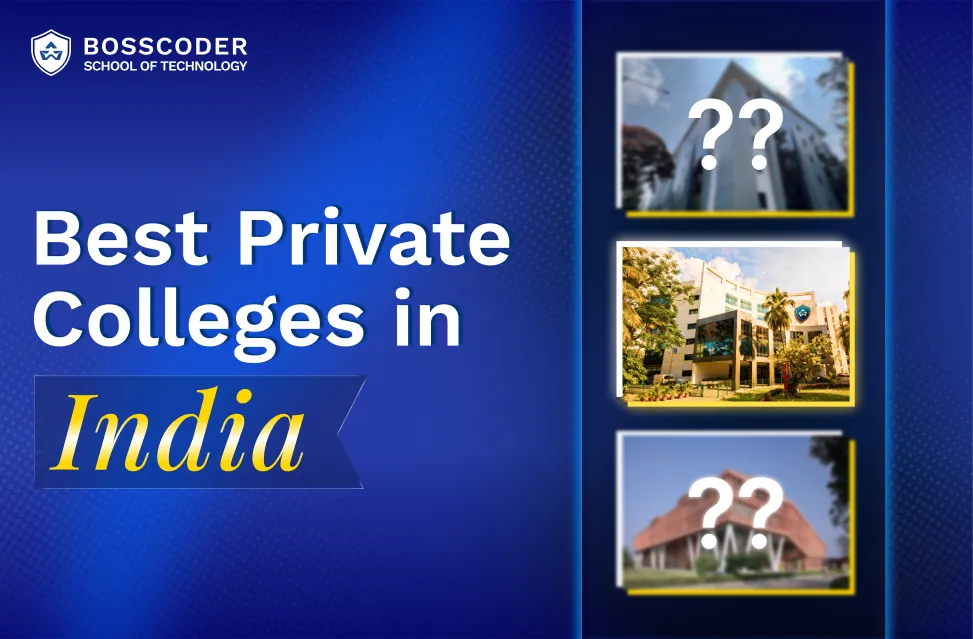
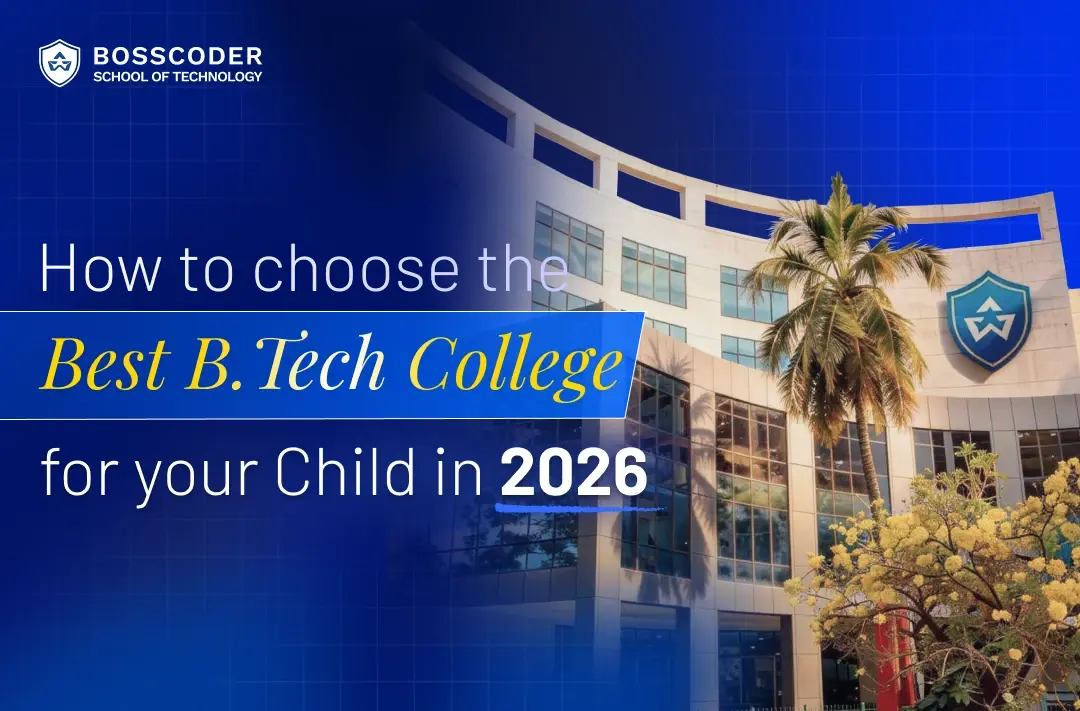
To explore the campus location, environment, and connectivity, you can check the BST profile.
Why Bosscoder School of Technology Is Limiting to Only 200 Seats
BST focuses on quality, not just large student numbers. The aim is to give every student proper attention, mentorship, and industry exposure.
For 2026, admissions are limited to 200 students through BSAT (Bosscoder Scholastic Admission Test) to keep the batch focused and maintain high learning standards.
Why?
Because a smaller batch size helps students get better guidance, more support, and stronger career outcomes.
1. Mentorship Ratio Matters
Good education is not just about teaching. It is about guidance. And guidance needs time.
BST provides:
- 1:1 mentorship
- Dedicated Success Managers
- Personal interview screening
- Continuous performance tracking
Now imagine doing all this with 800 students. It becomes operationally weak.
With only 200 students:
- Mentors can actually review projects properly
- Students get real personal feedback
- Career paths can be tracked clearly
- Doubts are solved deeply, not rushed
When batch size reduces by 60-70%, attention increases by 2-3x. That is not marketing. That is simple math.
To understand how 1:1 mentorship at Bosscoder School of Technology works in detail, read more in our blog on why mentorship matters at Bosscoder School of Technology.
2. Project-First Learning Needs Space & Resources
Learning engineering properly means building things, not just writing exams. But building requires space, systems, and support.
From Year 1, BST students build:
- Tic-Tac-Toe / Interactive Game Development
- Personal Portfolio Website Development
- Coffee Machine Billing Counter System
- Social Media Analyzer (Sentiment Analysis Project)
- Email Spam Classifier
- E-commerce Application (Frontend)
- Ride-Sharing Matching System (like Uber)
These are not theoretical assignments. They require:
- Lab access
- Code reviews
- Technical discussions
- Infrastructure support
- Mentor feedback
If 600 students are building complex systems at the same time, lab access becomes limited and reviews get delayed.
With 200 students:
- Better lab access
- Faster mentor reviews
- Real technical depth
- Higher project quality
Quality projects cannot be mass-produced.
3. Industry Immersion Needs Real Opportunities
Internships and industry exposure are meaningful only when they are structured and monitored. Otherwise, they become formalities.
In Year 4, BST students go through:
- Paid internships
- Industry-sponsored projects
- Startup incubation
- Innovation lab work
Now think practically. If 1,000 students need internships at the same time:
- Either quality drops
- Or many students get average roles
BST works with 500+ hiring partners and focuses on converting students into strong candidates.
To maintain internship quality, seat count must remain controlled. You cannot promise strong outcomes with unlimited admissions.
To understand how BST ensures strong career outcomes at Bosscoder School of Technology, you can read more in our detailed blog on placements, internships, and industry exposure.
4. Selection Through BSAT Ensures Serious Candidates
Peer group plays a huge role in engineering growth. The energy of a classroom depends on who sits inside it.
BST admissions include:
- BSAT (120-minute online test)
- Personal 1: 1 Interview
- Profile evaluation
Seats are limited to 200 because BST wants:
- Students serious about technology
- Students ready to build projects
- Students committed to deep learning
- Students aligned with long-term goals
When admissions are open without filters, classroom focus weakens.
With selective admission:
- Peer group becomes stronger
- Competition becomes healthy
- Discussions become deeper
- Learning speed increases
One focused classroom of 40 serious learners is stronger than 150 distracted ones.
5. Maintaining Placement Outcomes
Placements do not happen in the final year. They are built over four years of preparation.
BST focuses on three outcomes:
- Placements
- Entrepreneurship
- Higher studies
Placement preparation includes:
- Mock interviews
- Resume reviews
- System design practice
- Coding rounds
- Behavioral rounds
- Mentor feedback
Now imagine reviewing 800 resumes personally. It becomes rushed and repetitive. There is hardly any time to give proper, detailed feedback to each student.
With 200 students:
- Resume feedback is detailed
- Mock interviews are personalized
- Placement tracking is accurate
- Students are guided individually
That is how outcomes improve.
6. Controlled Growth Protects Quality
Many colleges increase seats every year. But infrastructure, mentors, and systems take time to scale.
And that's why BST campus offers:
- Modern labs
- Tech ecosystem exposure
- Startup studio
- Innovation lab
- 1: 1 Mentorship sessions
- Industry talks
Every system has a capacity limit. Beyond that limit, quality drops.
It is easy to increase seats. It is harder to maintain standards.
Bosscoder School of Technology has chosen controlled growth to protect the student experience.
To understand how BST builds an industry-ready B.Tech in CSE & AI at Bosscoder School of Technology, you can read more in our detailed blog about its curriculum and ecosystem.
Final Thoughts
The real issue in engineering education is not talent. It is too many students in one classroom, very little personal guidance, and limited real-world exposure. When batches are very large, students often don’t get enough attention, feedback, or career direction.
That is why Bosscoder School of Technology has limited admissions to only 200 seats in 2026 through BSAT. This keeps the focus on quality learning and strong outcomes. With an industry-aligned curriculum, faculty with real tech experience, 1:1 mentorship, a 1-year industry immersion, and 500+ hiring partners, BST ensures every student gets proper support.
Frequently Asked Questions (FAQs)
Q1. Why are there only 200 BSAT seats at Bosscoder School of Technology?
Bosscoder School of Technology limits seats to 200 to maintain quality education, better 1:1 mentorship, and stronger placement outcomes. Smaller batches allow more personal attention and industry exposure.
Q2. Does limiting seats improve placement chances?
Yes. With fewer students, mentors can give personalized guidance, conduct detailed mock interviews, and provide better resume feedback, which improves overall placement outcomes.
Q3. How are students selected for these 200 seats?
Admissions are based on BSAT (Bosscoder Scholastic Admission Test), followed by a personal 1:1 interview and profile evaluation to select serious and committed students.
Q4. What makes Bosscoder School of Technology different from other engineering colleges?
Bosscoder School of Technology focuses on small batches, 1:1 mentorship, industry-aligned curriculum, a 1-year industry immersion, and strong placement support with 500+ hiring partners ensuring students graduate job-ready.