Many aspiring technology professionals complete their education without gaining enough practical experience. This gap between classroom learning and industry expectations makes it harder for learners to perform confidently in real tech roles.
That's why Bosscoder School of Technology (BST), a Centre for Applied Technology offering a 4-year undergraduate program in Computer Science & Artificial Intelligence. It combines industry-integrated learning, hands-on projects, expert mentorship and career-focused skill development to bridge the gap between theoretical knowledge and real-world engineering.
With guidance from experienced industry professionals, BST helps learners develop practical skills, build real-world projects, and understand how the technology industry works.
Why Industry-Aligned Learning Matters Today
India produces nearly 1.5 million engineering graduates every year, yet only a small percentage are job-ready. The main reason is not a lack of talent, but a gap between academic learning and industry expectations.
BST focuses on bridging this gap by emphasizing:
- Strong computer science fundamentals
- Hands-on learning
- 1:1 mentorship from real industry engineers
- Practical, industry-oriented skill development
The 3 Core Pillars of Learning at BST
BST's learning model is built on three core pillars that help learners move from learning concepts to applying them confidently. The focus is on hands-on practice, personalized support, and career exposure so learners become industry-ready from Day 1.
| Pillar | What It Means for Students |
|---|---|
| Practical Learning | Industry-aligned curriculum designed around real tech roles, early exposure to coding, projects, and industry-level problem-solving from Day 1 |
| Personal Learning | 1:1 mentorship from experienced engineers, dedicated support, and continuous academic and career guidance |
| Purpose-Driven Learning | Industry immersion opportunities, exposure to hackathons, entrepreneurship support, and dedicated startup funding and incubation support |
Want to see how these pillars lead to real careers? Read about placements, internships, higher studies, and startups in Career Outcomes at Bosscoder School of Technology.
BST Curriculum Overview
The BST learning curriculum in Computer Science & Artificial Intelligence is structured to help learners build industry-relevant technical skills through progressive, hands-on learning.
Year 1: Build Strong Foundations
Focus: Develop a strong foundation in Computer Science and AI through hands-on learning.
- Learn programming fundamentals and problem-solving
- Build websites and frontend applications through web development
- Study Data Structures & Algorithms (DSA) fundamentals
- Learn mathematics, probability, and statistics for data science and AI
- Understand AI fundamentals that support modern technology
- Work on real-world projects like games, portfolio websites, and basic applications
- Develop communication skills and professional values through soft-skill courses
Goal: Build a solid foundation in coding, computer science, and AI for advanced learning in later years.
Year 2: Core Computer Science & Systems
After building strong foundations in Year 1, learners go deeper into core computer science and real-world systems in Year 2.
Focus: Understand how real-world software systems are designed, built, and scaled.
- Learn database systems including DBMS and SQL
- Study Operating Systems and Computer Networks
- Build backend applications using Java and Spring Boot
- Develop a strong foundation in Machine Learning concepts
- Practise Low-Level Design (LLD) for system building
- Work on industry-style projects involving real software systems
Goal: Develop system-level thinking and the ability to design and build scalable software systems.
Year 3: Choose Your Specialization
Focus: Become an expert in one domain.
Learners can explore specialized learning tracks based on their interests and career aspirations.
Software Engineering Track
- Cloud computing and DevOps practices
- High-Level System Design (HLD)
- Application security and secure system building
- Design and build scalable backend systems
Artificial Intelligence Track
- Artificial Intelligence, Machine Learning, and NLP
- Generative AI and Large Language Models (LLMs)
- ML system design and deployment
- Hands-on AI engineering projects
Goal: Build deep technical expertise and advanced skills aligned with your chosen career path.
Year 4: Industry Immersion
Focus: Work like a professional before entering the workforce.
- Complete a year-long industry immersion experience
- Work on industry-sponsored projects OR
- Build your own startup with BST support and access to a ₹1 crore dedicated startup fund
- Gain real company exposure and hands-on team experience
- Convert skills into job offers or real products
Goal: Develop professional experience, practical problem-solving abilities, and industry confidence.
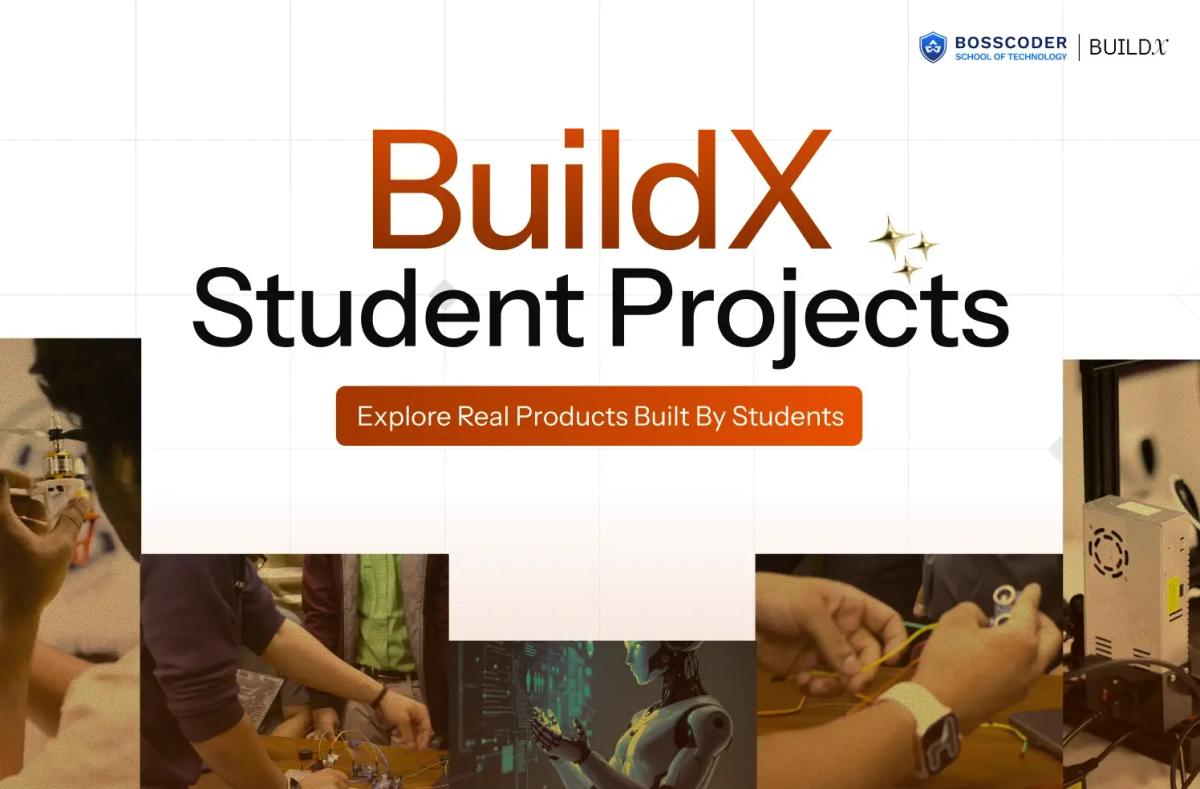
Hands-On Projects from Day 1
Learners don't just learn concepts; they build real projects. Some projects they will work on are:
| Year | Projects You’ll Work On |
|---|---|
| Year 1 | Portfolio website, web applications, data analysis and spam classification projects |
| Year 2 | Ride-sharing system, database design, Google Drive-like backend systems, machine learning projects |
| Year 3 | AI chatbots, recommendation systems, system-design projects, scalable platforms |
| Year 4 | Industry-sponsored projects, paid internships, startup or innovation-lab projects |
These projects are designed to mirror real industry problems, helping learners build a strong resume, practical experience, and a solid GitHub portfolio for career opportunities.
Practitioner-Led Mentorship at BST
At BST, learners receive guidance from engineers who have worked at top product-based companies, not just textbook instructors.
Who Guides Learners at BST:
| Role | What This Means for Students |
|---|---|
| Industry Practitioners | Engineers who have worked at leading top tech companies and bring real-world experience into the classroom |
| Mentors | Senior software engineers, data engineers, and AI professionals who guide students through projects and career preparation |
| Success Managers | Dedicated on-campus team that tracks academic progress and supports students with learning and career planning |
This model ensures learning stays practical, industry-relevant, and aligned with what top companies actually expect from engineers.
Continuous Mentorship & Learner Support
Every BST learner gets:
- 1:1 mentorship from experienced engineers
- A dedicated success manager for academic and career guidance
- Regular feedback, mock interviews, and progress tracking
This support system helps learners stay focused, confident, and on the right path throughout their learning journey.
Want to know why mentorship matters at BST? Read more in How Mentorship Matters at Bosscoder School of Technology.
Industry Exposure Before Entering the Workforce
Unlike conventional classroom-only learning models, BST includes mandatory industry immersion as part of its skilling approach.
| Opportunity | Details |
|---|---|
| Paid Internship | Year-long industry experience opportunities |
| Hiring Network | 500+ hiring partners |
| Startup Support | ₹1 Crore dedicated startup fund with incubation & mentorship support |
| Higher Studies | Degree pathway guidance and preparation for further education |
Learners develop practical experience and a portfolio of real-world work alongside their learning journey.
Internships, hiring opportunities, and startup funding are subject to individual eligibility, selection, and availability.
Degree Pathway & Industry Skills
BST focuses on developing industry-ready skills through technology learning, practical projects, mentorship, and career support.
Learners who wish to pursue a formal undergraduate qualification can separately explore a degree pathway through a UGC-recognised university, subject to the university's independent eligibility criteria, admission process, and applicable regulations.
BST does not independently award degrees. Any degree is awarded solely by the respective university under its approved academic framework.
This distinction allows learners to understand the separate roles of industry-focused skilling and formal university education.
Final Thoughts: Why BST's Learning Model Works
BST's curriculum and mentorship are designed to answer one key question:
"Can learners apply their skills to solve real-world problems?"
By combining:
- Industry-aligned curriculum
- Practitioner-led mentorship
- 1:1 learning support
- Hands-on projects
- Industry exposure
- Career development support
Bosscoder School of Technology helps learners build the skills, experience, and confidence needed to pursue opportunities in the technology industry.
Frequently Asked Questions (FAQs)
Q1. How is the BST curriculum different from traditional engineering colleges?
BST focuses on practical, industry-aligned skilling through real-world projects, coding practice, mentorship, and industry exposure. Its learning model is designed to complement formal education with skills relevant to modern technology roles.
Q2. Who teaches and mentors learners at Bosscoder School of Technology?
BST provides learning and mentorship support through experienced technology practitioners, including software engineers, AI professionals, and industry mentors. The focus is on practical guidance, project development, and career readiness.
Q3. Does BST provide real industry experience before graduation?
BST's learning model includes industry-oriented projects, mentorship, and industry immersion opportunities. Learners may explore internships, startup projects, and other professional experiences, subject to eligibility and availability.
Q4. Does Bosscoder School of Technology offer a undergraduate degree?
No. Bosscoder School of Technology is a Centre for Applied Technology offering a 4-year undergraduate program in Computer Science & Artificial Intelligence. It combines industry-integrated learning, hands-on projects, expert mentorship and career-focused skill development to bridge the gap between theoretical knowledge and real-world engineering.
Learners interested in a formal undergraduate degree can separately explore degree pathways through UGC-recognized universities, subject to the respective university's admission requirements and applicable regulations. BST does not award degrees or independently conduct university degree programmes.