Introduction
Computer Science and Artificial Intelligence are transforming almost every industry, from finance and healthcare to e-commerce, logistics and entertainment. As technology evolves, students need more than an understanding of concepts. They need opportunities to apply what they learn, experiment with ideas and understand how technology is used to solve real-world problems.
Yet, learning to build useful technology products takes more than theory alone. Students need opportunities to practice programming, explore AI tools, work on projects, collaborate with others, and develop problem-solving skills.
This creates an important question for students and parents: How can students connect what they learn about technology with how it is applied in the real world?
Bosscoder School of Technology (BST) is building its learning experience around this opportunity, bringing industry perspectives, applied learning, and emerging technologies into the student journey.
So, what is BST, and who can benefit from its approach? Let’s explore.
What Is Bosscoder School of Technology (BST)?
Bosscoder School of Technology (BST) is a Centre for Applied Technology offering a 4-year undergraduate program in Computer Science & Artificial Intelligence. It combines industry-integrated learning, hands-on projects, expert mentorship and career-focused skill development to bridge the gap between theoretical knowledge and real-world engineering.
Positioned as a Center of Applied Technology, BST aims to help students explore Computer Science, Artificial Intelligence, product development and entrepreneurship through a learning experience connected to real-world technology practices.
Its approach focuses on helping students move beyond understanding how technology works to exploring how it can be used to build applications, develop products and experiment with ideas.
At BST, the broader learning philosophy brings together three elements:
- Technology foundations: Understanding programming, Computer Science and emerging technologies.
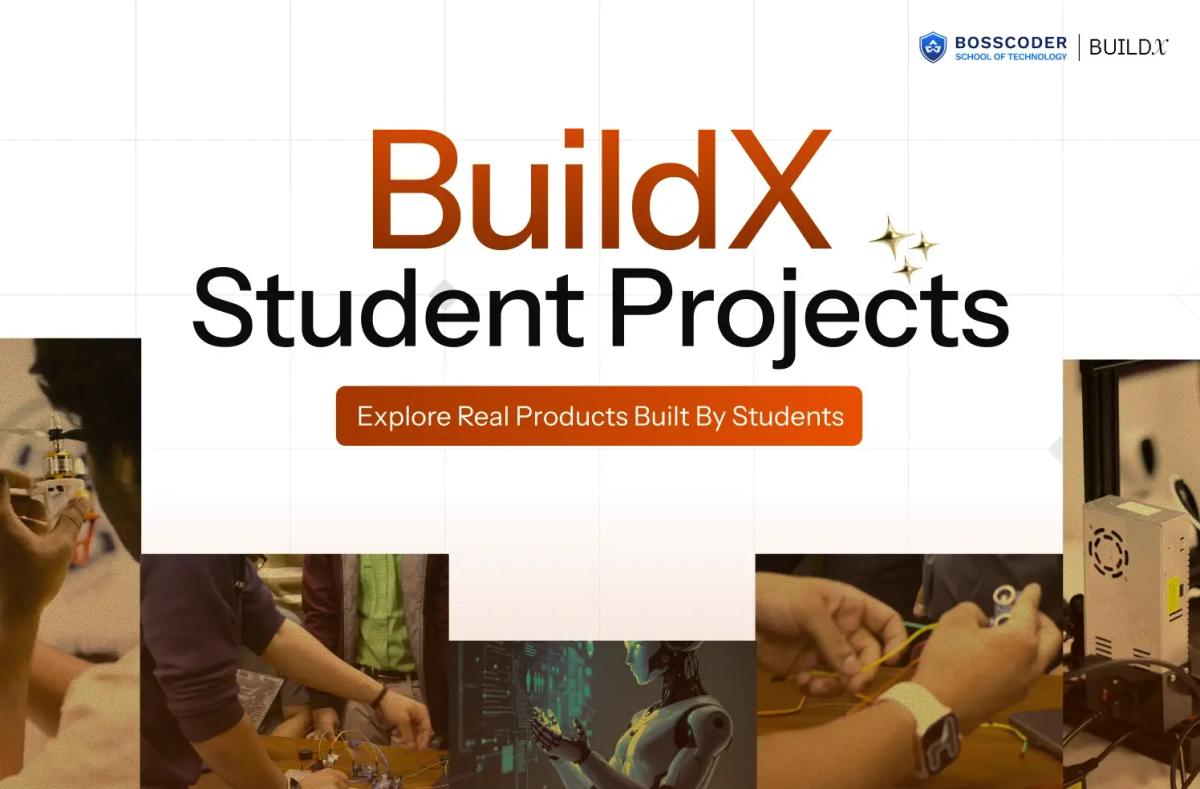
- Applied learning: Exploring concepts through practical exercises, projects and experimentation.
- Industry perspective: Learning about real-world workflows, product development and the challenges technology teams solve.
BST’s vision is captured in the idea of An Industry Edge in the Age of AI: helping learners engage with technology as it evolves and develop the ability to apply their knowledge.
For details about any degree pathway, university relationship or formal academic qualification, students should refer to the applicable official programme documentation.
What Makes BST’s Learning Approach Different?
Technology education is evolving alongside the industry itself. Developers increasingly work with AI-assisted tools, collaborate across disciplines and contribute to products that solve specific user problems.
BST’s learning approach reflects the importance of connecting technical understanding with practical application.
Here are the principles behind this approach:
- Applied learning that connects technology concepts with practical exercises.
- Exposure to Computer Science, AI and emerging technology use cases.
- Project-based exploration and opportunities to experiment with ideas.
- Industry perspectives on software development and product thinking.
- Opportunities to explore innovation, entrepreneurship and startup concepts.
Rather than viewing technology only as a collection of subjects, learners are encouraged to consider how different concepts work together to create useful products and solutions.
How Does BST Connect Learning With Real-World Technology?
Learning becomes more meaningful when students can connect a concept with a practical use case.
For example, learning about programming can lead to building a simple application. Exploring databases can help learners understand how applications organise information. Studying AI can introduce them to applications such as recommendation systems, text analysis and intelligent assistants.
BST’s applied learning philosophy encourages students to explore these connections through structured learning activities and practical projects, where offered as part of the relevant programme.
The approach can bring together:
- Core technology concepts and practical exercises.
- Project-based exploration of software and AI applications.
- Problem-solving, collaboration and communication.
- Industry perspectives on how technology products are developed.
- Exposure to product innovation and entrepreneurial thinking.
The specific subjects, project requirements, assessments and learning outcomes depend on the programme and its published curriculum.
Three Pillars of Applied Learning at BST
Pillar 1: Practical Learning
Understanding a concept is the first step. Applying it is how learners begin to explore its possibilities.
BST’s applied learning philosophy emphasizes connecting technical concepts with practical use cases. Learners can explore how programming, software development and AI concepts are used in applications and technology products.
Practical learning activities may include:
- Programming exercises and logical problem-solving.
- Exploring web applications and software systems.
- Understanding how AI-powered applications work.
- Building and presenting projects.
- Testing ideas, reviewing outcomes and improving solutions.
For example, a learner exploring AI could investigate how a recommendation system works, while someone interested in product development could examine how an application addresses a specific user need.
The aim is to develop a stronger connection between learning concepts and applying them in practice.
Pillar 2: Guided Learning and Mentorship
Every learner approaches new concepts differently. Guidance, feedback and opportunities to ask questions can help learners identify gaps in their understanding and improve their work.
BST’s learning philosophy values access to industry perspectives and structured guidance wherever these are included in the relevant programme.
This can help learners:
- Understand how technical concepts are applied in professional settings.
- Receive feedback on projects and problem-solving approaches.
- Explore different technology career paths.
- Develop communication and collaboration skills.
- Understand the early stages of turning an idea into a product.
Learners interested in entrepreneurship can also explore questions such as how to identify a problem, validate an idea, understand potential users and develop an initial product concept.
The availability and format of mentorship, individual guidance and startup support should be confirmed against the specific programme offering.
Pillar 3: Purpose-Driven Learning
Technology skills become more valuable when learners understand what they want to use them for.
Some learners may want to explore software development. Others may be interested in AI, product management or entrepreneurship. Understanding these areas can help learners make more informed decisions about the skills and experiences they want to pursue.
BST encourages learners to explore the relationship between technology, real-world problems and possible career or entrepreneurial interests.
This approach can include:
- Exploring different technology domains and their applications.
- Developing projects around specific problems or use cases.
- Understanding how software and AI products are designed.
- Learning about collaboration, presentation and professional communication.
- Exploring entrepreneurship and early-stage startup concepts.
Learning outcomes ultimately depend on the learner’s effort, the programme curriculum and the opportunities available to them.
Exploring AI, Product Innovation and Startups
Artificial Intelligence is changing how products are designed, developed and improved. It is also creating opportunities for people to explore new business ideas and build solutions for emerging needs.
For learners interested in entrepreneurship, understanding AI is only one part of the journey. They also need to think about the problems they want to solve, the people they want to serve and the products they want to create.
An AI and startups learning pathway can bring these areas together through topics such as:
- AI fundamentals: Understanding key AI concepts, tools and use cases.
- Problem discovery: Identifying problems that technology could help solve.
- Product thinking: Understanding users, defining features and evaluating ideas.
- Prototyping: Exploring how early product concepts can be tested.
- AI-powered products: Investigating how AI capabilities can be incorporated into applications.
- Startup fundamentals: Learning about business models, validation, customer feedback and early-stage execution.
- Responsible innovation: Considering privacy, reliability, bias and the responsible use of AI.
The goal is to help learners understand the journey from identifying a problem to exploring a potential technology solution.
The exact modules, projects and outcomes should be described according to the final approved curriculum for the AI & Startups programme.
A Learning Journey Built Around Technology
Technology learning is most effective when concepts are introduced progressively and learners have opportunities to practise them.
A structured learning journey can move from foundational concepts to applied projects and more specialized areas of interest.
Stage 1: Build the Foundations
The first stage focuses on understanding the basics of programming, logical thinking and technology.
Learners can explore:
- Programming fundamentals and problem-solving.
- Basic software and web concepts.
- Introduction to AI and its applications.
- Communication and collaborative work.
Possible practice activities include simple applications, interactive web pages and introductory AI exercises, depending on the curriculum.
Stage 2: Understand How Technology Works
Once the foundations are established, learners can explore how different parts of a technology system work together.
Topics may include:
- Databases and data management.
- Software architecture and application development.
- Understanding how digital products handle information.
- Introduction to machine learning concepts.
- Testing, debugging and improving applications.
Practical exercises can help learners connect individual concepts with larger systems.
Stage 3: Explore Specialised Areas
As their understanding grows, learners can investigate areas that match their interests.
These may include:
Software and Product Development
Exploring application development, software design, user needs and the process of improving digital products.
Artificial Intelligence
Understanding AI applications, machine learning concepts and the opportunities and limitations of AI-powered systems.
AI and Startups
Exploring problem discovery, product validation, AI-enabled prototypes and the fundamentals of building a technology venture.
The specific specializations available will depend on the programme’s final structure.
Stage 4: Apply Learning to Projects
Projects offer an opportunity to bring different concepts together.
Depending on the programme, learners may explore an application, develop a prototype, investigate an AI use case or work on a product concept.
A project journey can involve:
- Identifying a problem or use case.
- Researching possible approaches.
- Planning and developing an initial solution.
- Testing the solution and gathering feedback.
- Presenting the work and reflecting on improvements.
Internships, industry-sponsored projects, startup incubation and other advanced opportunities should be communicated only where they are formally available and their terms are clearly defined.
Holistic Development at BST
Technology learning involves more than technical knowledge. Communication, teamwork, curiosity and responsible decision-making are also important when working on technology products.
BST’s broader learning philosophy recognizes the value of developing these capabilities alongside technical understanding.
Learners can benefit from opportunities to develop:
Communication and Collaboration
Explaining ideas clearly, listening to feedback and working effectively with others.
Critical Thinking
Examining problems, comparing approaches and making reasoned decisions.
Responsible Technology Use
Understanding the importance of privacy, security, fairness and accountability when working with digital technologies and AI.
Personal Growth
Building confidence, discipline and the willingness to learn from challenges.
Where available, campus activities, student communities, clubs and collaborative projects can provide additional opportunities for learners to practise these skills.
To explore student life, facilities, and daily experiences in detail, read our blog on campus life at Bosscoder School of Technology.
Understanding the Degree Pathway
Students and parents often want clarity about the difference between a learning programme and a formal academic qualification.
These are important distinctions.
BST’s technology-learning experience and any degree pathway associated with a learner should be understood according to their respective official documentation.
A degree is awarded by the institution legally authorized to award that qualification. Its title, eligibility requirements, duration, curriculum, campus arrangements and applicable approvals must be confirmed through the relevant institution’s official records.
Students considering a degree pathway should verify:
- The name of the degree-awarding institution.
- The exact degree title and programme.
- The approved campus or location, where applicable.
- The institution responsible for formal admission and student registration.
- The applicable academic, examination and graduation requirements.
- The fees, services and responsibilities associated with each part of the arrangement.
BST’s industry-oriented learning positioning should not be interpreted as a claim that BST independently awards a university degree.
Students should consult the official programme documents for the details applicable to their admission year.
Faculty, Mentors and Industry Perspectives
Understanding how technology is used in professional environments can help learners connect concepts with practical challenges.
Industry perspectives can introduce learners to software development practices, product decisions, AI applications, teamwork and the changing demands of technology roles.
Depending on the programme, learning opportunities may include:
- Sessions with experienced technology professionals.
- Discussions about real-world software and AI use cases.
- Project presentations and feedback.
- Exposure to product development practices.
- Career exploration and professional guidance.
The experience and background of individual faculty members, mentors and guest speakers should be represented accurately. Any specific claims about employers, qualifications, mentorship frequency or access to professionals should be supported by current, verifiable information.
Want to know how BST’s curriculum and faculty stay industry-aligned? Read more in BST Curriculum & Faculty: Industry-Aligned Learning
Who Can Benefit From BST’s Approach?
BST’s applied technology philosophy may be relevant to learners who want to explore how technology is used beyond textbooks and theoretical explanations.
It may particularly appeal to those who are interested in:
- Understanding Computer Science and emerging technologies.
- Exploring practical applications of AI.
- Learning how software and digital products are developed.
- Experimenting with ideas through projects.
- Understanding product innovation and entrepreneurship.
- Exploring how technology can be used to address real-world problems.
Learners interested in AI and startups may also want to explore the relationship between technical skills, user needs, product development and business fundamentals.
Before choosing any specific course or degree pathway, learners should review its published curriculum, eligibility requirements, duration, fees and available learning opportunities to determine whether it matches their goals.
To understand how BST prepares students for placements, higher studies, and entrepreneurship, explore our detailed blog on career outcomes after Bosscoder School of Technology.
Final Thoughts: An Industry Edge in the Age of AI
The future of technology will be shaped not only by people who understand emerging tools, but also by those who can think critically, solve problems and apply their knowledge responsibly.
For learners, this creates an opportunity to explore technology through practical work, experimentation and an understanding of how ideas become useful products.
Bosscoder School of Technology is building its identity around this vision: a Center of Applied Technology focused on connecting learning with the realities of a rapidly evolving technology landscape.
Whether a learner is interested in software, AI, product innovation or startups, the journey begins with curiosity, a willingness to experiment and the commitment to keep learning.
Bosscoder School of Technology - An Industry Edge in the Age of AI.
Frequently Asked Questions (FAQs)
Q1. What is Bosscoder School of Technology (BST)?
Bosscoder School of Technology (BST) is a Centre for Applied Technology offering a 4-year undergraduate program in Computer Science & Artificial Intelligence. It combines industry-integrated learning, hands-on projects, expert mentorship and career-focused skill development to bridge the gap between theoretical knowledge and real-world engineering.
Q2. Does BST offer a B.Tech degree?
Bosscoder School of Technology (BST) is a Centre for Applied Technology offering industry-integrated skilling programs focused on Computer Science, Artificial Intelligence, hands-on projects, industry mentorship, and career development.
BST is not a university or degree-awarding institution.
Q3. What makes BST different from a traditional engineering college?
Unlike traditional engineering colleges, BST is a Centre for Applied Technology focused on industry-integrated skilling rather than independently providing university degree programmes.
Its learning model emphasizes on hands-on projects, practitioner-led mentorship, practical technology skills, and career development to complement formal education.
Q4. Can I pursue a recognised degree alongside BST's skilling program?
Yes, learners may independently explore eligible undergraduate degree pathways through recognised universities, subject to the university's admission requirements, programme approvals, and applicable regulations.
BST's role is limited to industry-integrated skilling, mentorship, projects, and career development. Any formal degree is awarded independently by the respective university.