Introduction
For many years, the path to becoming an engineer in India was simple. Students would prepare for exams like JEE Main or JEE Advanced, try to get into IITs, NITs, or other engineering colleges, and then complete their b.tech degree.
For a long time, this was considered the safest and most trusted route to build a career in technology.
But the technology industry has changed rapidly in the last decade. New fields like Artificial Intelligence, cloud computing, and data science are evolving every year. Companies today look for engineers who can build real products, solve practical problems, and work with modern tools.
Because of this change, many students and parents have started exploring new options in engineering education.
This is where new age colleges come in. These institutions focus not only on a degree but also on practical skills, industry exposure, and real-world projects.
To understand why they are gaining attention, let’s first look at the current reality of engineering education in India.
The Reality of Engineering Education in India
India produces one of the largest numbers of engineers in the world.
According to multiple industry reports, around 15 lakhs engineering graduates come out of Indian colleges every year.
However, many companies still struggle to find candidates with the right skills.
Experts often highlight that a significant portion of graduates are not job-ready despite having a degree.
Why does this happen?
Because in many cases:
→ The curriculum is outdated and mostly theory-based.
→ Students focus on exams instead of doing industry relevant projects
→ Industry exposure happens very late
This gap between education and employability is what people refer to as India’s skill gap problem.
And this is exactly where new age colleges are trying to make a difference.
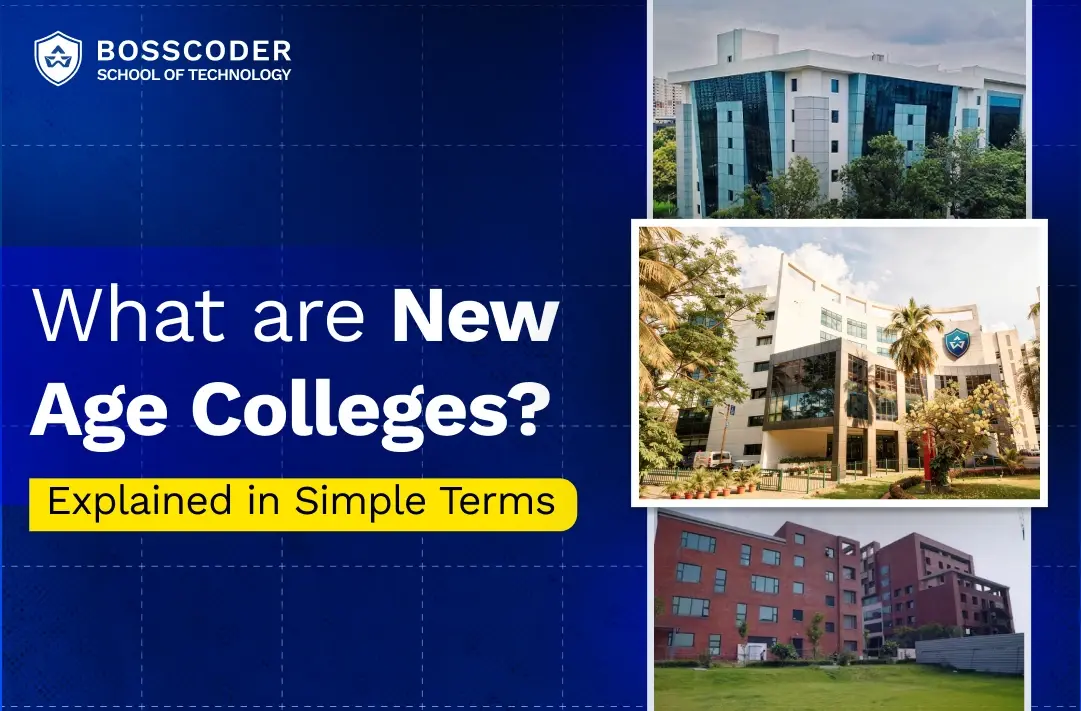
To get a clearer idea of BST’s location and campus environment, you can check the BST location overview.
What Are New Age Colleges?
New age colleges are modern institutions designed to make engineering education more practical and industry-aligned.
Instead of focusing only on theory and exams, these colleges prioritize:
→ Real-world tech skills
→ Industry 1: 1 mentorship
→ Hands-on projects
→ Industry exposure during college
→ Startup exposure
In simple terms:
They try to make students job-ready while they are still studying.
This is a shift from the traditional approach where students often learn practical skills only after graduation.
Why the Demand for New Age Colleges Is Growing
Students today are entering a very different tech industry.
Fields like:
→ Artificial Intelligence
→ Cloud Computing
→ Data Science
→ Cybersecurity
→ Software Product Engineering
are evolving rapidly.
Companies expect engineers who can build real systems, work with modern tools, and solve practical problems.
But many students graduate without working on real projects.
That’s why students and parents are increasingly exploring alternative education models.
How New Age Engineering Colleges Work Differently
While each institution has its own model, most new age colleges share a few common ideas.
1. Curriculum Designed Around Industry Skills
Traditional engineering programs update their syllabus very slowly. Many colleges follow the same curriculum for 15-16 years, making learning mostly theory-based.
New age colleges try to keep their curriculum aligned with current technology trends.
Students may learn topics like:
→ Data Structures and Algorithms
→ Backend Development
→ Machine Learning
→ System Design
→ Cloud Infrastructure
The idea is simple:
Teach what the industry actually uses.
2. Learning Through Real Projects
Another major change is project-based learning.
Instead of only studying concepts, students build applications such as:
→ Social media platforms
→ E-commerce apps
→ AI based projects
→ Recommendation systems
This helps students graduate with a strong portfolio, which companies often value more than theoretical knowledge.

3. Mentorship From Industry Engineers
Many new age programs invite industry professionals as mentors.
Students can learn from engineers who have worked at:
→ Top tech companies
→ Startups
→ Global tech firms
This helps them understand:
→ How real tech teams work
→ How software products are built
→ What companies expect in interviews
4. Early Internships and Industry Exposure
In traditional colleges, internships often come in the final year.
New age colleges try to introduce paid internships much earlier, sometimes in the second or third year.
For example, some programs report that a high percentage of students secure internships early in their academic journey.
This allows students to gain real industry experience before graduation.
Examples of New Age Colleges in India
Several institutions in India are experimenting with this model.
Some examples often discussed in this space include:
→ Bosscoder School of Technology
→ Newton School of Technology
→ Scaler School of Technology
→ NIAT programs offered with universities
These institutions aim to combine technology education with practical industry exposure.
Many of them focus heavily on computer science, AI, and software engineering, reflecting the growing demand for digital skills in the job market.
If you want to understand how these programs are structured, you can also explore our detailed blog on Degree & Curriculum in Modern Engineering Colleges, which explains what students typically study during the four years of engineering.
A Look at Bosscoder School of Technology
One example of this approach is Bosscoder School of Technology (BST).
BST offers a 4-year B.Tech in Computer Science & Artificial Intelligence designed to combine academic learning with real-world engineering experience.
The b.tech program focuses on three important aspects:
→ Industry-Aligned Learning
→ Students learn technologies that are actively used in the software industry.
→ Project-Based Education
→ Instead of only theory, students work on projects that simulate real tech products.
→ Career Preparation
Students receive mentorship and preparation for roles such as:
- Software Engineer
- AI Engineer
- Data Scientist
The goal is to ensure students graduate with both a recognized degree and practical engineering skills.
Is the Future of Engineering Education Changing?
Engineering education in India is evolving.
Traditional universities will continue to play a major role, especially institutions like IITs and NITs.
However, new age colleges represent a different approach to learning one that focuses more on skills, projects, and industry exposure.
As technology continues to change rapidly, education models may also need to adapt.
For many students interested in technology careers, understanding these new options can help them make better decisions about their future.
Final Thoughts
India has one of the largest engineering talent pools in the world, producing around 15 lakhs graduates every year.
But bridging the gap between education and real-world skills remains an important challenge.
New age colleges are one attempt to solve this problem by focusing on:
→ Practical learning
→ Industry mentorship
→ Hands-on projects
→ Real tech exposure
Colleges like Bosscoder School of Technology, Scaler School of Technology, and Newton School of Technology represent this evolving model of engineering education.
For students planning their future in technology, the key question may no longer be just “Which college should I choose?”
Instead, it might be:
"Which learning environment will help me build real industry skills during college?”
Frequently Asked Questions
Q1. What are new age engineering colleges in India?
New age engineering colleges are institutions that combine traditional degree programs with practical industry skills. Instead of focusing only on theory, they focus on coding practice, real-world projects, paid internships, and 1:1 mentorship from industry professionals to make students job-ready.
Q2. Why are new age engineering colleges becoming popular in India?
Many students and parents are exploring new age colleges because the technology industry now expects practical skills like coding, system design, and product development. These colleges try to bridge the gap between academic learning and real-world engineering work.
Q3. Which are some examples of new age engineering colleges in India?
Some commonly discussed new age engineering colleges include Bosscoder School of Technology, Newton School of Technology, and Scaler School of Technology. These colleges focus on combining engineering education with industry exposure and project-based learning.
Q4. How are new age colleges different from traditional engineering colleges?
Traditional engineering colleges often focus more on theory and exams, while new age colleges emphasize practical learning. Students work on real projects, receive 1:1 mentorship from industry engineers, and gain exposure to paid internships and modern technologies during their degree.