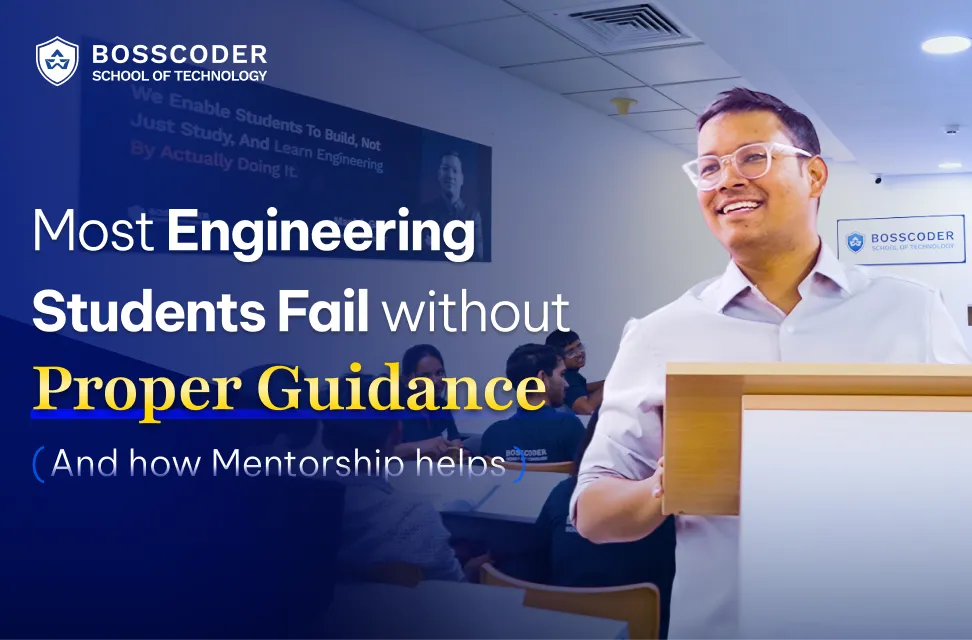
Most engineering students in India are not failing because they are lazy or incapable.
They’re failing because the education system they’re part of is broken. Walk into any typical engineering college, and you’ll see students facing:
→ 75% attendance requirement
→ Endless homework/assignments
→ Internals and Tests every week
→ But very little focus on real-world skills that actually get them hired
However, every year there are still many of students who successfully get placed at top tech companies.
The Real Problem: It’s the Education System
Every year, around 15 lakhs of students graduate with engineering degrees. But the harsh reality is:
→ A lot of students are not able to clear basic technical interviews
→ Some don’t have a single strong project
→ A lot of students do not know where to begin and what they should be studying about.
This happens because traditional education focuses on finishing the syllabus, not on building real skills.
In a traditional college you are taught;
→ How to pass exams.
→ How to write your theory answers.
→ How to memorize the material and concepts.
You do not learn:
→ How to build real-world systems from scratch
→ How to solve practical & industry-level problems
→ How technical interviews actually work in top tech companies
So when placement season arrives, most students feel:
“I studied everything… but I still don’t feel ready.”
That’s where things start breaking.
Why Most Engineering Students Fall Behind
1. Lack of Direction
One of the biggest issues is not knowing what to focus on.
Should you learn:
→ DSA?
→ Web development?
→ AI/ML?
→ Competitive programming?
Without guidance, students jump from one thing to another like YouTube tutorials, random courses, incomplete roadmaps.
Result?
A feeling of studying so much but not making any actual progress
2. Too Much Theory, Too Little Practice
Most colleges are still stuck in outdated, theory-heavy curriculum.
Students write:
→ Long answers about operating systems
→ Definitions of networking concepts
But when asked to:
→ Build an API
→ Design a system
→ Solve a real coding problem
They struggle. Because learning ≠ doing.
3. No Real Feedback Loop
Imagine learning coding without knowing:
→ If you’re doing it right
→ Where you’re making mistakes
→ How to improve
That’s the reality for most students.
They:
→ Solve questions but don’t know their level of understanding
→ Build projects but don’t know if they’re good enough
→ Prepare resumes but don’t know what skills recruiters expect
Without feedback, growth becomes slow and confusing.
4. Isolation & Lack of Peer Environment
Environment matters more than motivation.
If your surroundings don’t push you:
→ You procrastinate
→ You lose consistency
→ You settle for average
Many students don’t have access to:
→ Strong peer groups
→ Coding communities
→ Competitive environments
And that slows them down significantly.
5. No Understanding of the Industry
Most students don’t know:
→ How interviews actually work
→ What companies expect
→ What skills matter most
So they prepare blindly. This leads to:
→ Wasted time
→ Poor preparation strategy
→ Missed opportunities
So How Do Some Students Still Succeed?
Despite all this, many students crack top placements.
What was unique about their approach?
1. They focus on learning skills not just scoring marks
Grades (CGPA) are important, but they aren’t the most important.
Top students understand:
"Skills pay the bills."
They focus on:
→ Strong DSA fundamentals
→ Core CSE subjects
→ Problem solving ability
These are all areas where they will be evaluated by recruiters.
2. They Follow Structure Over Random Effort
They have a plan instead of doing it all:
→ Fixed Day/Time for College Work
→ Dedicated time for placement prep
→ Set Day/Time for Reviewing and Practicing
This reduces stress and increases consistency.
3. They Build Real Projects
They know:
Your GitHub is more valuable than your marksheet
Rather than having 10 small projects, they focus on;
→ 2-3 high quality meaningful projects
→ Real-world applications
→ Clean, structured code

4. They Learn in Communities
They surround themselves with:
→ People who are serious about learning
→ Development groups
→ Peer Groups
You grow faster when there are other people with you.
5. They Start Early
They do not wait for their final year.
They will:
→ Do Early Internships
→ Contribute to Open Source
→ Gain Work Experience while in College
6. They Practice Like It’s the Real Interview
They will:
→ Practice mock interviews
→ Get resume reviews
→ Work on communication
All preparation is incomplete without realistic simulation.
Where Mentorship Changes Everything
Here’s the truth most successful students don’t figure everything out on their own.
They have someone guiding them, correcting them, and keeping them on track.
That’s what mentorship does.
→ Clarity of Path
A mentor helps you understand what to learn, in what order, and what to ignore for saving months of confusion.
→ Accountability
With regular check-ins and deadlines, you stay consistent and disciplined.
→ Real Feedback
You get honest input on your code, projects, and resume something self-learning often lacks.
→ Industry Insights
Mentors show you what actually matters in interviews and real jobs, not just college theory.
→ Confidence Boost
Sometimes, hearing “you’re on the right track” is all you need to stay motivated and move forward.
That’s why mentorship often becomes the real turning point.
A Better Way: Learning With Structure + Mentorship
This is exactly the gap modern engineering colleges are trying to solve. One such example is Bosscoder School of Technology.
Instead of following the traditional model, it focuses on:
→ From Day 1, students develop skills through hands-on projects
→ Strong fundamentals + real-world application
→ Continuous 1:1 mentorship
→ Industry exposure during the degree itself
As highlighted in their approach :
→ Students complete real projects before they graduate
→ Mentors from top tech company guide them throughout their journey
→ There’s structured preparation for careers, not just exams
The concept is simple:
Don’t wait till final year to become job-ready. Start from Year 1.
This kind of model solves the exact problems we discussed:
→ Lack of direction
→ No feedback from industry experts
→ No understanding of industry needs
Final Thoughts
Let’s be real.
We can’t change the entire education system overnight. But we can change how we approach it.
Most students aren’t failing because they lack talent. They’re struggling because they don’t have:
→ Clear direction
→ Proper structure
→ The right mentorship
Fix these three, and things start to change.
Because success in engineering isn’t about doing more and more.
It’s about doing the right things, in the right way, with the right guidance.
Frequently Asked Questions (FAQs)
Q1. Why do most engineering students struggle with placements in India?
Most students focus heavily on theory and exams but lack practical skills, project experience, and interview preparation. This creates a gap between college learning and industry expectations.
Q2. Is CGPA important for getting a job in tech?
CGPA matters for eligibility in some companies, but skills like DSA, projects, and problem-solving ability are far more important during interviews.
Q3. How can I find a good mentor as an engineering student?
You can connect with:
→ Seniors in your college
→ Professionals on LinkedIn
→ Coding communities and Discord groups
Look for someone who has already achieved what you’re aiming for.
Q4. Can mentorship really improve placement chances?
Yes. Mentorship provides clarity, structured learning, feedback, and real industry insights all of which significantly increase your chances of cracking real interviews.