Engineering has long been one of the most popular career choices for students in India. Traditional engineering colleges have long been the default option for students after Class 12, but many of them still follow outdated curriculum and theory-heavy teaching methods.
At the same time, the technology industry has evolved rapidly. Companies today expect graduates to have strong coding skills, project experience, system design knowledge, and industry exposure from the start.
This gap between college education and industry expectations has led to the rise of New Age Schools of Technology.
Since these colleges focus on real-world learning environments, you can also explore the BST campus snapshot to understand where this experience happens.
These institutions are designed to combine academic degrees with real-world engineering skills, mentorship from industry professionals, and hands-on learning environments.
Let’s understand the key differences between traditional engineering colleges and modern technology-focused institutions.
What Are New Age Schools of Technology?
New Age Schools of Technology are modern educational institutions that focus on industry-integrated learning.
Unlike traditional engineering colleges that emphasize theoretical coursework, these schools combine:
→ Industry-aligned curriculum
→ Project-based learning
→ Mentorship from experienced engineers
→ Strong placement preparation
→ Real-world internships and exposure
Their goal is simple: prepare students to become industry-ready engineers from day one.
Many students today are exploring new age schools of technology that focus on practical learning and industry exposure.
Traditional vs Modern Engineering Colleges
Before looking at specific colleges, it helps to understand how traditional engineering colleges differ from modern industry-integrated colleges.
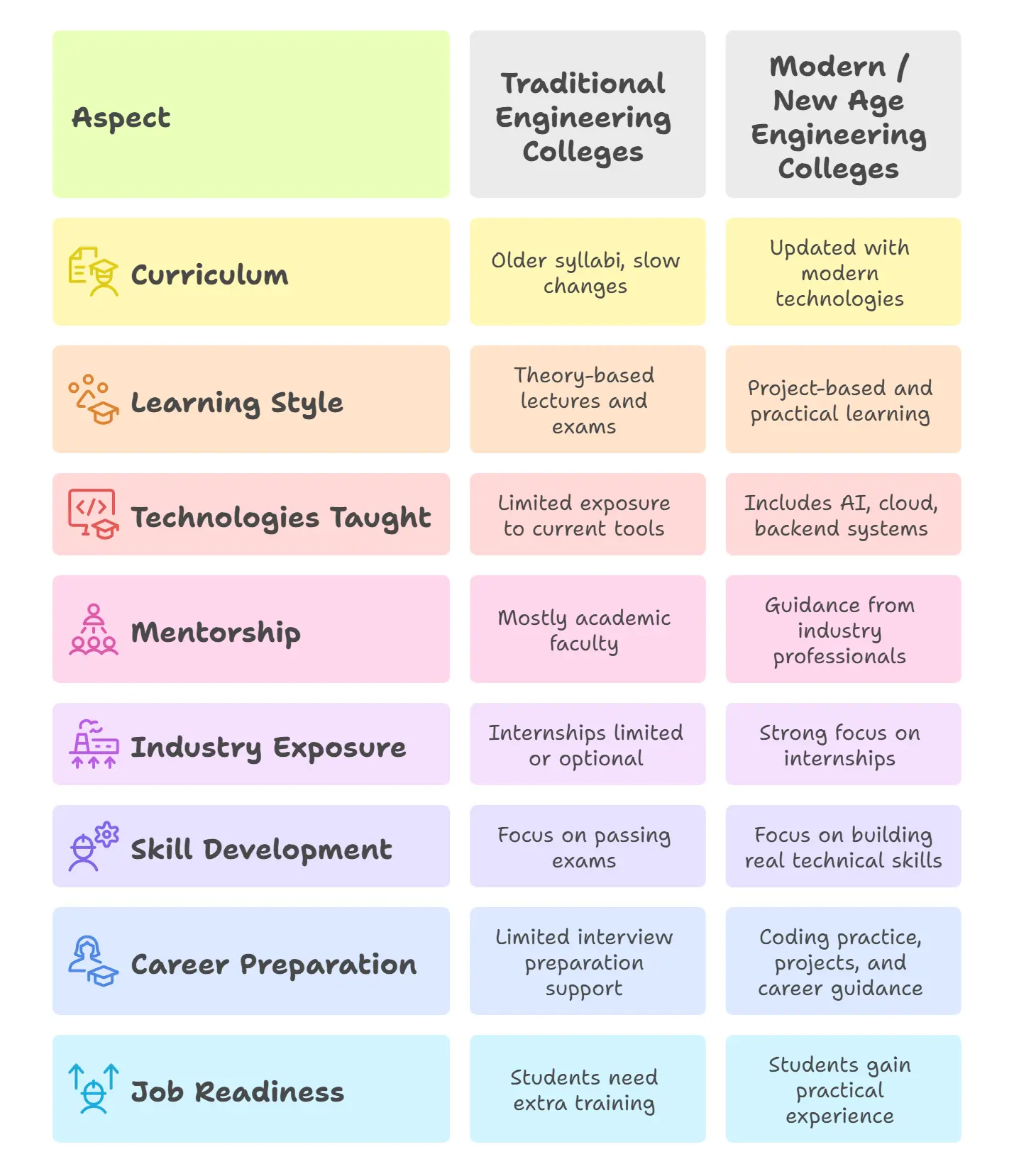
This shift in approach is why many students today are exploring new-age schools of technology that focus on practical skills and industry readiness.
Examples of New Age Technology Schools in India
Below are some of the well-known colleges in India that follow this modern approach to engineering education.
1. Bosscoder School of Technology (BST)
Bosscoder School of Technology (BST) is an industry-integrated engineering school focused on building strong software engineers through a combination of academic learning and practical industry exposure.
The college offers a 4-year B.Tech in Computer Science and Artificial Intelligence designed to combine academic depth with real-world engineering skills.
The b.tech program is delivered in collaboration with S-VYASA University, Bengaluru, allowing students to earn a UGC-recognized B.Tech degree while learning modern technologies and building real-world engineering skills.
Key Highlights:
→ Industry-aligned curriculum designed by experienced engineers
→ Hands-on projects and practical learning from the first year
→ 1:1 Mentorship from engineers working in top tech companies
→ 1-year industry immersion, where students gain real experience through internships or industry projects
→ Access to 500+ hiring partners for career opportunities
Instead of separating academics and industry exposure, BST integrates both throughout the program to help students graduate as industry-ready engineers.
To learn more about the differences, you can read our detailed guide on why choose Bosscoder School of Technology over traditional engineering colleges.
2. Scaler School of Technology
Scaler School of Technology is another modern institution focusing heavily on software engineering and data science education.
Scaler is known for its strong industry mentorship model and coding-focused curriculum.
Key Highlights:
→ Intensive software engineering and data science curriculum
→ Industry expert-led mentorship sessions
→ Strong emphasis on coding and real-world projects
→ Dedicated interview preparation programs
→ Focus on job readiness and career outcomes
Scaler’s approach is designed to help students develop strong programming and system design skills aligned with industry expectations.
3. Newton School of Technology
Newton School of Technology focuses on building practical software engineering skills through immersive learning experiences.
The institution offers programs centered around full-stack development, coding practice, and career-focused training.
Key Highlights:
→ Full-stack development and software engineering training
→ Live coding sessions and industry mentorship
→ Personalized career guidance
→ Strong placement-focused programs
→ Project-based learning approach
Newton School’s learning model focuses on continuous practice and real-world problem solving.
4. Polaris School of Technology
Polaris School of Technology offers a UGC-approved B.Tech in Computer Science with a focus on emerging technologies like AI and machine learning.
The institution aims to blend traditional academic learning with industry mentorship.
Key Highlights
→ UGC-recognized B.Tech degree program
→AI and Machine Learning specializations
→ Industry mentorship from experienced professionals
→ Project-based learning approach
→ Technology-focused campus environment in Bangalore
Polaris focuses on preparing students for careers in modern technology roles.
Comparison of Popular New Age Schools in India
To make it easier to understand the differences between these institutions, here’s a simple comparison table.
| College | Degree / Program | Learning Approach | Industry Exposure | Key Focus |
|---|---|---|---|---|
| Bosscoder School of Technology | UGC-approved B.Tech in Computer Science & AI | Project-based learning from Day 1 | 1:1 Mentorship + 1-year industry immersion | Building industry-ready software engineers |
| Scaler School of Technology | Software engineering focused program | Coding-heavy curriculum | Industry mentors and interview prep | Strong programming and system design |
| Newton School of Technology | Software engineering training | Live coding + project learning | Industry mentors and career guidance | Placement-oriented learning |
| Polaris School of Technology | B.Tech in Computer Science | Project-based engineering education | Industry mentorship | AI/ML specialization |
This comparison highlights how modern engineering schools focus on practical learning and industry alignment, unlike many traditional colleges.
Why Students Are Choosing New Age Technology Schools
The popularity of these institutions has grown because they address several limitations of traditional engineering education.
Here are some key reasons students are choosing them:
1. Industry-Aligned Curriculum
Many traditional colleges still follow syllabi that haven’t changed significantly for years.
New age schools regularly update their curriculum to include:
→ Artificial Intelligence
→ Cloud Computing
→ Data Engineering
→ Backend Development
→ System Design
2. Hands-On Learning
Students build real-world projects such as:
→ Web applications
→ AI models/projects
→ Recommendation systems
→ Scalable backend systems
This helps them build strong portfolios for job interviews.
3. Mentorship from Engineers
Instead of learning only from academic faculty, students often learn from engineers working in leading tech companies.
This provides insights into real-world engineering practices.
4. Strong Career Preparation
New age schools focuses on:
→ Coding practice
→ Mock interviews
→ System design preparation
→ Internship opportunities
This structured preparation improves the chances of landing jobs in top technology companies.
How to Choose the Right New Age Engineering School
If you’re considering joining a modern technology-focused college, here are a few factors to evaluate:
Curriculum
Check if the curriculum includes modern technologies, practical projects, and is designed by industry professionals.
Mentorship:
Look for institutions where students can learn from experienced engineers and industry professionals.
Internship Opportunities:
Real-world internships are critical for gaining practical experience.
Placement Support:
A strong placement network and career guidance system can significantly improve job opportunities.
Degree Recognition:
If you want long-term career flexibility, ensure the program offers a recognized engineering degree.
Final Thoughts
Engineering education is evolving rapidly, and new-age technology schools are playing an important role in shaping the future of tech learning in India.
Colleges like Bosscoder School of Technology, Scaler School of Technology, Newton School of Technology, and Polaris School of Technology represent this new wave of industry-integrated education.
While each institution has its own approach, the common goal is clear: prepare students to succeed in the modern technology industry.
For students aspiring to build careers in software engineering, AI, and emerging technologies, these new-age institutions offer a learning environment that combines academic knowledge with practical experience.
Choosing the right college ultimately depends on your learning style, career goals, and the kind of exposure you want during your engineering journey.
Frequently Asked Questions
Q1. What are New Age Schools of Technology?
New Age Schools of Technology are modern engineering institutions that combine academic degrees with practical industry skills. They focus on coding practice, real projects, mentorship from industry engineers, and internships to make students job-ready.
Q2. Which are the top New Age technology schools in India?
Some popular new-age technology schools in India include Bosscoder School of Technology, Scaler School of Technology, Newton School of Technology, and Polaris School of Technology. These colleges focus on industry-aligned learning and practical software engineering skills.
Q3. How are New Age technology schools different from traditional engineering colleges?
Traditional engineering colleges focus mainly on theory and exams. New Age Schools of Technology focus on practical learning, real-world projects, mentorship from industry professionals, and strong career preparation for software engineering roles.
Q4. Are New Age engineering colleges good for software engineering careers?
Yes. Many new age engineering schools focus heavily on coding, system design, and real-world software projects. This helps students build strong portfolios and improve their chances of getting jobs in technology companies.