Introduction
Software engineering is one of the highest-paying and fastest-growing careers in the tech industry. From mobile apps and websites to artificial intelligence and cloud computing, software engineers build the digital products we use every day.
If you are a student, graduate, or career switcher wondering how to become a software engineer, this complete step-by-step guide will help you understand the required skills, qualifications, salary expectations, and career roadmap in simple language.
What is a Software Engineer?
A software engineer is a professional who designs, develops, tests, and maintains software applications and systems. They use programming languages, problem-solving skills, and engineering principles to build reliable and scalable digital solutions.
In simple words, software engineers write code that solves real-world problems.
Key Responsibilities of a Software Engineer
Software engineers work on different stages of software development. Their day-to-day work may include:
→ Writing clean and efficient code
→ Designing system architecture
→ Fixing bugs and improving performance
→ Testing applications before launch
→ Collaborating with designers and product teams
→ Maintaining and updating existing software
Why Choose Software Engineering as a Career?
Software engineering offers strong career growth, global opportunities, and excellent salary packages. It is one of the most stable and future-proof career options.
Top Reasons to Become a Software Engineer
Here are some major benefits of choosing this career path:
→ One of high demand job in India and globally
→ Competitive salary packages
→ Remote and hybrid work opportunities
→ Opportunities in top tech companies (Google, Amazon, Microsoft, etc.)
→ Continuous learning and career growth
→ Scope in multiple industries like fintech, healthcare, gaming, AI, and startups
Step-by-Step Guide: How to Become a Software Engineer
Becoming a software engineer requires a combination of education, technical skills, and practical experience. Below is a clear roadmap you can follow.
Step 1: Choose the Right Educational Path
A strong foundation in computer science concepts is important for long-term success.
You can choose from multiple learning paths:
Option 1: Bachelor’s Degree in Computer Science or IT
- B.Tech / B.E in Computer Science
- BCA / B.Sc IT
- Software Engineering Degree
This is the best and structured route. Some modern colleges like Bosscoder School of Technology (BST) go a step further by integrating hands-on projects, industry mentorship, and product-based company preparation into the curriculum.
Option 2: Online Courses and Certifications
→ Data Structures and Algorithms
→ Web Development Courses
→ Cloud Computing Certifications
→ Full Stack Development Programs
Option 3: Coding Bootcamps
Bootcamps are short-term, intensive programs that focus on job-ready skills.
👉 Timeline:
- Degree: 3-4 years
- Bootcamp: 4-12 months
- Self-learning: 6–18 months (with consistency)
Step 2: Learn Programming Languages
Programming is the core skill of a software engineer. Start with one language and master it before moving to others.
Here are some of the best programming languages for beginners:
- Python: Easy to learn, great for beginners and AI
- Java: Popular for enterprise applications and Android
- JavaScript: Essential for web development
- C++: Strong for competitive programming and system design
- SQL: Important for database management
Focus on understanding logic rather than memorizing syntax.
Step 3: Master Core Computer Science Concepts
To crack interviews and build scalable systems, you must understand core technical concepts.
These fundamentals form the backbone of software engineering:
→ Data Structures and Algorithms (DSA)
→ Object-Oriented Programming (OOP)
→ Database Management Systems (DBMS)
→ Operating Systems (OS)
→ Computer Networks
→ Software Development Life Cycle (SDLC)
→ Git and GitHub (Version Control)
Strong fundamentals help you clear technical interviews at product-based companies.
Step 4: Build Real-World Projects
Learning theory is not enough. Recruiters look for practical skills.
Start building small projects and gradually move to advanced applications.
Examples of beginner-friendly projects:
→ To-do list application
→ Personal portfolio website
→ Blogging platform
→ Weather app using API
→ E-commerce website clone
Upload your projects on GitHub and create a strong developer portfolio.
Step 5: Choose Your Specialization
Software engineering has multiple career paths. Once you understand basics, you can specialize in a specific domain.
Popular software engineering career paths:
→ Frontend Developer
→ Backend Developer
→ Full Stack Developer
→ Data Engineer
→ DevOps Engineer
→Mobile App Developer
→ Cloud Engineer
→ Machine Learning Engineer
Choose based on your interest and market demand.
Step 6: Gain Internship or Work Experience
Internships give you real industry exposure and help you understand how teams work in companies.
You can:
- Apply for software development internships
- Contribute to open-source projects
- Freelance on small projects
- Participate in hackathons
Practical experience increases your chances of getting a high-paying software engineer job.
Step 7: Prepare for Software Engineer Interviews
Most product-based companies focus on:
→ Data Structures and Algorithms & Coding rounds
→ System Design (for experienced roles)
→ Problem-solving ability
→ Behavioral interview questions
Practice on platforms like LeetCode, CodeStudio, and HackerRank to improve your coding skills.
Skills Required to Become a Software Engineer
To succeed in this career, you need both technical and soft skills.
Technical Skills
→ Programming languages (Python, Java, C++)
→ Data Structures and Algorithms
→ Database management
→ API integration
→ Cloud computing basics
→ System design
Soft Skills
→ Problem-solving mindset
→ Communication skills
→ Team collaboration
→ Logical thinking
→ Continuous learning attitude
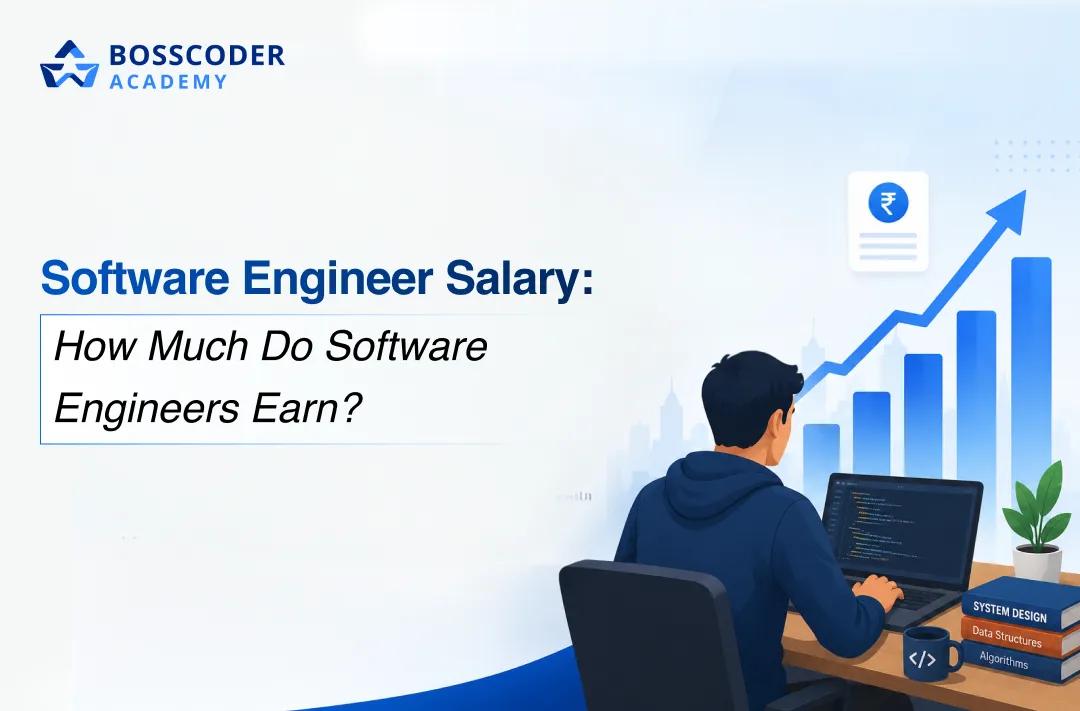
Software Engineer Salary in India (2026)
Salary depends on skills, experience, and company type.
- Entry-Level Software Engineer: ₹4-10 LPA
- Mid-Level Engineer: ₹10-25 LPA
- Senior Software Engineer: ₹25-50+ LPA
- Top Product-Based Companies: ₹40+ LPA
With strong DSA and system design skills, you can crack high-paying software engineering roles.
How Long Does It Take to Become a Software Engineer?
The time required depends on your learning path and consistency.
- College students: 3-4 years
- Career switchers: 6-12 months with focused learning
- Self-taught learners: 1-2 years
Consistency matters more than speed.
Final Thoughts
Becoming a software engineer is not about memorizing code. It is about solving problems, building real-world projects, and continuously improving your skills.
If you follow the right roadmap, practice consistently, and build strong fundamentals, you can build a successful career in software engineering.
FAQs on How To Become a Computer Software Engineer
Q1. How can I become a software engineer after 12th?
After 12th, you can pursue a B.Tech/B.E in Computer Science, BCA, or B.Sc IT. If you don’t want a traditional degree, you can learn programming through online courses, coding bootcamps, and self-study. Start with one programming language like Python or Java, build projects, and practice Data Structures and Algorithms to prepare for software engineering jobs.
Q2. Can I become a software engineer without a degree?
Yes, you can become a software engineer without a formal degree. Many companies focus more on skills, projects, and problem-solving ability rather than just qualifications. If you have strong programming knowledge, real-world projects, GitHub portfolio, and good interview preparation, you can get hired even without a computer science degree.
Q3. Which programming language is best for beginners?
Python is considered the best programming language for beginners because it is easy to learn and widely used in web development, automation, and artificial intelligence. However, Java and JavaScript are also great options depending on your career goals.
Q4. How long does it take to become a software engineer?
It depends on your learning path and dedication.
→ With a degree: 3-4 years
→ Through bootcamp or structured program: 6-12 months
→ Self-learning: 1-2 years
If you stay consistent and build projects regularly, you can become job-ready faster.