Introduction
Choosing the right course after 12th is one of the most important decisions in a student’s career. With technology like AI is growing rapidly, computer engineering has become one of the most popular and future-proof fields.
From software development to artificial intelligence, this field offers multiple career paths with strong growth and high salary potential. However, many students feel confused about which course to choose, what skills are needed, and how to start.
This blog explains everything in a simple and structured way to help students make the right decision.
Why Choose Computer Engineering?
Computer Engineering is a field that combines software development, computer systems, and problem-solving using technology.
Students learn how computers work, how software is built, and how large systems handle data and users in real-world applications.
Key areas covered:
→ Programming languages like Java, Python, and C++ to build real applications
→ Data Structures and Algorithms to improve problem-solving and coding skills
→ Databases to store, manage, and retrieve data efficiently
→ Operating Systems to understand how computers run internally
→ Computer Networks to learn how systems connect and communicate
Why it is important:
→ High demand across industries like tech, finance, and healthcare
→ Strong career growth with multiple job roles and specializations
→ Opportunity to work on real-world problems and innovative products
→ One of the highest-paying and future-proof career options
It is a practical field where logic, consistency, and hands-on experience matter more than theoretical knowledge alone.
What is the Eligibility for Computer Engineering Courses After 12th?
Before choosing any computer engineering course, it is important to understand the basic eligibility requirements. These requirements may vary slightly depending on the course and college.
Basic eligibility criteria:
→ Most courses require Physics, Chemistry, and Mathematics (PCM) in Class 12th
→ Some courses like BCA may not strictly require Mathematics
→ Minimum 50% to 75% marks are generally required in 12th
→ Admission is based on entrance exams like JEE or state-level exams
→ Diploma students can apply through lateral entry in the second year
It is always recommended to check the specific eligibility criteria of the college or course before applying.
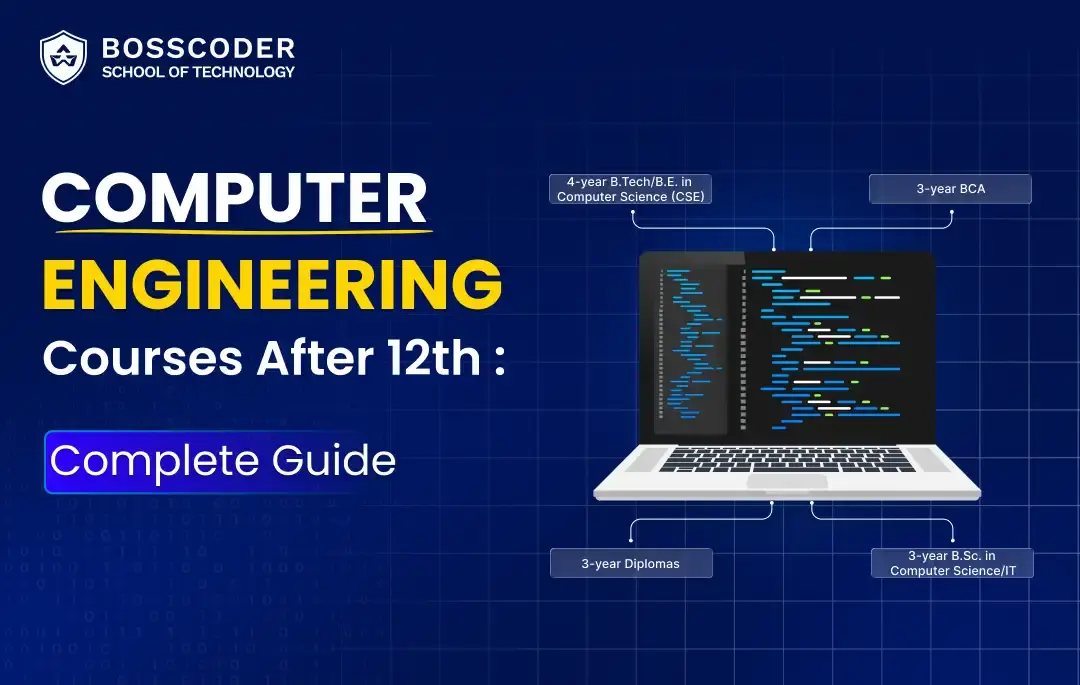
Top 5 Computer Engineering Courses After 12th
After completing 12th with Science stream, students have multiple options depending on their goals and preferences.
1. B.Tech in Computer Science Engineering (CSE)
This is the most popular and in-demand course among students.
Duration: 4 years
Eligibility: 12th with Physics, Chemistry and Mathematics (PCM)
What you learn:
→ Strong programming foundation for software development
→ DSA for solving coding problems asked in interviews
→ Web development for building real-world applications
→ Basics of system design for scalable systems
Career options:
→ Software Developer in product-based companies
→ Backend Engineer working on large systems
→ Full Stack Developer handling both frontend and backend
→ Data Engineer working with large datasets
This program is best for students aiming for top tech companies and high-paying roles.
Many students rely only on college syllabus, but top companies require deeper problem-solving skills. Colleges like Bosscoder School of Technology help students build strong DSA and system design knowledge alongside college.
2. B.Tech in Information Technology (IT)
This course is similar to CSE but focuses more on practical IT systems and applications.
Duration: 4 years
What you learn:
→ Networking concepts to manage system communication
→ Database systems for handling large-scale data
→ Software development for business applications
→ Cybersecurity basics for system protection
Career options:
→ IT Engineer managing systems and infrastructure
→ Software Developer building applications
→ System Administrator handling networks and servers
A good option for students interested in software systems and IT operations.
3. BCA (Bachelor of Computer Applications)
BCA is a strong alternative for students who do not choose B.Tech but still want to enter tech.
Duration: 3 years
What you learn:
→ Programming basics to start coding journey
→ Web development to build websites and apps
→ Database management for storing data
Career options:
→ Web Developer building websites and applications
→ Junior Software Developer starting in tech roles
→ Software Tester ensuring quality of applications
Many students pursue MCA or upskill further to improve career opportunities.
BCA students often need additional industry-level skills to compete with B.Tech graduates. Structured programs like Bosscoder Academy help in building job-ready skills.
4. Diploma in Computer Engineering
This is a shorter and more practical course.
Duration: 3 years
What you learn:
→ Basic programming and coding fundamentals
→ Computer hardware and system components
→ Networking basics for communication systems
Career options:
→ Technical support roles
→ Junior-level development roles with additional skills
Suitable for early entry into the technical field, but higher education is recommended for long-term growth.
5. B.Sc in Computer Science
This course focuses more on theoretical understanding and academic learning.
Duration: 3 years
What you learn:
→ Core programming and algorithms
→ Mathematical concepts for computing
→ Data structures and logic building
Career options:
→ Software Developer roles
→ Analyst positions
→ Research or academic careers
Best for students interested in deeper understanding along with coding.
Key Skills Required for Computer Engineering
No matter which course is chosen, these skills are essential for success.
1. Programming Skills
→ Ability to write clean and efficient code
→ Understanding of at least one language deeply
2. Problem-Solving Ability
→ Strong DSA knowledge for coding interviews
→ Logical thinking to solve complex problems
3. System Understanding
→ Knowledge of databases, OS, and networks
→ Understanding how real-world systems scale
4. Practical Development Skills
→ Building real-world projects
→ Hands-on experience with tools and frameworks
How to Choose the Right Course
The right course depends on career goals and learning preferences.
Choose B.Tech CSE if:
→ Aim is to work in top tech companies like Google, Microsoft, etc.
→ Strong interest in coding and problem-solving
→ Willing to invest 4 years in deep learning

Choose BCA if:
→ Prefer a shorter and flexible course
→ Plan to upskill through additional programs like Software Engineering Program with Applied GenAI
→ Interested in practical learning
Choose Diploma if:
→ Want early job opportunities
→ Plan to continue studies later
The most important factor is consistent skill development.
Career Opportunities After Computer Engineering
Computer engineering offers diverse and high-growth career paths.
Popular roles:
→ Software Engineer building applications and systems
→ Full Stack Developer handling end-to-end development
→ Data Engineer working with data pipelines
→ Machine Learning Engineer building AI models
→ DevOps Engineer managing deployment systems
Where you can work:
→ Product-based companies
→ Startups and tech companies
→ IT service companies
Demand for skilled developers is increasing rapidly across industries.
Why Skills Matter More Than Degree
A degree alone is not enough in today’s competitive environment.
Companies focus on:
→ Problem-solving ability through coding rounds
→ Strong understanding of core concepts
→ Real-world project experience
Bosscoder School of Technology focuses on building strong fundamentals in DSA, system design, and real interview preparation to help students move toward top product-based companies.
Conclusion
Computer engineering is one of the best career options after 12th for students interested in technology and innovation.
Courses like B.Tech CSE, BCA, and B.Sc Computer Science offer different paths, but success depends on skills, not just the degree.
Consistent practice, strong fundamentals, and real-world exposure are the key factors that help students grow in this field and achieve long-term success.
FAQs:
1. Which course is best for computer engineering after 12th?
B.Tech in Computer Science Engineering is the most popular choice. It offers better job opportunities and strong career growth.
2. Can I pursue computer engineering without maths in 12th?
Most B.Tech courses require maths as a main subject. However, some BCA courses allow students without maths.
3. What skills are most important for computer engineering?
Programming, problem-solving, and basic DSA are very important. Understanding systems and building projects also helps a lot.
4. Is computer engineering a good career option?
Yes, it offers high-paying jobs and strong future growth. There are many roles like developer, data engineer, and more.