Artificial Intelligence (AI) is a technology that helps machines think and act like humans. It allows computers to learn from data, understand patterns, and make decisions on their own. AI is used to solve problems faster and make everyday tasks easier.
For example: AI is used in voice assistants, product recommendations like in shopping online, spam email filtering, and customer support chatbots.
Why is AI important?
AI is becoming important because it is used in many parts of our daily life and work. The AI industry is growing by 30% every year, creating more job opportunities. Companies now use AI to work faster, make better decisions, and solve real problems.
AI is also changing the tech market because many top product companies now focus more on skills than degrees, and people with AI knowledge are also in high demand. AI is important because it helps to:
- Solve real-world problems using data
- Improve efficiency and accuracy
- Create new career opportunities
- Prepare you for future tech roles
Skills & Tools Needed for These AI Projects
You don’t need to know everything about AI to get started. Just focus on a few core skills and tools that are commonly used in real AI projects.
Fun fact: Most AI developers spend more time Googling errors than writing code and that’s completely normal
Best Programming Languages to Start with AI
Python
Python is the most widely used language in the AI world. It is easy to read, beginner-friendly, and has powerful libraries that make building AI projects much simpler.
Why Python is best for AI:
- Simple syntax that is easy to understand, even for beginners
- Large community support with plenty of tutorials and examples
- Powerful AI and machine learning libraries that save time and effort
With Python, you can create chatbots, AI agents, automation systems, and generative AI applications without writing complex code.
JavaScript
JavaScript is useful if you want to add AI features directly to websites or web apps. It’s commonly used for AI-powered chat interfaces, browser-based tools, and frontend integrations.
Good to know: If you already know web development, JavaScript + AI is a powerful combo.
R Language
R is mainly used for data analysis and statistics. It’s helpful for AI projects related to data visualization, research, and analytics.
Good to know: R is popular in research and academic projects but less common for production AI apps.
Java
Java is used in large-scale and enterprise-level AI systems. It’s helpful when AI needs to run inside big applications with high performance and stability.
Good to know: Java is more complex than Python, so it’s usually learned later.
Key Concepts to Know
You don’t need deep math or advanced theory at the beginning. Understanding these core concepts is enough to start building meaningful AI projects:
- Generative AI: Used to create content like stories, images, shopping assistants, and educational tools.
- AI Agents & Automation: Helps build smart bots that can perform tasks, research topics, or improve productivity.
- NLP & Voice Processing: Used in chatbots, wellness apps, and voice-based commands like speech-to-text.
- Basic Computer Vision: Helps AI understand images and human actions for simple interaction-based projects.
Tools You’ll Use
These tools help you build, test, and present your AI projects in a simple and effective way:
- Python + Jupyter Notebook: For writing code, testing ideas, and learning step by step.
- OpenAI / Generative AI APIs: To add intelligence to your AI agents and assistants.
- Git & GitHub: To store your projects, track changes, and share your work with recruiters.
- Streamlit / Gradio: To create quick, clean demos of your AI apps without worrying about frontend design.
Once you’re familiar with these tools, the next step is to actually apply them.That’s where AI projects come in & help you practice what you’ve learned and turn theory into real, working solutions.
Beginner AI Project Ideas (Data Science & ML)
These beginner AI projects help you understand the complete machine learning workflow. You’ll learn how to collect data, clean it, train a model, and check its accuracy.
By working on these projects, you’ll build a strong foundation in data science and machine learning through real-world practice.
1. AI Shopping Buddy

The Problem
Online shopping can be confusing and time consuming. Many users struggle to find the right product, compare options, or choose what best fits their needs.
What You’ll Build
- You will build a simple AI shopping assistant.
- It helps users find products based on their needs and budget.
- Users can ask questions just like they talk to a real person.
Why It’s Useful
- This project shows how AI can simplify decision-making for users.
- It helps reduce confusion when there are too many product choices online.
- This project shows how AI can improve user experience.
Skills & Tools Involved
- Python to write the main code
- AI or LLM APIs to understand user questions
- Basic text understanding (NLP)
- Git & GitHub to save and share your project
How It Works
- The Customer types what they want to buy.
- The AI reads the message and understands the need.
- It then suggests products in a simple and helpful way.
Real World Use Case
Used in e-commerce apps and websites to build shopping assistants and product recommendation systems. Companies like Amazon, Flipkart, and Myntra use similar AI features to improve the shopping experience.
2. Generative AI storymaker
The Problem
Creating stories takes time and creativity. Many people struggle to come up with ideas, plots, or interesting characters, especially when writing regularly for blogs, learning, or entertainment.
What You’ll Build
- You will build an AI-powered story generator.
- It can create short stories, poems, or scripts based on user input.
- Users can give prompts like genre, characters, or mood, and the AI generates a story.
Why It’s Useful
- It helps users quickly create creative content.
- Useful for writers, students, and content creators who need ideas.
- This project shows how generative AI can produce human-like text.
Skills & Tools Involved
- Python to handle logic and prompts
- Generative AI or LLM APIs for text generation
- Basic NLP concepts
- Git & GitHub to save and showcase your project
How It Works
- The user enters a prompt such as story type or theme.
- The AI understands the prompt and generates a story.
- The output is shown in simple and readable text format.
Real World Use Case
Used in content creation tools, writing assistants, and entertainment platforms. Companies like Netflix, Disney, and Medium use similar AI systems to support creative storytelling and content generation.
3.Health and Wellness AI App
The Problem
Many people find it hard to maintain healthy habits due to busy schedules, lack of guidance, or low motivation. Tracking health routines and staying consistent can feel difficult.
What You’ll Build
- You will build an AI-based health and wellness assistant.
- It helps users with daily habits like exercise, sleep, hydration, or mental wellness.
- Users can ask questions or get simple tips related to their health goals.
Why It’s Useful
- It helps users stay consistent with healthy routines.
- Provides quick and simple wellness guidance anytime.
- This project shows how AI can support personal well-being in a practical way.
Skills & Tools Involved
- Python to write the core logic
- AI or LLM APIs to respond to user queries
- Basic NLP for understanding text input
How It Works
- The user enters a health-related question or goal.
- The AI understands the input and gives simple advice or reminders.
- The response is shown in an easy-to-read and supportive tone.
Real World Use Case
It is Used in fitness and wellness apps to provide guidance and reminders. Companies like Fitbit, Headspace, and Cure.fit use similar AI features to improve user health and engagement.
Intermediate AI Project Ideas
These intermediate level AI projects help you move beyond the basics and apply machine learning to more realistic problems. You’ll work with larger datasets, perform feature engineering, tune models, and evaluate performance using proper metrics.
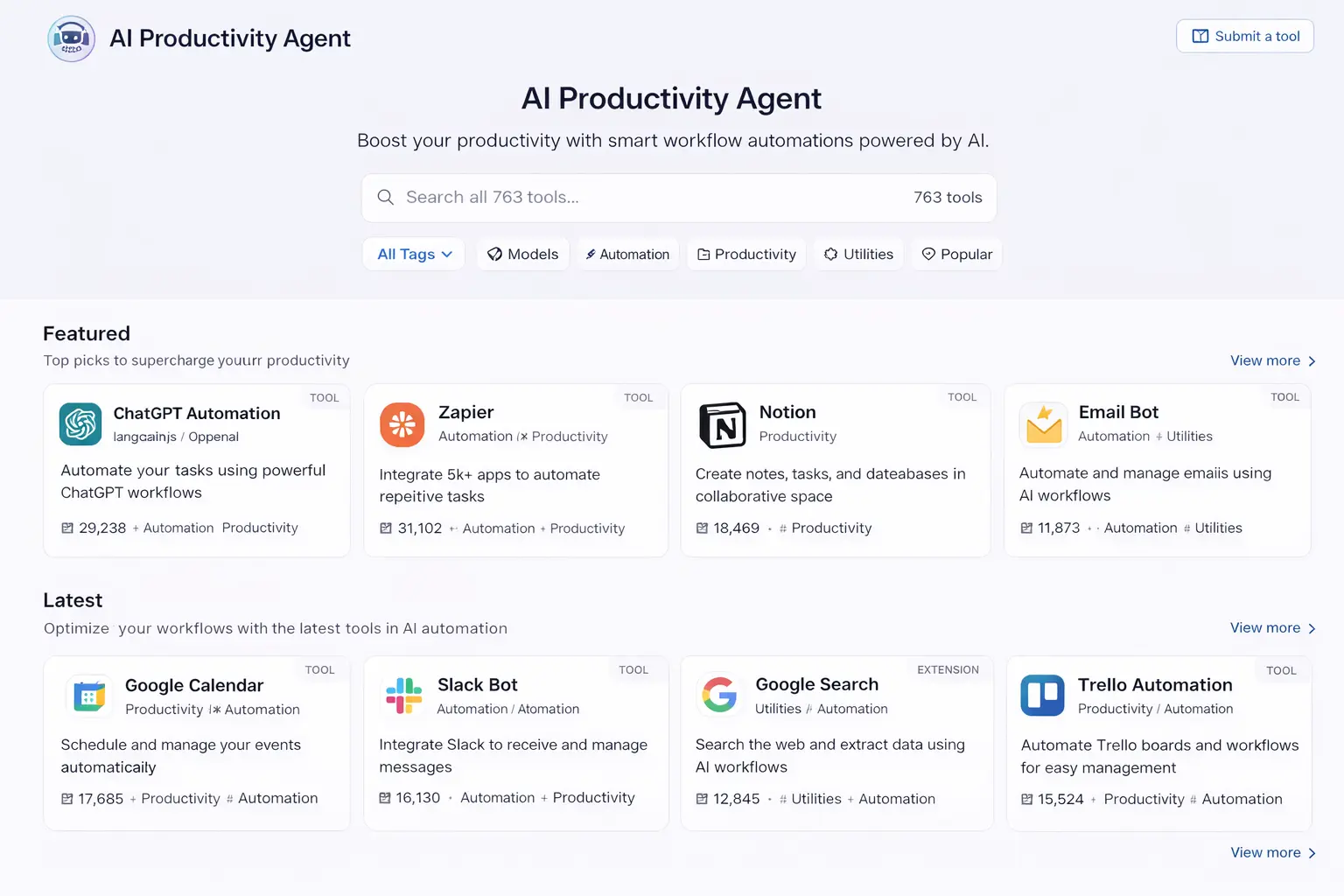
4. AI Productivity Agent
The Problem
Staying productive every day is difficult. People often struggle with managing tasks, emails, notes, and deadlines, which leads to missed priorities and wasted time.
What You’ll Build
- You will build an AI-powered productivity agent.
- It can manage tasks, create to-do lists, summarize notes, and suggest priorities.
- Users can input tasks, goals, or reminders, and the AI helps organize and plan them.
Why It’s Useful
- It saves time by automating daily planning and organization.
- Useful for students, professionals, and busy individuals who want to stay focused.
- This project shows how AI can act as a personal productivity assistant.
Skills & Tools Involved
- Python to handle logic and task flow
- Generative AI or LLM APIs for understanding and generating responses
- Basic NLP concepts like summarization and intent recognition
How It Works
- The user enters tasks, notes, or goals.
- The AI analyzes the input and prioritizes or summarizes information.
- The output is shown as clear action items, schedules, or suggestions.
Real World Use Case
AI productivity agents are used in tools by companies like Google and Microsoft to help users organize tasks and work more efficiently.
5. Voice-to-Action System
The Problem
Typing commands or navigating apps can be slow and inconvenient, especially when users are busy or multitasking. Many people want a faster, hands-free way to perform actions like setting reminders, opening apps, or managing tasks.
What You’ll Build
- You will build a voice-to-action system powered by AI.
- It can listen to voice commands and convert them into actions like creating tasks, setting reminders, or fetching information.
- Users can speak simple commands, and the system responds or performs the requested action.
Why It’s Useful
- It enables hands-free interaction and saves time.
- Useful for busy professionals, students, and smart device users.
- This project shows how AI can connect speech understanding with real actions.
Skills & Tools Involved
- Python for handling logic and workflows
- Speech-to-text APIs for voice recognition
- NLP for understanding user intent
- Basic automation or API integration
How It Works
- The user gives a voice command.
- The system converts speech into text and understands the intent.
- The required action is performed and feedback is given to the user.
Real World Use Case
Voice-to-action systems are widely used in virtual assistants and smart devices by companies like Microsoft and Amazon to enable voice-controlled actions.

6. Research Augmentation with Autonomous Research Agent
The Problem
Doing research takes a lot of time. Finding reliable sources, reading multiple articles, and summarizing information can be overwhelming, especially for students and professionals working under strict deadlines.
What You’ll Build
- You will build an autonomous AI research agent.
- It can search for information, read multiple sources, and generate concise summaries.
- Users can provide a research topic or question, and the agent gathers and organizes relevant insights.
Why It’s Useful
- It reduces the time spent on manual research.
- Helpful for students, researchers, analysts, and content creators.
- This project shows how AI agents can work independently to support decision-making.
Skills & Tools Involved
- Python for orchestration and logic
- LLM or Generative AI APIs for understanding and summarizing content
- Basic web data handling or API usage
- NLP concepts like summarization and keyword extraction
How It Works
- The user enters a research topic or question.
- The agent collects information from multiple sources.
- The AI summarizes key points and presents them in a structured format.
Real World Use Case
Autonomous research agents are used by companies like OpenAI (ChatGPT)and Google (Gemini) to assist with information discovery, summarization, and knowledge management.
Advanced AI Project Ideas
And now, these advanced AI projects take you to the next level. You’ll work on complex, real-world problems, build intelligent and scalable AI systems, and create solutions that are closer to production use.
7. Multi-Agent AI Team Project
The Problem
Many real-world problems are too complex for a single AI system to handle efficiently. Tasks like planning, research, decision-making, and execution often require multiple skills working together, which is difficult to manage with one model.
What You’ll Build
- You will build a multi-agent AI system where multiple AI agents work as a team.
- Each agent has a specific role, such as planner, researcher, executor, or reviewer.
- Agents communicate with each other to solve a task collaboratively.
Why It’s Useful
- It breaks complex problems into smaller, manageable tasks.
- Improves accuracy and efficiency through collaboration.
- This project shows how advanced AI systems can mimic team-based workflows.
Skills & Tools Involved
- Python for agent logic and coordination
- Generative AI or LLM APIs for reasoning and communication
- Prompt engineering for defining agent roles
- Basic orchestration frameworks or workflows
How It Works
- The user provides a goal or problem.
- A planner agent divides the task into subtasks.
- Other agents work in parallel and share results.
- A final agent reviews and combines the output.
Real World Use Case
Multi-agent AI systems are used by companies like OpenAI, IBM, and other top MNCs to handle complex workflows such as research automation, software development assistance, and enterprise decision support.
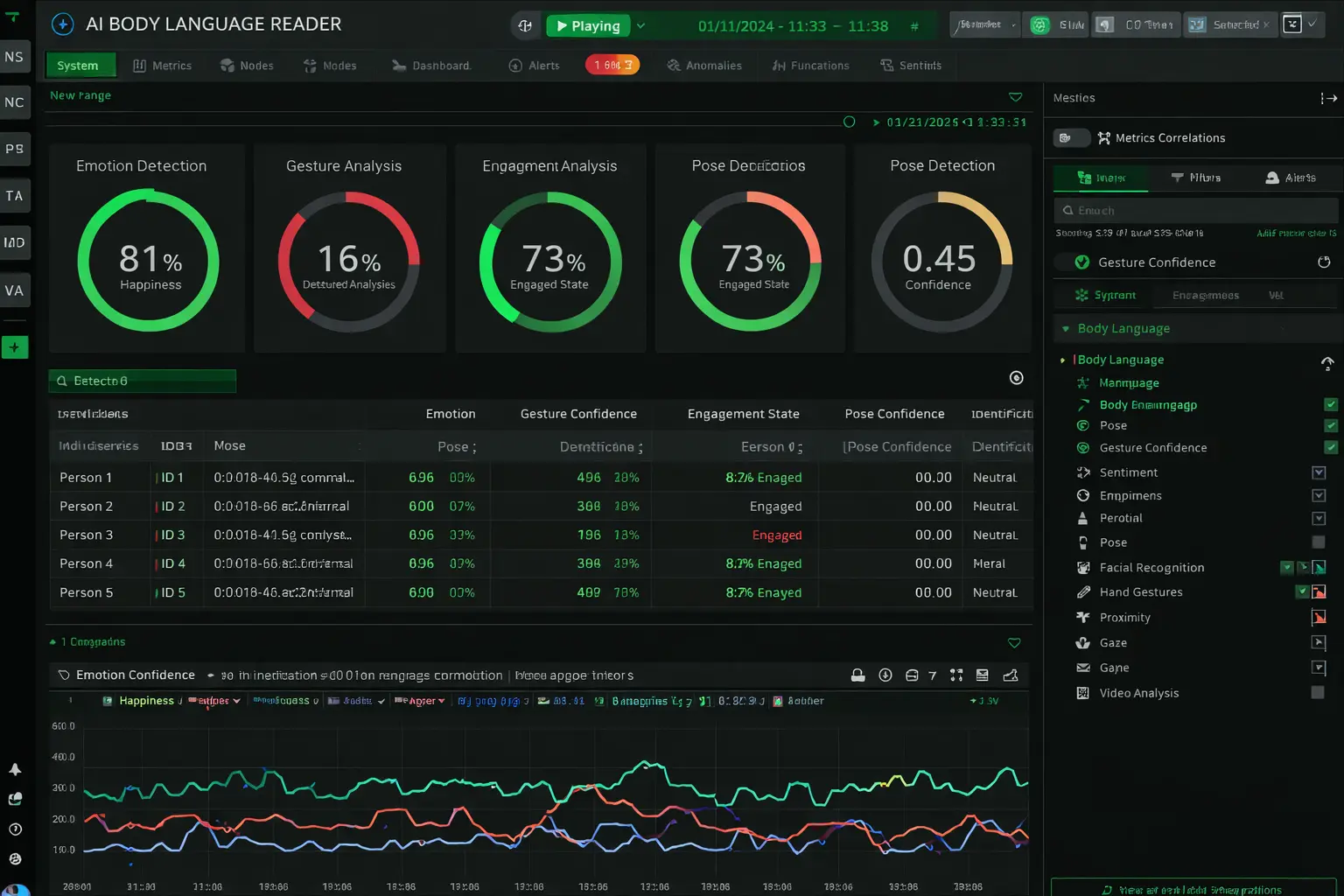
8. AI Body Language Reader
The Problem
Understanding emotions and intent through body language is challenging. In interviews, meetings, or presentations, important non-verbal cues like posture, facial expressions, or gestures are often missed.
What You’ll Build
- You will build an AI-powered body language reader.
- It analyzes facial expressions, posture, and gestures from images or video.
- The system identifies signals such as confidence, stress, or engagement.
Why It’s Useful
- Helps improve communication and awareness.
- Useful for interviews, training sessions, and presentations.
- This project shows how AI can understand human behavior visually.
Skills & Tools Involved
- Python for logic and processing
- Computer Vision tools like OpenCV or MediaPipe
- Machine Learning or Deep Learning models
- Basic emotion and gesture recognition concepts
How It Works
- The system captures video or image input.
- AI detects facial features and body movements.
- The data is analyzed to infer behavior or emotions.
- Results are displayed as simple insights.
Real World Use Case
AI body language and emotion analysis is used in HR tech, security, and training platforms by companies like Meta, Tesla, and other global enterprises to better understand human behavior and interactions.
9. Real World Robotics Control with AI
The Problem
Controlling robots in real-world environments is complex. Robots must adapt to changing conditions, avoid obstacles, and make decisions in real time, which is difficult with rule-based systems alone.
What You’ll Build
- You will build an AI-driven control system for a robot.
- The system can make decisions based on sensor data such as cameras or distance sensors.
- It enables the robot to perform tasks like navigation, object handling, or path planning.
Why It’s Useful
- Enables robots to work autonomously in dynamic environments.
- Useful in manufacturing, logistics, healthcare, and automation.
- This project shows how AI connects perception with physical action.
Skills & Tools Involved
- Python for control logic and integration
- Basic Robotics concepts (sensors, actuators, feedback)
- Machine Learning or Reinforcement Learning
- Computer Vision for environment awareness
How It Works
- Sensors collect data from the environment.
- AI models analyze the data and decide the next action.
- Control commands are sent to the robot.
- The robot adjusts its behavior in real time.
Real World Use Case
AI-based robotics control is used by companies like Boston Dynamics, NVIDIA, AMD and other global leaders to power autonomous robots in industrial and real-world applications.
10. AI Fraud Detection & Risk Scoring System
The Problem
Online fraud is increasing rapidly in banking, fintech, and e-commerce platforms. Manually detecting fraud is slow and often misses suspicious activities, leading to financial losses.
What You’ll Build
You will build an AI-based fraud detection system that analyzes user behavior and transaction data to detect suspicious or risky activities in real time.
The system can:
- Identify unusual transactions
- Assign a risk score to each user or transaction
- Flag high-risk cases for further review
Why It’s Useful
- Helps companies prevent financial fraud
- Reduces losses and improves security
- Shows how AI is used in critical, real-world systems
This project demonstrates how AI can protect users and businesses at scale.
Skills & Tools Involved
- Python for data processing and logic
- Machine Learning algorithms (Logistic Regression, Random Forest, XGBoost)
- Data analysis using Pandas & NumPy
- Model evaluation and performance metrics
- Git & GitHub for version control
How It Works
- Transaction data is collected and cleaned
- The AI model learns patterns of normal vs fraudulent behavior
- Each transaction is given a risk score
- High-risk transactions are flagged automatically
Real World Use Case
Fraud detection systems like this are widely used by banks, fintech companies, and payment platforms such as credit card providers and online wallets to detect suspicious activity and protect users.
Why Do AI Projects Fail ?
Even with good ideas and tools, many AI projects fail. These are the most common reasons.
1. Poor Quality Data: If your data is messy or biased, your AI will not work well. Most AI projects spend a lot of time cleaning data.
2. Model Memorizing Data: Sometimes the model performs well only on training data but fails on new data. Always test with unseen data.
3. Unclear Project Scope: Trying to build everything at once leads to failure. Start with a small and clear goal, then improve gradually.
4. Ignoring Deployment: A model that runs only in a notebook is not enough. Deploy it as an app or API so others can use it.
5. Lack of Real-World Testing: If you don’t test with real users or real data, the project may fail in real life use.
Final Thoughts
To truly learn AI and data science, you must move from reading to building. The best way to gain confidence is to start small. Build simple projects first, understand how data works, and then slowly move to more complex real-world problems.
Looking for a structured learning path? The Bosscoder Academy Data Science Program is designed to help you become job-ready. It focuses on strong fundamentals, real-world projects, and interview preparation, guided by industry experts. With hands-on learning and practical exposure, it helps you build the skills needed to crack data science roles in top product companies.
If you’re serious about starting or growing your career in data science, building projects with the right guidance can make all the difference.
Frequently Asked Questions (FAQs)
Q1. What are the best AI project ideas to build in 2026?
Some of the best AI project ideas for 2026 include AI chat assistants, fraud detection systems, recommendation engines, voice-based apps, and autonomous AI agents. These projects focus on real-world problems and are highly valued by recruiters.
Q2. Do I need advanced math to start AI projects?
No. You can start AI projects with basic math knowledge such as probability and statistics. Most beginner projects focus more on data handling, logic, and model usage rather than complex mathematics.
Q3. Which tools are commonly used for AI and ML projects?
Popular tools include Python, Jupyter Notebook, Pandas, NumPy, Scikit-learn, TensorFlow or PyTorch, and GitHub. For showcasing projects, tools like Streamlit and Gradio are widely used.
Q4. How do AI projects help in getting Data Science or ML jobs?
AI projects show recruiters your practical skills. They prove that you can work with real data, build models, and solve real problems which helps build strong resume for Data Science, ML, and AI roles.