The hiring landscape in tech is changing quickly.
Today, more than 70% of recruiters at top tech companies say practical skills matter more than CGPA. Many top tech companies now review GitHub profiles, live projects, and real problem-solving ability before even checking a student’s CGPA.
In 2026 and beyond, companies are not just hiring graduates. They are hiring people who can build, think clearly, and solve real problems from day one.
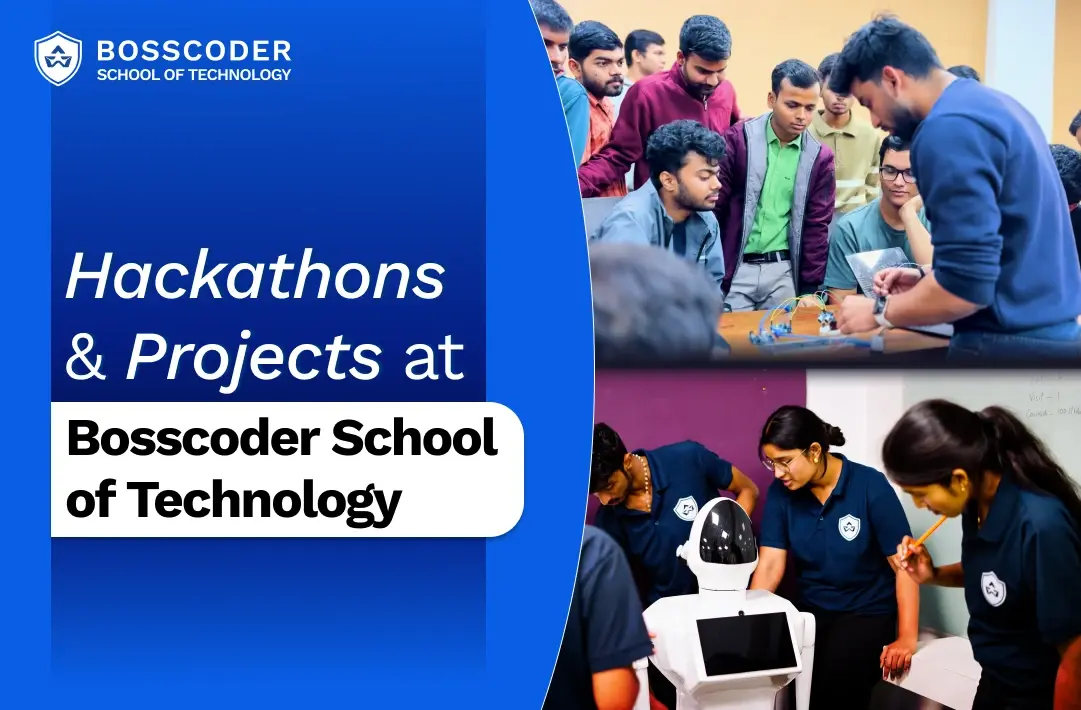
This shift is why Bosscoder School of Technology (BST) strongly focuses on hands-on projects and hackathons throughout the B.Tech journey.
At BST, students don’t wait until their final year to gain practical experience. They start building real systems and applications from the very first year, developing the skills that top tech companies truly value.
To see where students build and work on these projects, you can explore the BST campus details.
Learning by Building, Not Just Studying
In many traditional colleges, students spend years understanding theory but rarely apply it.
At Bosscoder School of Technology, every technical concept is connected to a real implementation.
→ Instead of just learning programming, students build systems.
→ Instead of only reading about AI, students build and deploy real AI projects.
→ Instead of studying electronics in theory, students connect hardware and make it work.
This approach builds confidence, clarity, and real engineering skills.
If you want to understand how this approach differs from traditional engineering colleges, read our detailed comparison in Why Choose Bosscoder School of Technology Over Traditional Engineering Colleges, where we explain the shift from theory-heavy learning to industry-focused execution.
Hardware + Software Projects at BST
Engineering becomes powerful when software meets hardware.
At Bosscoder School of Technology, students work with real tools like Arduino, Raspberry Pi, sensors, motors, and LED displays.
They write code, push it to hardware boards, and connect components to create working systems.
This process teaches practical debugging, system integration, and real-world problem solving.
To see how projects, faculty guidance, and industry alignment are structured across semesters, explore BST Curriculum & Faculty Explained: Industry-Aligned Learning, which breaks down the academic framework behind these hands-on systems.
1. Line Following Robot
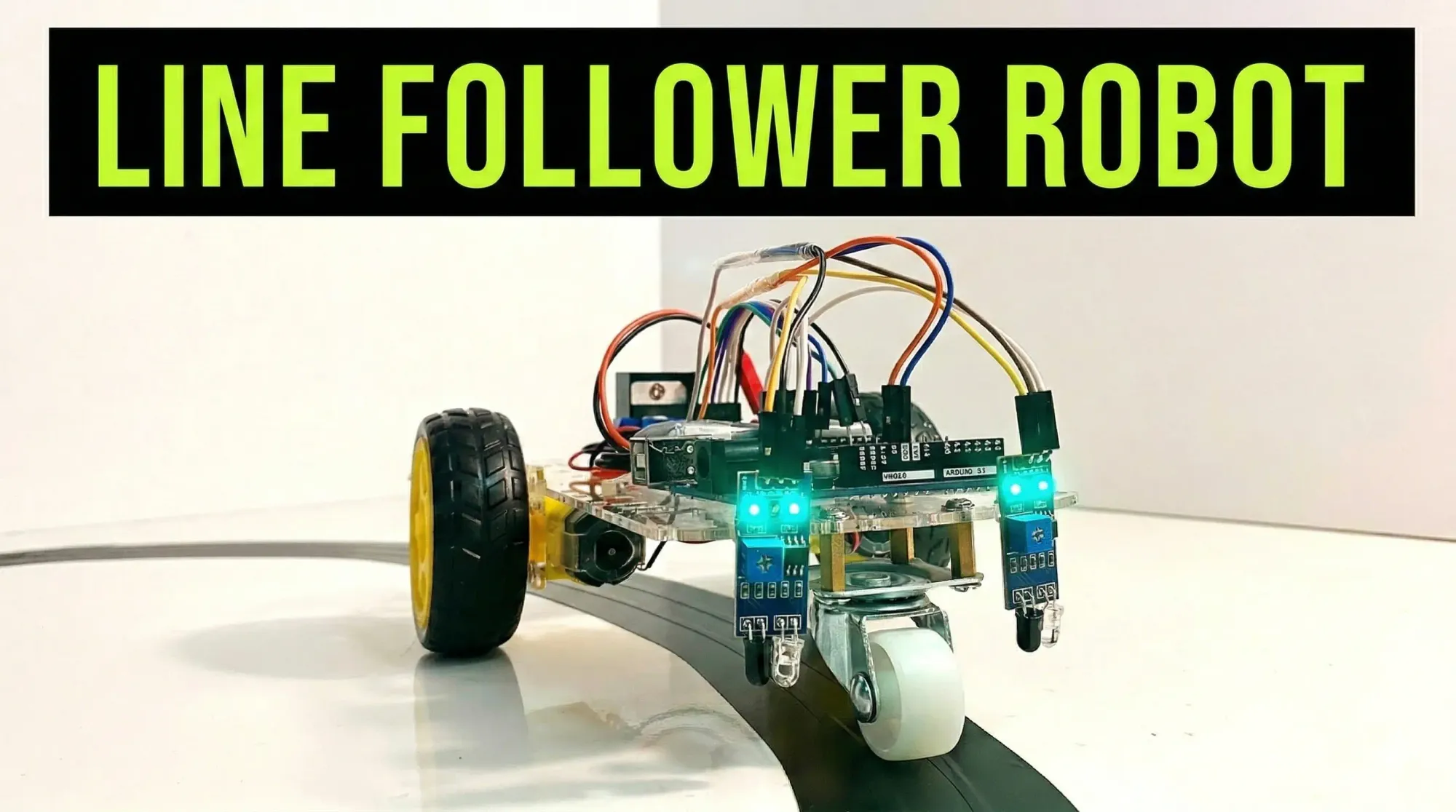
In this project, students build a robot that can detect and follow a specific path using sensors.
The sensors continuously read the surface below the robot.
Based on the input, the program decides whether the robot should move left, right, or forward.
Through this project, students learn:
→ Sensor integration
→ Real-time decision making
→ Embedded programming logic
→ How automation systems work
It gives students a clear understanding of how machines respond to live input.
2. Object Detection System for Blind Assistance
In this project, students design a system that detects nearby obstacles and alerts the user.
Using sensors and micro controllers, the device measures distance in real time.
When an object comes within a certain range, the system triggers an alert.
Through this project, students learn:
→ Distance measurement using sensors
→ Real-time data processing
→ Safety-focused system design
→ How technology can create social impact
This project shows how engineering can solve meaningful real-life problems.
3. Automated Buzzer Alert System
In this project, students build a smart alert system that activates when predefined conditions are met.
For example, if a sensor detects movement or a certain input value crosses a limit, the buzzer triggers automatically.
Through this project, students learn:
→ Conditional programming
→ Input-output systems
→ Hardware-triggered automation
→ Practical debugging techniques
It helps students understand how simple logic can power real automation systems.
Each of these projects helps students see how code controls physical devices.
Instead of just writing programs on a screen, students build systems that interact with the real world.
Hackathons at BST (We Call Them Buildathons)
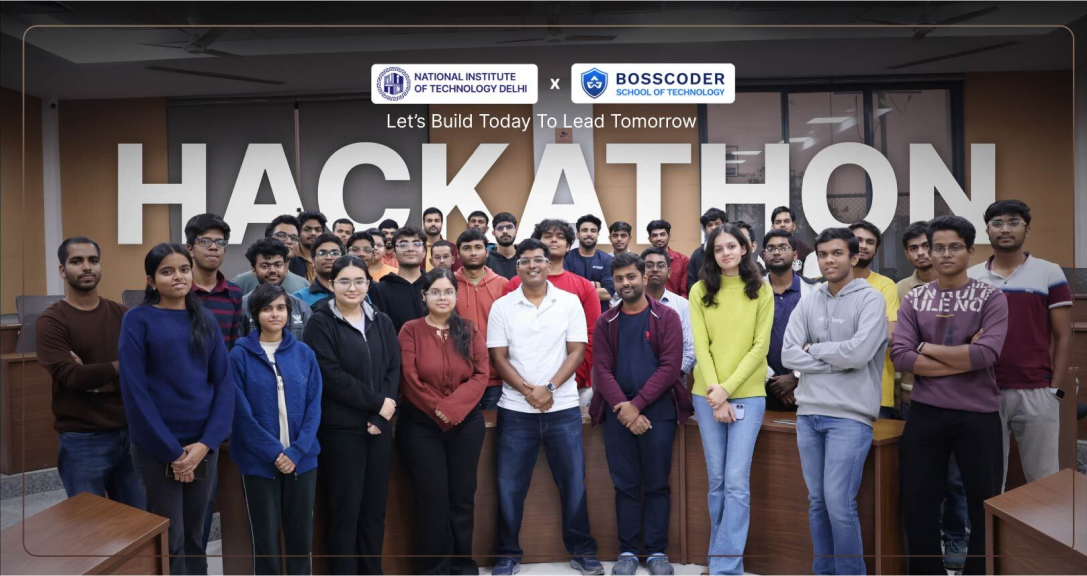
In the real tech world, engineers do not always get unlimited time.
They work with deadlines, team discussions, quick decisions, and real pressure.
At Bosscoder School of Technology (BST), we recreate that same environment through what we call Buildathons.
A Buildathon is BST’s version of a hackathon a time-bound, team-based challenge where students solve real-world problems and build working prototypes within a limited time frame.
Students collaborate in teams, brainstorm solutions, write code, integrate hardware when required, test their systems, and refine their ideas all under structured deadlines. This experience mirrors how real product teams function inside top tech companies.
Buildathons help students:
→ Develop execution speed
→ Strengthen teamwork and communication
→ Improve real-time problem-solving skills
→ Build confidence under pressure
Most importantly, students realize that learning is not just about understanding concepts, it’s about applying them when it truly matters.
Some of the exciting Buildathon projects include:
Radar-Based Object Detection System
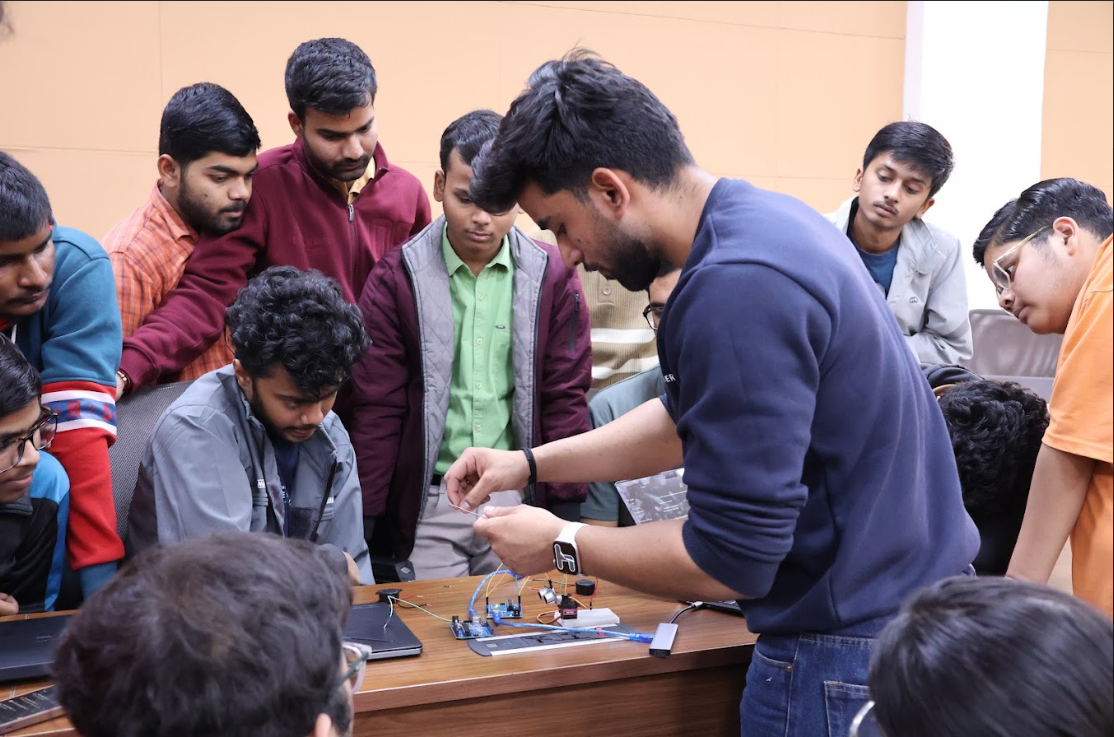
In this project, students build a radar-style system using Arduino and ultrasonic sensors.
The sensor detects nearby objects and measures their distance. The system then shows real-time detection results.
Through this project, students learn how hardware and software work together.
They understand sensor data, real-time processing, and system response.
Air Pollution Monitoring System
In this project, students create a system that measures air quality.
Gas sensors collect pollution data from the environment. The system calculates AQI levels and displays the results using LED indicators.
This project helps students understand environmental data collection, sensor calibration, and real-time output systems.
It also shows how technology can solve real social problems.
Rapid Automation Systems
These are quick-build projects created during hackathons.
Students design simple automation systems using sensors, buzzers, motors, and basic logic.
For example, a system that triggers alerts when certain conditions are met.
Or a smart setup that performs an action automatically based on input.
These projects improve logical thinking and execution speed.
Hackathons improve speed, teamwork, creativity, and confidence.
They teach students how to think fast and execute faster.
AI-Based Real-World Projects
Bosscoder School of Technology also focuses strongly on Artificial Intelligence and software engineering.
Students do not just study AI concepts in class. They build practical AI applications that solve real-life problems. This helps them understand how AI is actually used inside real products.
Some of the AI-based projects include:
1. AI Resume Scanner
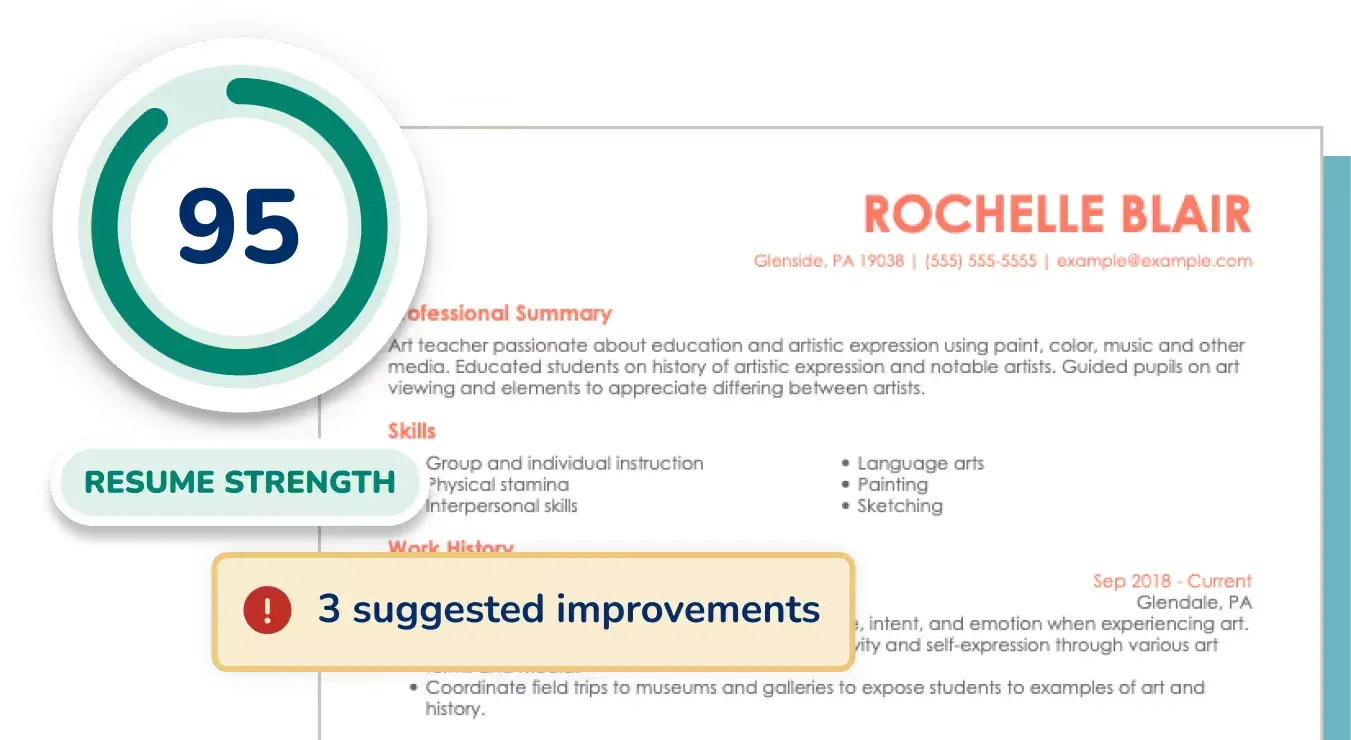
In this project, students build a smart system where users upload their resume.
The AI reads the content, analyzes skills, keywords, formatting, and experience level.
It then gives a score and suggests specific improvements like adding missing skills, improving structure, or making the resume more role-focused.
Through this project, students learn:
→ Fundamentals of Natural Language Processing (NLP)
→ Text analysis and keyword matching
→ Scoring logic and feedback systems
This project helps students understand how AI is used in recruitment platforms.
2. AI Diet Planner
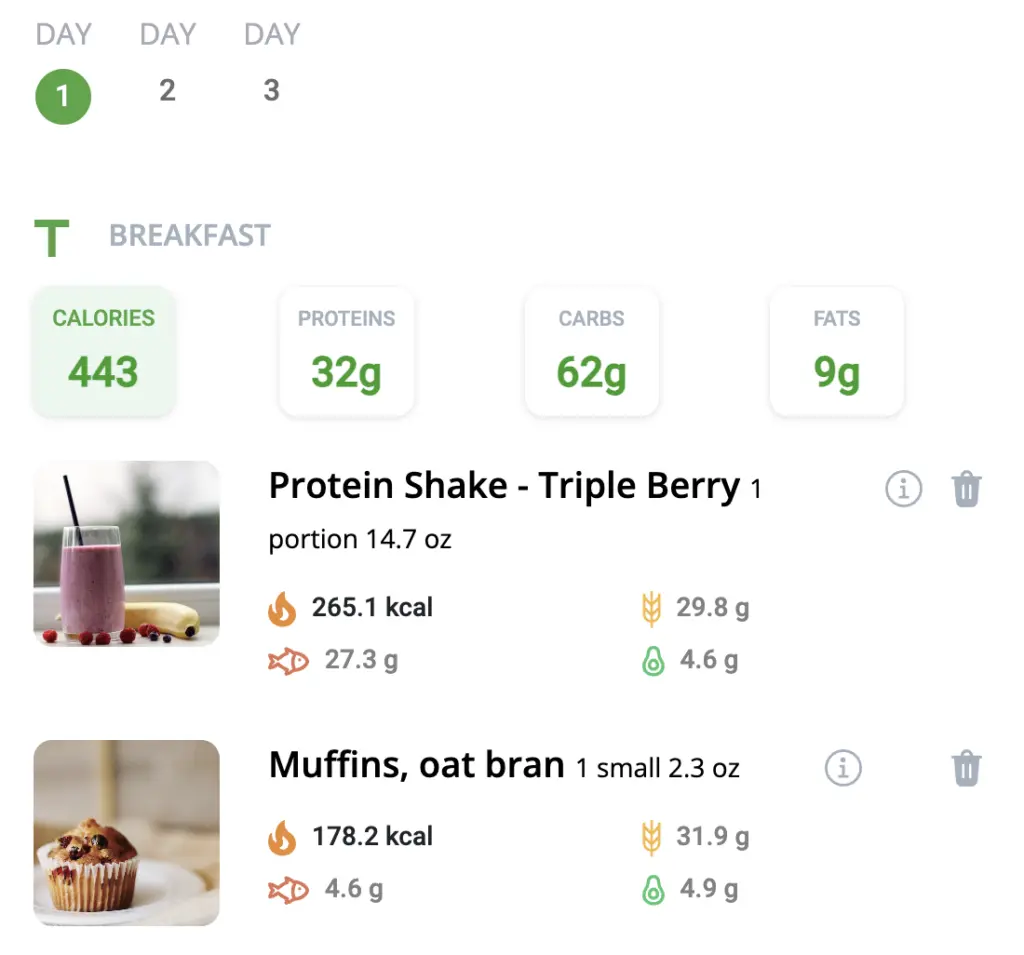
In this project, students create a system where users enter details such as weight, height, age, and calorie goals.
The AI processes the data and generates a personalized diet recommendation.
It suggests daily calorie intake, meal distribution, and possible supplement guidance.
Through this project, students learn:
→ Data processing and user input handling
→ Recommendation logic
→ Personalization algorithms
→ How health-tech applications are built
This project shows how AI can be used in healthcare and fitness applications.
3. AI Journal with Emotion Detection
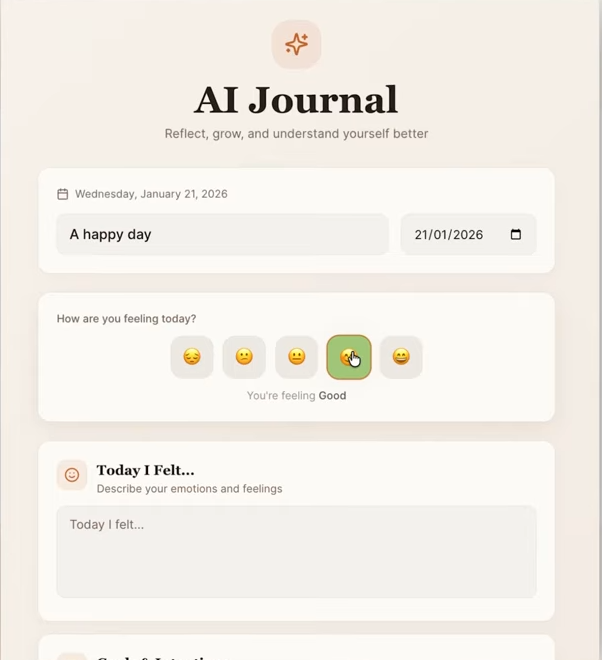
In this project, students build a mood-tracking system where users write about their day.
The AI reads the text and detects emotional patterns such as happiness, stress, anger, or sadness.
The system then provides emotional insights based on language patterns.
Through this project, students learn:
→ Sentiment analysis
→ NLP and text classification
→ Model training basics
→ Real-world AI behavior analysis
These projects help students move from theory to real implementation.
Instead of just learning machine learning algorithms, students apply them, test them, improve them, and see real results in working systems.
And this is just the beginning. Students also work on projects like Hate Speech Detection Systems, AI Chat Systems similar to ChatGPT, AI Interviewers, Recommendation Systems, and even Translation Systems as mentioned in the BST curriculum.
This is the real difference between studying AI and building with AI.
At BST, students don’t just understand concepts. They use them to create real, working products.
Why This Makes a Difference
When students graduate with only theory, they often have to restart their real learning during placements.
But when students graduate with real projects, they already have proof of their skills.
A student who has built a working robot, a pollution monitoring system, an AI-based product, or a hardware–software integrated system walks into an interview with confidence.
They are not just explaining concepts. They are demonstrating experience.
Recruiters don’t just hear “I know this.”
They see “I have built this.”
And that difference changes outcomes.
Curious about how this practical approach impacts placements?
Read our detailed breakdown in Career Outcomes of Bosscoder School of Technology, where we explain how project-based learning translates into stronger placement results and real career growth.
More Than Just Projects
At BST, projects are not random assignments.
Each project is designed to connect learning with:
→ Industry-level thinking
→ Practical implementation
→ Real-world applications
→ Innovation and startup opportunities
Students also get exposure to innovation labs, industry mentorship, and real internship experiences during their B.Tech journey.
By the time they graduate, they don’t just hold a degree.
They carry a strong portfolio of systems they have designed, built, tested, and improved.
Final Thoughts
In 2026 and beyond, companies are moving beyond just checking CGPA.
They want to know what you have built, what problems you have solved, and how well you can design and improve real systems.
That is why PRACTICAL LEARNING matters more than ever.
At Bosscoder School of Technology, students are encouraged to build, experiment, and apply their knowledge from the very beginning. The goal is simple to help students graduate not only with a recognized B.Tech degree, but also with the industry-relevant skills, confidence, and real-world experience needed to create meaningful impact in the tech industry.
Frequently Asked Questions (FAQs)
Q1. How are Hackathons at BST different from regular college competitions?
At BST, Hackathons are integrated into the learning journey. They are not just competitions but structured, curriculum-aligned events where students apply programming, hardware integration, AI concepts, and system design to solve real-world problems within a deadline.
Q2. Do students work on both hardware and software projects during Hackathons?
Yes. Depending on the problem statement, students may build hardware–software integrated systems (like sensor-based automation or monitoring systems) or AI-driven software applications such as resume scanners, recommendation systems, or emotion detection models.
Q3. How do Hackathons help students prepare for tech placements?
Hackathons simulate real product team environments like tight timelines, teamwork, debugging, and rapid execution. This helps students build confidence, strengthen their portfolios, and clearly demonstrate practical problem-solving skills during interviews.