Many professionals believe that transitioning into Data Engineering is just about learning tools like Spark, SQL, Airflow, or Delta Lake. I thought the same at first.
But I soon realized the real challenge isn’t learning tools → it’s moving from basic data tasks to designing data systems end-to-end.
“I was working with data, but I wasn’t building real data systems.”
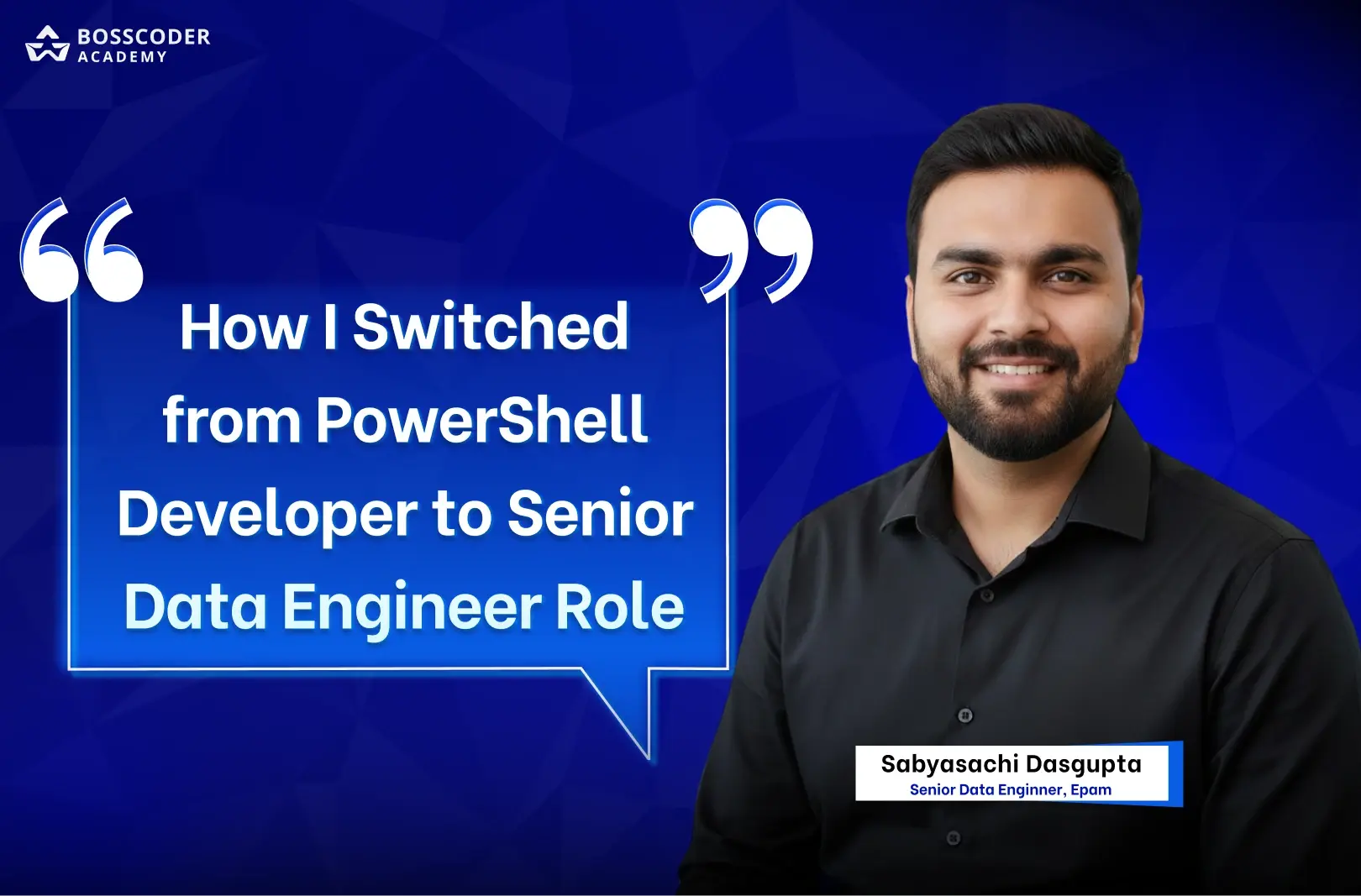
Sabyasachi Dasgupta
That realization completely changed how I looked at my career.
Where I Started: PowerShell & Maintenance Work
I began my career as a PowerShell Developer. Over time, I worked on data-related tasks such as:
- Writing scripts
- Handling minor ETL jobs
- Supporting maintenance workflows
While this gave me exposure, most of my work was operational. I wasn’t designing scalable pipelines or owning data systems. When I started looking at Data Engineering roles, I clearly felt the gap.
I knew I wanted:
- Deeper technical ownership
- Real pipeline architecture experience
- Roles that matched my potential
The Turning Point: Choosing Structured Learning
At first, I thought learning a few tools would be enough. But very quickly, I understood:
Data Engineering isn’t about tools alone, it's about how systems are designed, scaled, and maintained.
That’s when I decided to join Bosscoder Academy’s Data Engineering Program not just to add skills, but to grow with proper structure and mentorship.
What Actually Helped Me Improve
Even while working full-time, the learning process stayed manageable and focused.
Here’s what made the biggest difference for me:
1.Live Python & SQL sessions: These sessions helped me understand how data engineers use Python and SQL in real-world systems.
2. Strong concept clarity: Instead of just learning “how to do things,” I finally understood why systems are designed a certain way.
3. Consistent 1:1 mentorship: Every doubt I had was addressed, which kept me confident and on track.
4. Interview-focused preparation: LeetCode practice combined with mentorship helped me think and speak like a Data Engineer during interviews.
Slowly, my mindset shifted from:
“I run scripts” → “I design and own data pipelines”
Interview Phase & Role Transition
After a couple of months of structured preparation, I started interviewing.
This time, interviews felt very different because:
- I could confidently explain pipeline design
- I understood trade-offs in data architecture
- I could clearly communicate my decisions
And the effort paid off when:
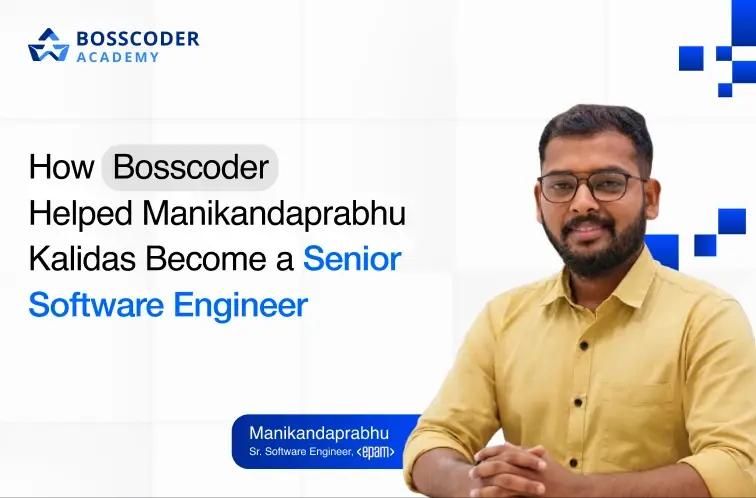
“I successfully transitioned into a Senior Data Engineer role at epam with a 60% salary hike!”
Final Thoughts
My journey taught me one important lesson:
"A career switch into Data Engineering needs direction, not guesswork"
If you’re currently:
- Doing scripting or maintenance-heavy data work
- Stuck in basic ETL roles
- Or unsure how to move into core Data Engineering
Then having the right roadmap and mentorship can make all the difference.
I’m grateful to Bosscoder Academy for providing the structure, guidance, and support that helped me grow into a Senior Data Engineer.
If you’re aiming for a similar transition, focusing on fundamentals and system-level thinking can truly change your career trajectory.