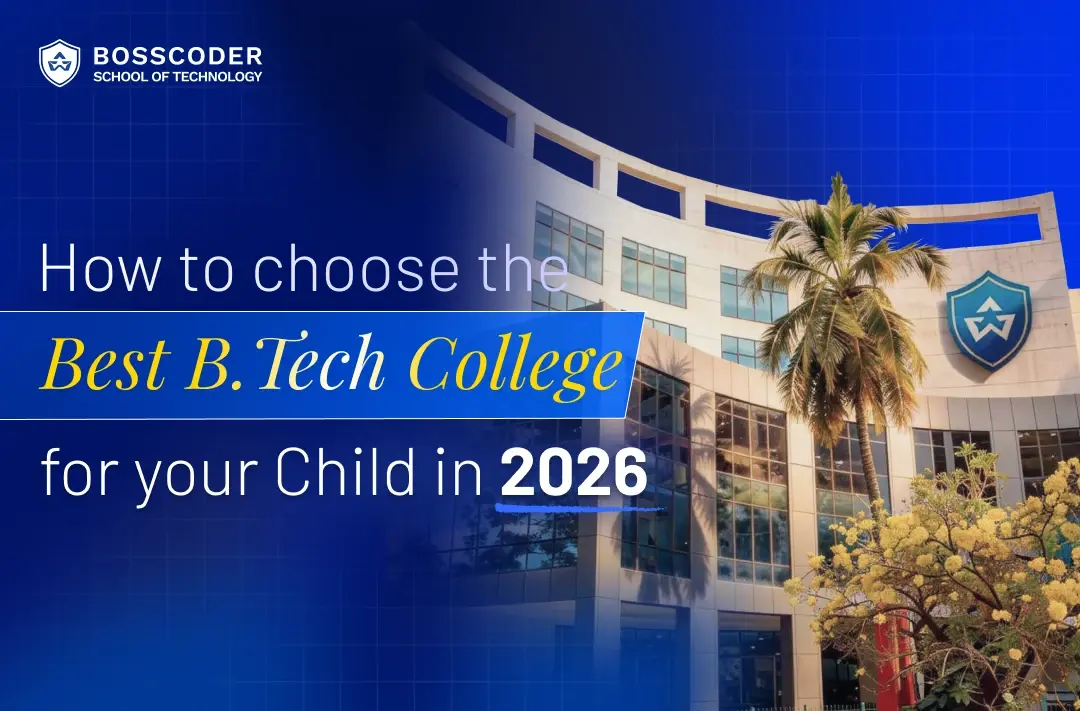
For many parents, choosing a B.Tech college has become more confusing than ever before. Earlier, selecting an engineering college mostly meant checking rankings, campus size, or placement advertisements. But in 2026, the reality is very different.
The rate of technological change today is accelerating rapidly due to artificial intelligence (AI), automation, and continuously changing software development/engineering roles. Top tech companies today are less focus on hiring recent college graduates based on their college degree rather that more focus is placed on having developed their practical skill sets, achieving hands-on project experience, demonstrating problem-solving skills, and confidence.
This is why many parents are now worried about an important question:
“ Will this college actually prepare my child for a successful career after 4 years? ”
And honestly, this concern is valid.
Many engineering graduates still struggle during placements as there's a gap between their education and the requirements of top tech companies required. Students are often taught theory for years and have little to no exposure to hands-on experience, practice writing code, or working on a project that is relevant to the industry.
Because of all this, deciding which B.Tech college to attend is not just about getting accepted. It also involves finding an environment where students can develop into professionals with the skills they need to become industry-ready.
Why Choosing the Right Engineering College Matters in 2026
The need for engineers continues to increase with the advancement of technology, especially in the areas of Artificial Intelligence, Data Science, Software Development, Cybersecurity, and Cloud Computing. Top tech companies now expect even fresher (student) to be ready for practical work from the beginning of their careers.
Many traditional university systems continue to operate under a traditional curriculum, focusing primarily on details from textbooks, assignments, and finals. Therefore, it’s very common for students to reach their final year or final semester and not feel at all prepared for a job interview or to perform in a technical role.
There are many reasons that parents should focus on how a college teaches students rather than just the degree received.
A good engineering college should help students:
→ Develop hands-on skills,
→ Engage in "real-world" projects,
→ Improve their communication skills,
→ Learn about industry-standard tools,
→ Obtain experience and an opportunity to complete an internship before graduating,
→ Prepare for their careers by having multiple opportunities to develop professionally.
Today, these factors are far more important than large campuses or flashy advertisements.
Check Whether the Curriculum Matches Industry Needs
It is important to check if the curriculum offered by a college matches the needs of the industry in order to help your child succeed. Many parents mistakenly believe that all B.Tech programs offered at colleges provide current material, which may not be true.
Many colleges are still teaching outdated theories and practices that have little connection to real-life job functions within the technology field.
Before you choose a engineering college for your child, it’s important to research and find out whether they offer educational experiences that incorporate modern technology into their course materials and use hands-on activities from Day 1.
For example, modern colleges today should ideally include learning related to:
→ Learning about Current Technologies like AI & Machine Learning
→ Full Stack Development
→ Cloud Computing
→ Real World Projects
→ Case Studies of How the Industry Creates Software
→ Exposure to Open Source Software.
Students acquire a greater understanding of concepts when they apply them than when they learn only from books.

As a result, practical learning has taken on a greater significance, as companies are increasingly looking for candidates who can build and solve problems instead of only explaining concepts in interviews.
Placement Numbers Alone Should Not Decide Everything
Some colleges use placement data to market themselves, however, this may lead to unrealistic Placement expectations.
Before you choose a school solely based on a placement data figure, Some things you may wish to consider:
→ Find out what companies are recruiting on campus
→ Find out how many students have actually been placed
→ Whether internships are provided
→ How they prepare students for interviews
→ Find out average placement quality looks like
A college with strong mentorship and exposure to the marketplace usually leads to better, long-term, employment outcomes, as opposed to a college that only markets its placement numbers.
Students with experience in developing projects and acquiring experiential learning through industry-relevant skills have a better chance of excelling during the hiring process.
Faculty and Mentorship Matter More Than Infrastructure
Although beautiful buildings on campus may appear impressive during campus tours, but good mentorship has far more impact on a student’s future than large campuses.
For this reason, it is important for parents to find out if the college has faculty and mentors who can provide guidance based on today’s industry requirements.
Some of the benefits of good mentorship include:
- Stay motivated
- Academic performance
- Problem-solving abilities
- Self-confidence
- An ability to prepare for internships/jobs
Many recently established institutions are putting a greater focus on providing students with industry-relevant learning experiences, as opposed to purely theoretical learning within the classroom.
For example, Bosscoder School of Technology focuses on combining structured academics with practical coding, mentorship, projects, and industry exposure. The program is offered in collaboration with S-VYASA University and provides a UGC-recognised B.Tech degree.
This type of learning model is becoming increasingly relevant because students need both academic knowledge and practical skills to succeed in the modern tech industry.
Internship Experience Has Become Invaluable To Engineering Students.
In 2026, internships are no longer optional for engineering students. Internships provide Engineering Graduates with:
→ improved understanding of Industry workflows
→ greater Confidence when interviewing
→ adapt faster in jobs
→ build stronger resumes
Parents should be sure to verify that the college supports students in obtaining a practical work experience throughout their studies rather than only during the final year of study.
Engineering Education is not just about the classroom. Students learn much quicker when they apply their knowledge to the world through Projects and Internships.
The Environment for Learning Also Matters
A student spends four important years in college, and the atmosphere in which they learn has a considerable influence on how much they develop.
Some factors that parents should look for would include:
→ whether students seem motivated
→ The culture that exists at the college for learning
→ How serious the peers group are about getting a job after college
→ whether the college encourages innovation and learning
Students who are placed in a strong peer group have a tendency to be continually stimulated by their peers to keep working toward improving themselves.
Students who have other students as their peers who will work hard and are very ambitious, tend to remain focused on their engineering careers for the duration of their engineering education.
Communication Skills Are Equally Important
Although many engineers/information technology (IT) students possess excellent technical capabilities, they may find difficulties during the job search on weak communication skills /or lack of confidence.
Today, top tech companies want engineers who can:
→ explain their ideas clearly
→ work effectively in a group
→ present solutions with confidence
→ communicate professionally and concisely.
That is why parents should also check whether the college supports personality development, interview preparation, communication training, and collaborative learning.
In addition, technical knowledge alone has now become insufficient for obtaining a role in today’s highly competitive job market.
Verify Degree Recognition Properly
Before finalizing admission, parents must always verify:
→ recognition from UGC
→ university affiliation
→ approval of AICTE
→ validity of degree
This is one of the most important steps because degree recognition affects future opportunities including higher education and government exams.
According to official information, Bosscoder School of Technology’s B.Tech program focuses on industry-ready Computer Science and AI education with strong mentorship, coding culture, and practical exposure alongside academics.
Final Thoughts
When selecting a good B.Tech college for your child in 2026, being top-ranked or having an extensive campus area should not necessarily be the leading criteria.
What’s more important, are the findings of an academic institution that can help students:
→ acquire modern skill sets.
→ get hands-on learning experiences in real-world environments.
→ build confidence
→ work on real projects
→ help develop students towards career readiness.
Parents should carefully evaluate the curriculum, mentorship quality, internship opportunities, learning environment, and industry exposure before making a decision.
Because in today’s rapidly changing technology world, the right learning environment can make a huge difference in a student’s future career journey.
Frequently Asked Questions (FAQs)
Q1. What should parents look for when choosing a B. Tech
The parents need to look for an academic curriculum, placement history, possible internships, qualified instructors, industry exposure and whether the college focuses on hands-on learning on their education as opposed to purely academics (theoretical teaching).
Q2. What makes Bosscoder School of Technology a great choice for B.Tech in 2026?
The Bosscoder School of Technology places emphasis on real-world learning, coding culture, coaching, internships and industry exposure, along with academics, helping students become industry- ready.
3. Is placement percentage enough while selecting an engineering college?
No, parents should also check placement quality, internship opportunities, company visits, and how students are prepared for real industry roles.
Q4. What is the importance of an internship for a B.Tech student?
An internship provides the student with the opportunity to gain experience in the area of their chosen career, to develop self-confidence and to gain an understanding about how the industry operates before starting full-time jobs.